Turning Talent from Other Industries into Key Assets
 Employee Training (Training Management)
- Knowledge Sharing

Emimen Co., Ltd. operates a senior home referral service centered on in-person consultations by experienced coordinators. Viewing the burden placed on caregiving families as a major societal issue, the company strives to build a society where family members can focus on compassionate, emotional care while seniors live with smiles on their faces. To achieve this, Emimen actively hires talent from diverse industries while heavily investing in coordinator development.
Previously, their training structure relied heavily on individual skill sets, creating a high operational burden. By systematizing video training and transitioning to learningBOX, Emimen standardized its training programs and decentralized operations. This shift not only improved training efficiency but also enabled the company to expand its hiring pool and strengthen its overall HR foundation. We spoke with the representative in charge to learn more.

Senior Home Referral Services (Support for Prospective Residents)
・Senior home placement and transition support
・Provision of senior home information
2. CarePrime Business
Operation of the Care Prime Community Site
・B2B services for senior home operators and related businesses
Executive Officer
CHRO & Department Director
Mr. Kazuhiro Nishiwaki
- Content management and permission adjustments in the previous system were overly complex.
- Oral, person-dependent instruction caused inconsistencies in training quality.
- The company needed a reproducible way via video training to deliver top-performing employees' know-how to everyone.
- Operational management was centralized under a single employee; if that person was unavailable, operations came to a halt.
- Intuitive operation reduced delivery and maintenance tasks to less than one-third of the previous time. AI features further lightened the workload.
- Standardization centered on videos and quizzes progressed smoothly. Viewing progress is now reflected in performance evaluations.
- Top sales representatives participated in video production. Sales staff's learning volume directly correlates with performance.
- More than 10 staff members now handle operations, evolving the training foundation. Onboarding candidates from other industries is now fully achievable.
- Intuitive usability for content management and operational tasks.
- A robust feature set necessary for training operations, including test creation and report submissions.
- Ability to verify usability during the free trial period, especially the ease of monitoring video viewing status.
- A well-balanced price point and attentive customer support.


The Gap Between On-the-Ground Knowledge and Person-Dependent Training
Could you start by telling us about your responsibilities?
I am responsible for overall HR operations, including recruitment, training and development, turnover prevention, HR system design and operation, as well as employee benefits. Among these, training and development take up a significant portion of my focus.
What kind of knowledge and skills are required of your employees?
Recommending senior homes requires a high degree of expertise. In addition to knowledge about senior facilities, staff need an understanding of administrative procedures related to moving in. Furthermore, a certain level of medical knowledge is indispensable, including understanding medical procedures, medication, and physical health conditions.
Beyond that, facilitating discussions with both the senior individuals and their family members plays a critical role. Family members often hold differing opinions, so coordinators need strong facilitation skills to organize everyone’s thoughts, prioritize needs, and build consensus. Frankly, it is not a job that can be done purely through sales ability.
What challenges did you face regarding training in the past?
When I joined the company about six years ago, the training structure relied heavily on individuals. The standard style was senior employees teaching junior staff orally. While not inherently bad, the content varied depending on who was teaching. In extreme cases, a underperforming senior employee might teach their own methods to a newcomer, which naturally failed to improve productivity.
Therefore, we set a strategy to structure video training so that top-performing employees' know-how could be delivered to everyone in a reproducible way. We also incorporated the concept of "Sales Enablement," an initiative to set up systems, environments, content, and training structures so that sales organizations can consistently generate results.
What was the background behind adopting learningBOX?
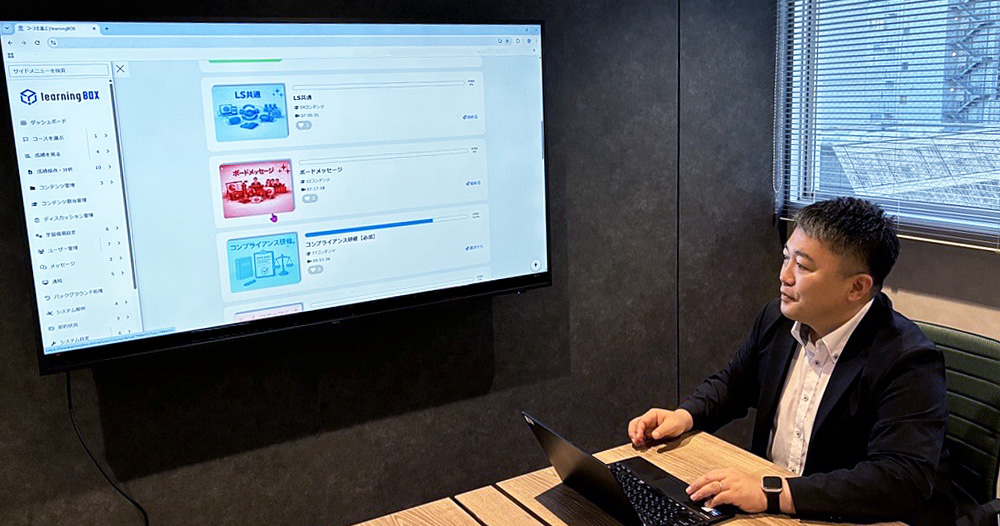
Although we had been working on video training for some time, the system we used back then required immense operational effort. Every time we moved a content storage location or reassigned viewing permissions, detailed setting adjustments were required.
Because we have internal transfers every quarter, we had to reconfigure permissions each time, which consumed a vast amount of time. To make matters worse, I was the only person capable of performing those operations. Because viewing status directly affects employee evaluations, errors were strictly unacceptable.
I found myself frequently working off the clock just to keep up. I eventually realized, "We need to re-evaluate the system itself."
Designing Beyond "Just Watching" to Drive Action
Why were you so committed to video training?
The main reason is high reproducibility. With video, staff can watch repeatedly regardless of time or location, and top performers' know-how can be delivered directly to new hires.
Oral, individual-dependent training inevitably leads to inconsistencies. In contrast, video allows us to distribute content widely while maintaining quality. That is why we insisted on using video.
We heard that you also integrated video training into your evaluation system.
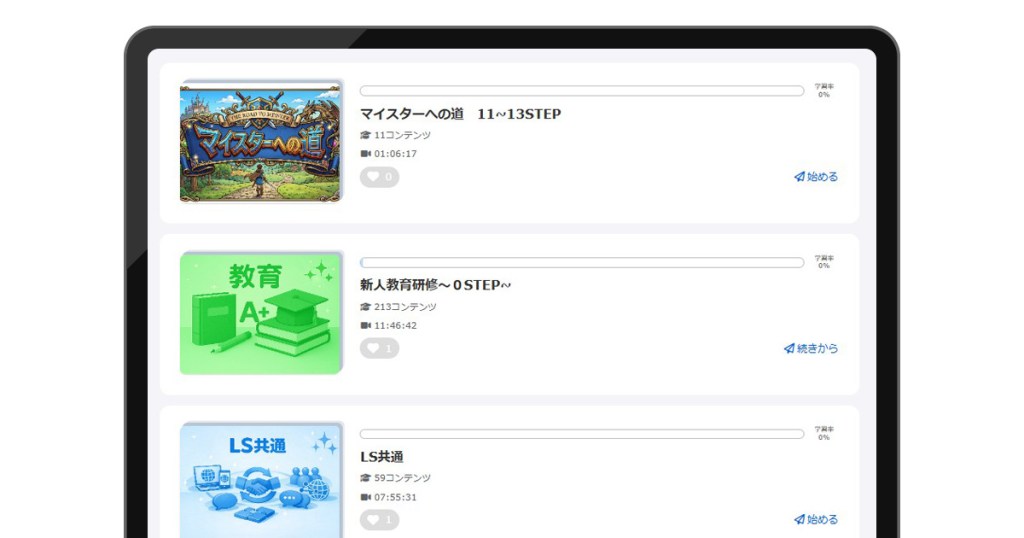
We use the system's tracking features (Grade Management:) to visualize viewing progress and integrate it into our evaluation system. The evaluation model is designed based on top-performing sales representatives; if an employee does not watch the assigned videos, their evaluation score decreases.
However, "watching" in itself is not the ultimate goal. The design ensures that staff acquire the necessary knowledge and skills through videos, and that effort is properly reflected in their evaluation. As a result, video viewing and performance evaluations work together as an effective system.
How do you approach content creation?
We ask top-performing sales representatives to assist with video production. Because our initial issue was that underperforming methods were being passed down to new hires, we pay close attention to whose know-how we are sharing.
Additionally, simply recording a video often causes key details to be missed. Therefore, we always attach explanatory text, such as "Explanations" or "Key Highlights." You can think of it as verbalizing the core points of the video.
By doing so, learners can easily understand what aspects they should focus on while watching. Rather than ending at simple viewing, we design the process to connect directly to actual behavior on the job.
Role-Based Operational Design Balancing Results and Compliance
Did the transition from adopting learningBOX to starting operations go smoothly?
Because we urgently needed to track viewing progress, we started operations just one month after deciding to adopt the platform. During the Free Plan trial period, I verified firsthand that uploading videos and tracking progress—which directly links to evaluations—could be done without issues. Convinced that it would work, I decided to switch systems immediately.
The instruction manuals were detailed and user-friendly, so there was virtually no confusion.
How are you currently operating the platform?
We operate mainly around videos and quizzes. Including archives and repositories, we have over 500 pieces of content. For new employees, watching one video every morning and evening, totaling 40 videos per month, is included as an evaluation metric.
This is not about simply going through the motions; we track whether the viewed content actually leads to actionable results on the job.
Granted, everyone approaches it differently. Some employees watch consistently every day, while others catch up in bulk near the deadline. To be honest, individual variation remains.
How do you manage mandatory training, such as compliance?
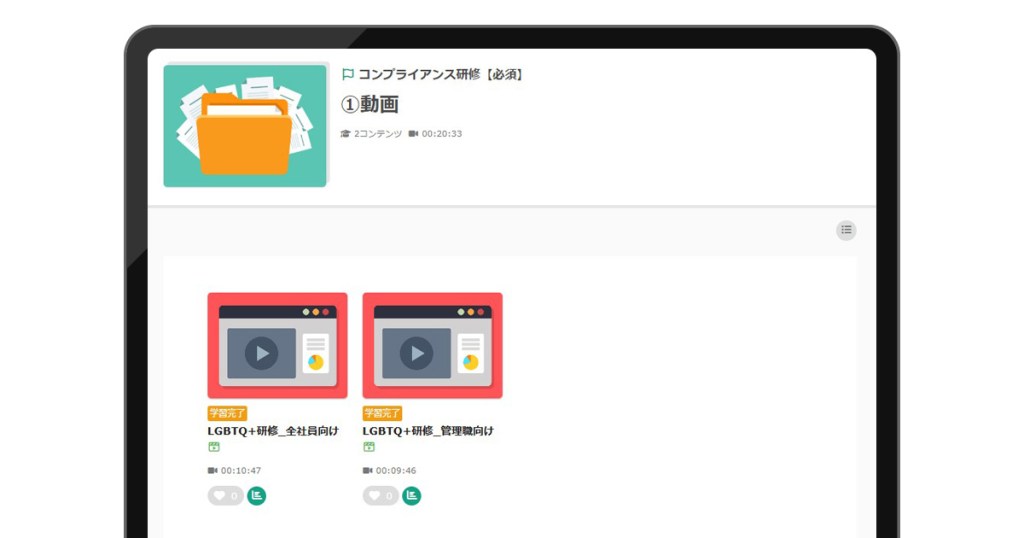
For compliance training, such as anti-harassment programs, our priority is ensuring that every employee completes it by the deadline. For quizzes and tests, the rule is to repeat them until achieving a score of 100%.
If an employee fails, Notifications is sent via email, and points are deducted under the "Basic Standards" section of their evaluation sheet. Because evaluations directly affect compensation, this operational setup guarantees complete compliance.
Video training focuses on driving results, whereas mandatory training focuses on thorough execution without exception.
AI Quickly Generates Quizzes, Significantly Reducing Workload
In what situations do you utilize the "AI Assist" feature?
Previously, when creating a quiz based on a video made by someone else, I had to watch the entire video first. Having to watch videos solely for quiz creation ate into my time for other tasks. As the number of videos grew, the effort increased proportionally, which felt extremely inefficient.
Then the AI Assist feature was introduced, and trying it out yielded great results. Because AI generates the quizzes quickly, we only need to review the content for accuracy.
It used to take more than 15 minutes to create a single question: watching the video, summarizing key points, writing the question, and coming up with incorrect options. Now, we simply generate it with AI and review it, cutting the time down to just 2–3 minutes.
Team members who create quizzes on the ground have responded enthusiastically, noting how much it helps. Everyone is truly pleased that their workload has been drastically reduced.
Bringing Our Vision directly onto the Screen
Tell us about the ease of use of learningBOX.
It allows us to translate our ideal training distribution workflows directly into reality. Who to assign content to, what materials to give them, and how they should submit reports—if you can map out the flow in your head, you can replicate it almost directly within the system.
Moving content and linking target users can be operated intuitively, so even team members who are not tech-savvy can handle it without issues. This is an extremely helpful point when rolling it out across departments. (Management roles)(Assign Content)
Could you recap the decisive factors in your vendor selection?
We compared learningBOX with several other services we were considering. There were three main decisive factors: first, the ease of content management; second, the completeness of essential training management features such as test creation and report submissions; and third, the ease of monitoring. Additionally, the excellent balance between functionality and price was a major selling point.
How was your experience with their sales and support teams?
I think they are exceptional. Especially during the trial period, I often operated the system while consulting the manual (How to Use), which was extremely clear and helpful.
When I did encounter uncertainties, the customer success representative responded promptly. Whenever I consulted them saying, "We want to achieve X," they provided accurate guidance, eliminating operational stress.
Knowing we have a reliable support system not only during onboarding but throughout ongoing operations provides immense peace of mind.
Establishing a Training System Transformed Our Core Recruitment Strategy
It has been three years since implementation. How has the operational workload changed?
The operational burden has decreased significantly. Previously, uploading content required complex procedures, making me the only person who could manage it.
Now, operations are intuitive, and the time required to deliver and maintain a single piece of content has been reduced to less than one-third of what it used to be. Furthermore, more than 10 team members including field trainers and back-office staff can now manage operations, successfully resolving the situation where everything stopped if I wasn't available.
What changes have you seen in day-to-day business performance?
Employees who actively watch the videos are seeing real results in their performance. One employee who watches roughly 1,200 videos a year achieves top-tier results within the company. We strongly feel that learning volume and business results are closely linked.
What was the single largest change brought about by the implementation?
It was expanding the candidate profile we can hire. Previously, our hiring was almost exclusively limited to people with industry experience or backgrounds in social welfare. Because training was person-dependent, the honest truth was that our organization lacked the capacity to train inexperienced hires from scratch.
However, by systematically organizing video training and linking viewing progress with performance evaluations, we built an environment where even inexperienced hires can learn reliably.
Today, we successfully recruit and onboard talent from entirely different industries, such as mobile phone sales and bridal coordinators. More people are joining us because they resonate with our identity as an impact company, a business that pursues significant social value while remaining commercially profitable.
As a result, our talent pipeline has stabilized, allowing us to execute long-term strategies to continuously grow staff capable of solving social issues. Strengthening our training infrastructure ultimately led to a complete transformation of our recruitment strategy itself.
Accelerating Growth Leveraging the Video Training Foundation
What are your goals for the future?
We plan to leverage learningBOX to further boost productivity and performance. Building upon the video training framework and evaluation linkages we have established, our next step is to expand the use of AI even further.
A System That Accomplishes Almost Anything You Want to Do
Finally, do you have a message for companies considering implementation?
Recently, AI allows you to create video training content with ease. By utilizing learningBOX alongside these content creation tools, you can accomplish virtually everything you want to do, from content delivery management and progress tracking to post-viewing report submissions and AI-assisted quiz generation.
Given how comprehensive the feature set is, I believe the pricing is exceptionally reasonable.
Thank you very much for your valuable insights!

Senior Home Referral Services (Support for Prospective Residents)
・Senior home placement and transition support
・Provision of senior home information
2. CarePrime Business
Operation of the Care Prime Community Site
・B2B services for senior home operators and related businesses
Executive Officer
CHRO & Department Director
Mr. Kazuhiro Nishiwaki


-
 Understanding disabilities through soccer, promoted through e-learning training
Japan Inclusive Football Federation -
 Significant Reduction in Time, Cost, and Safety Burden, with Increased Autonomous LearningMiyazaki Denshikiki Co., Ltd.
-
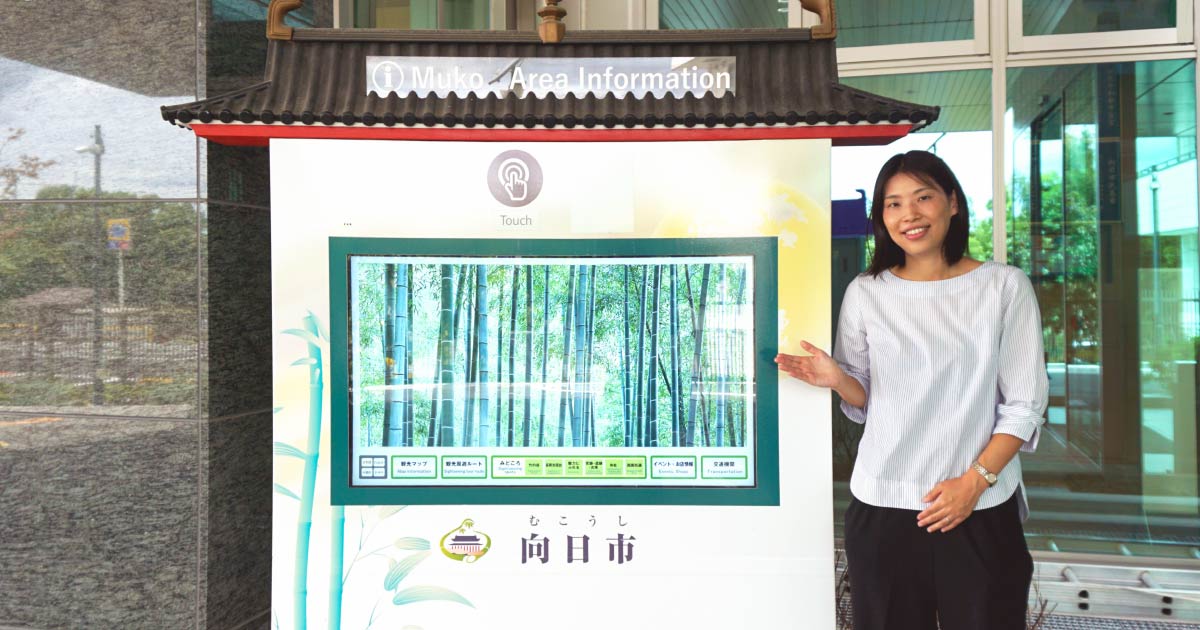 Successfully Conducted Unique Online ExaminationPlanning and Public Relations Division, Muko City, Kyoto
*Since October 1, 2023, the Industrial Promotion Division of the Environment and Industry Department has been in charge of the implementation of this program.