
Driving Success in a Multilingual Workforce: Future-Proofing Safety Training and Standardizing Education Through e-Learning
 Employee Training (Training Management)
- Knowledge Sharing
- Content Sales (B2B)
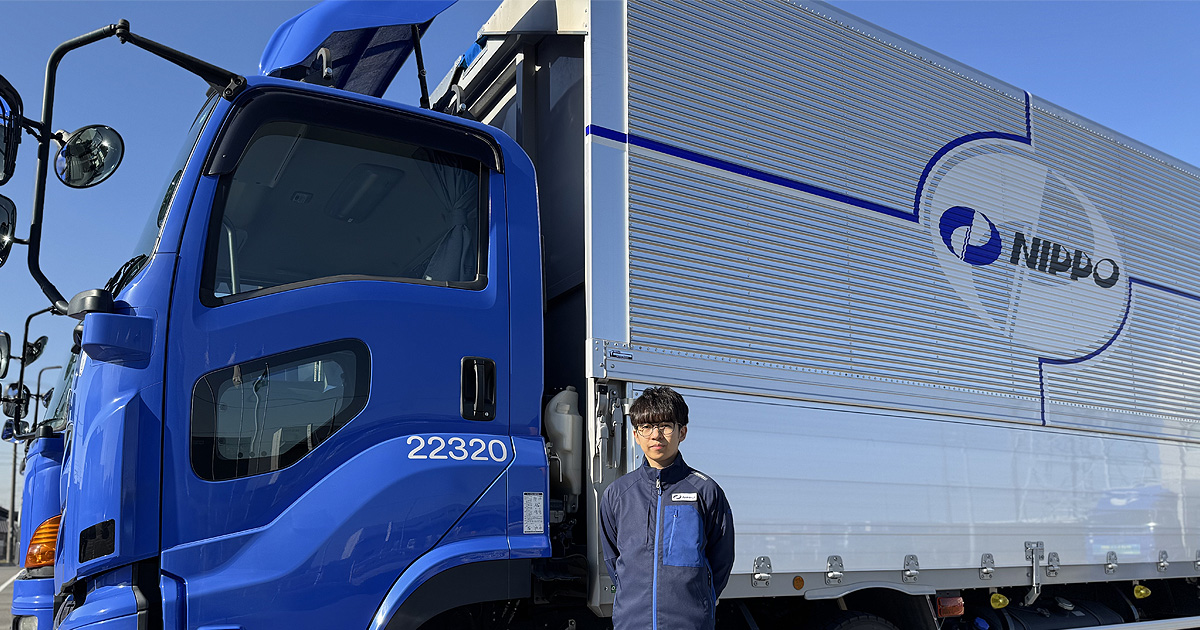
N.P. Logi Co., Ltd., an affiliate of Nippo Express Co., Ltd., plans, develops, operates, and markets “eDriver” (pronounced “i-driver”), an e-learning service specializing in truck driver training. Against the backdrop of the expansion of industries eligible under the Specified Skilled Worker Program and a rapidly growing need to hire international drivers, the company is vigorously advancing initiatives such as the development of multilingual training materials that do not rely on machine translation and the establishment of collaborative frameworks that cover the entire process from recruitment to post-employment support. In this interview, we spoke in detail about the company’s specific training initiatives for multilingual workers, the benefits of implementing these programs, and its future outlook.
▼Click here for the Nippo Express Transport Co., Ltd. case study


2. Planning and Production of Training Materials, Manuals, and Training Videos
3. In-person training and on-the-job coaching tailored to on-site challenges
4. Advisory Agreements and Consulting Services for Employee Development and Accident Prevention
5. Recruitment and Hiring Support, Including Global Talent
6. Support for New Business and Product Development
Mr. Koji Deguchi
- Amid a surge in demand, frontline operations are stretched thin, and the training system for multilingual workers is not yet fully established.
- Multilingual teaching materials had not been developed, and outsourcing the work was expected to cost several hundred thousand yen.
- Group training is difficult due to language issues and psychological barriers stemming from a lack of familiarity with multilingual workers.
- Working on holidays to complete the 12 mandatory training courses has become the norm, and complying with overtime regulations has become a challenge.
- Standardizing basic safety training for multilingual workers through E-Learning in Southeast Asian languages and Portuguese
- By selecting pre-existing content, you can significantly reduce the cost of translating educational materials
- Conducting pre-employment training for international drivers through e-learning reduces the burden on the field staff
- The shift to e-learning eliminated the need for employees to work on their days off for training and also reduced the time required to conduct the training.
- The intuitive user interface minimizes stress for both administrators and learners.
- The content offers a high degree of flexibility and can be improved based on learner feedback.
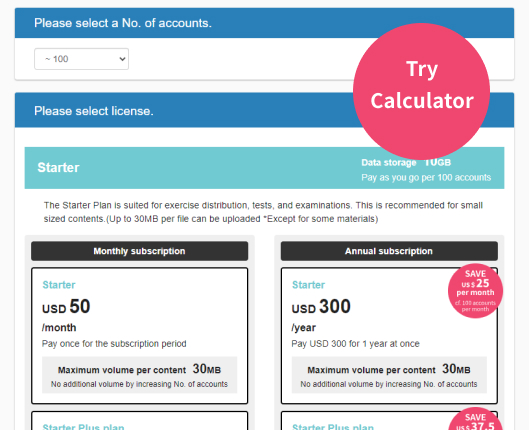
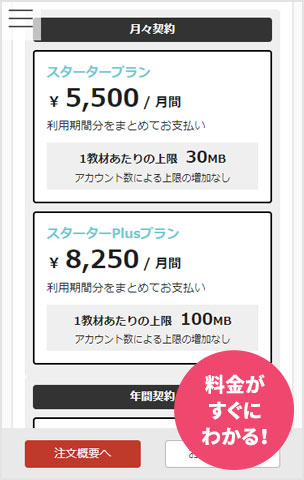
- The service fees were significantly lower than expected, making it ideal for a small-scale launch.
- learningBOX’s sales and support teams provide personalized support even before implementation.
(From an article by Nippo Express Co., Ltd., published in 2025)


The Rapid Increase in Demand for Non-Japanese Workers and the Challenge of Providing Multilingual Training
We also had the opportunity to speak with Mr. Deguchi at length during an interview with Nippo Express Co., Ltd. in 2025. How has the situation surrounding foreign workers changed since then?
In March 2024, the “Motor Transport Sector (encompassing trucks, buses, and taxis)” was added to the list of fields eligible for the Specified Skilled Worker program. As a result, there has been a sharp increase in the number of transportation companies considering hiring non-Japanese drivers.
Nippo Express has long employed a large number of Brazilian staff and had already developed training materials in Portuguese. However, in recent years, there has been a growing need to hire drivers from Southeast Asia, making the development of training materials in Indonesian a particularly urgent priority.
Indonesia is unique in that, like Japan, it drives on the left side of the road and uses right-hand drive vehicles; since many people aspire to become drivers there, there has been an increase in cases where companies are hiring Indonesian drivers.
What challenges did you face in training multilingual workers in the transportation industry?
There are two main challenges. The first is the cost of making training materials multilingual. Outsourcing the translation of in-house materials can cost hundreds of thousands of yen. Furthermore, simply translating materials intended for Japanese employees often results in foreign employees being unable to accurately understand the content. These issues have been major hurdles in training non-Japanese employees.
Another issue concerns the on-site training system. It is difficult to train Japanese and multilingual drivers simultaneously at the same time and place; even if this were possible, differences in understanding and progress would likely arise, so this approach is not necessarily effective. In addition to language barriers, there is also a psychological hurdle stemming from the fact that on-site staff are not accustomed to working with global talents. As a result, many companies hiring multilingual employees have reported that “we cannot provide sufficient training on our own.”

Ease of use that minimizes stress for both administrators and participants
After actually using learningBOX, what do you find easy to use or convenient about it?
Intuitive operation is the most important thing. From both the customer’s (learner’s) perspective and our company’s (administrator’s) perspective, we feel that using the system causes very little stress.
Please let us know if you have any suggestions for improvement.
Our educational materials are currently formatted to display Japanese and Indonesian side by side. If we add more languages in the future, displaying three or more languages simultaneously will make the screen difficult to read. It would be very helpful to have a feature that allows users to switch between language displays, similar to video subtitles.
I also think it would be great if the furigana (ruby text) could be turned on or off to suit the learners' needs. I believe this would further enhance learning effectiveness, including for Japanese language learning.
A comprehensive lineup ranging from e-learning courses to accompanying in-person training sessions
Please tell me what kind of content is currently available on “eDriver.”
In terms of video content, we offer a variety of educational materials centered on the theme of “safety,” including the 12 mandatory training modules for the transportation industry, courses on basic knowledge such as the Road Traffic Act and traffic etiquette, hazard prediction training using dashcam footage, and safety lectures on preventing drunk driving and distracted driving.
In addition to e-learning content, we also offer on-the-road instruction in collaboration with driving schools, as well as in-person training for on-site instructors.
In addition to Indonesian and Portuguese, we currently support multiple languages, including Burmese, Vietnamese, and Tagalog.

I understand that you’re seeing an increase in customers outside the transportation industry—could you tell me what types of industries and applications your products are being used for?
We do not have a specific regional focus, and most of our contracts are with companies that hire multilingual workers. We are expanding our sales to a diverse range of industries, including companies that use trucks for purposes other than transportation, staffing agencies, and schools. In addition, we are seeing an increase in contracts for employees who drive vehicles for sales activities, commuting, and other purposes.
More Than Just Translation: Creating Educational Materials for Indonesians
Are there any particular aspects you focus on when creating teaching materials for Indonesian?
What we focus on most is that we don’t just “translate” Japanese teaching materials—we rework them into materials specifically designed for Indonesians.
For example, when it comes to checking for vehicles in the blind spot before making a left turn—a procedure that is common sense for Japanese drivers—Indonesian drivers may be less aware of this due to differences in cultural background. This is because attitudes toward traffic culture and the priority given to vulnerable road users vary from country to country.
For this reason, we provide detailed explanations not only to teach the verification procedures themselves, but also to help students understand the underlying Japanese traffic culture.
I heard that you’re also particular about translation.
We do not use machine translation; instead, we rely on several native Indonesian speakers who have lived in Japan for a long time and have industry experience. This is because our top priority is not just translation, but using expressions and explanations that are easy for Indonesians to understand.
While cars in Indonesia drive on the left and have the steering wheel on the right—just like in Japan—there are definitely differences in traffic laws and cultural backgrounds. Anticipating that newcomers to Japan might find some aspects difficult to understand, we provide thorough explanations starting with the cultural context.
We have received feedback from Indonesian drivers who actually participated in the training, such as, “The explanations are easy for Indonesians to understand,” and “Topics that are particularly difficult for Indonesians to grasp are explained in great detail.”
No more working on holidays, and lower translation costs as well
Please tell us specifically about the benefits you have experienced since implementing learningBOX.
Here is a case study from a customer who has subscribed to “eDriver.” Previously, the company conducted in-person training sessions on the 12 mandatory training topics for the transportation industry on days off. Including preparation time, each topic took an average of one hour (12 hours for all 12 topics), plus commuting time. In the transportation industry, upper limits on overtime hours will be enforced starting in April 2024, and the traditional practice of requiring employees to work on holidays solely for training purposes had become a significant burden for the company.
However, by conducting e-learning training using “eDriver,” which leverages learningBOX, the need for employees to work on their days off has been eliminated. By utilizing video-based training materials, we were not only able to reduce the time required for training but also improve the quality of the training content. As a result, we have received feedback expressing gratitude for the increased safety awareness and reduction in accidents. In some cases, we are using the time saved from classroom training to conduct hands-on training, such as on-the-job coaching.
How about the cost?
Here’s an example of a company that was considering outsourcing the multilingual adaptation of its proprietary educational materials but was hesitant to do so because the translation costs would have amounted to several hundred thousand yen. However, after discovering “eDriver,” which offers educational materials optimized for Indonesian learners, the company was able to significantly reduce its costs.

Considering the hassle and high costs involved in commissioning in-house translation work, it seems they truly appreciated the value of being able to use multilingual educational materials as-is.
What kind of feedback have you received from Japanese participants?
We’ve received feedback such as, “It’s relaxed and easy to learn,” and “The dashcam footage is incredibly realistic.” Participants are also pleased that “being able to take the course anytime, anywhere has made classroom training more accessible.”
We have received feedback from companies that have adopted our system, such as: “Their support is thorough and flexible,” “They have a deep understanding of the realities of the shipping industry, making it easy to discuss our concerns, and they understand the features needed on the front lines.”
Serving as a bridge for the education of multilingual workers, we provide end-to-end safety training services
I heard that you have launched an initiative to provide one-stop support, ranging from the recruitment of non-Japanese drivers to post-hire assistance.
We have established a one-stop support system in collaboration with local companies, covering everything from the recruitment of non-Japanese drivers to post-hire support.
The main reason transportation companies hesitate to hire non-Japanese workers is that they “don’t have the capacity to provide on-the-job training.” By having registered support agencies conduct pre-employment training through “eDriver,” we are able to significantly reduce the burden on companies. Currently, we have received orders from more than 10 companies in Aichi Prefecture alone, and many drivers have already joined these companies and are performing well.
Do you have any other collaborative projects or initiatives?
In partnership with a local logistics university in Indonesia, we are providing Japanese-style safety training on-site. Going forward, we plan to conduct in-person lectures and offer career counseling regarding employment in Japan. Our goal is to go beyond pre-departure training and actively support the matching of candidates with companies.
We also provide training manuals for foreign workers to driving schools in Japan. In addition, we have formed business partnerships with these schools to serve as bases for on-the-road instruction, and we are expanding our services to include support for obtaining driver’s licenses and training programs for professional drivers.
Our mission is to establish a seamless educational system that spans from before students arrive in Japan to after they arrive.
Please share your outlook for the future.
Now, as we enter the dawn of a new era for multilingual drivers, I believe that the strengths of e-learning—namely, “standardized training” and the ability to “learn anytime, anywhere”—are more important than ever. In particular, the ability to use e-learning for training before arriving in Japan or before starting a new job is of great value.
Of course, customized education tailored to each individual’s characteristics is also essential. However, our first goal is to serve as a bridge to help companies begin recruiting and training global talent by widely promoting e-learning training.
Furthermore, after laying the foundation for safety through e-learning, we aim to combine this with customized in-person instruction tailored to each individual’s aptitudes, thereby developing a comprehensive, end-to-end safety training service that integrates in-person sessions with classroom instruction.
Furthermore, rather than being satisfied with our existing training programs or limiting them to in-house sessions, we intend to continuously refine them by listening to feedback from the field on a daily basis.
Thank you very much for your valuable insights!

2. Planning and Production of Training Materials, Manuals, and Training Videos
3. In-person training and on-the-job coaching tailored to on-site challenges
4. Advisory Agreements and Consulting Services for Employee Development and Accident Prevention
5. Recruitment and Hiring Support, Including Global Talent
6. Support for New Business and Product Development
Mr. Koji Deguchi



-
 Successfully Conducted Unique Online ExaminationPlanning and Public Relations Division, Muko City, Kyoto
*Since October 1, 2023, the Industrial Promotion Division of the Environment and Industry Department has been in charge of the implementation of this program. -
 Special article availableApproximately 2,900 Hours Saved for Data Entry, Allowing Teachers More Time with StudentsKashima Education Group
 -
 Online learning contributes to extensive knowledge acquisition for medical representativesTaiho Pharmaceutical Co.