Upgrading sign language tools to support 20,000 learners yearly: Cloud-based sustainable education
 Content Sales (B2C)

The National Sign Language Training Center (Social Welfare Corporation) carries out a wide range of sign language initiatives, including training sign language interpreters and volunteers, administering national certification and proficiency exams, and promoting awareness. In 2023, the Center implemented learningBOX to transition its volunteer training text video materials from DVDs to a cloud platform. Over the past three years, a small team has successfully managed and sold educational materials used by approximately 20,000 learners annually. For the Center, which bears the crucial societal role of training sign language volunteers, creating an environment where anyone can learn sign language anytime, anywhere represents much more than simple operational efficiency. We spoke with them about the background of the implementation, how the platform is used, and their future outlook for spreading sign language awareness.

・Sign Language Interpretation Services
・Disability welfare services and designated consultation support services under the Comprehensive Support Act for Persons with Disabilities
2. Social Contribution Initiatives
Overseas Scholarship Office / Director
Ms. Nami Akiyama
Sign Language Services Division, Awareness and Promotion Section
Ms. Tomoko Takei
- DVD materials limited where and how learners could study.
- Managing physical inventory and bundling book and DVD sets was highly labor-intensive.
- Manually verifying payments for 20,000 users per year was nearly impossible.
- There was no streamlined system for multiple staff members to share customer support records.
- Students can now study anytime, anywhere using their smartphones.
- The team was freed from managing stock for physical media.
- Payment processing operations were reduced to less than 10% of the estimated manual workload.
- Shared inquiry tracking across staff enabled seamless customer support while simultaneously elevating the overall quality of the educational materials.
- The system allowed internal staff to add and update content independently.
- A low initial investment structure fit their budget constraints.
- Usage-based fee tiers aligned well with the Center's operational scale.
- The vendor's geographic proximity allowed for easy in-person consultations, complemented by practical, tailored proposals.


Improving the Viewing Environment Through Cloud-Based Learning Materials
Could you share the background behind introducing an e-learning platform?
Ms. Akiyama:Our Center publishes textbooks that conform to the sign language attendant training curriculum established by the Ministry of Health, Labour and Welfare. In our 2014 edition, video materials were bundled and sold alongside physical textbooks in DVD format.
However, as internet infrastructure expanded and smartphone video consumption became second nature, we wanted to modernize the learning experience.
With these shifts in mind, as we prepared to publish the fully revised edition of Learning Sign Language, Speaking in Sign Language: Sign Language Attendant Training Textbook in 2023, we began evaluating systems to transition our video content from DVD to a cloud-based model.

Prior to implementation, which operational tasks placed the heaviest burden on your team?
Ms. Takei:Selling books and DVDs as a bundle created significant physical product management challenges. Ideally, you want to affix the DVDs to the books ahead of time to build stock. However, doing so deforms the books over time. As a result, we had to attach the DVDs manually on demand based on sales volume, which created a heavy workload.
Comparing 8 Vendors: Budget Fit and Concrete Proposals Made the Difference
How did you first learn about learningBOX, and what led to its selection?
Ms. Akiyama:An executive at our foundation was introduced to a Tokyo-based company, whose representative then introduced us to your team. Additionally, through referrals from various stakeholders, we received and evaluated quotes from eight different companies.
Ultimately, learningBOX met our budgetary requirements and offered the most concrete proposal, leading to our decision to adopt the system.
The main financial factors were the low initial setup costs and our ability to add and update learning materials in-house. Furthermore, for the sales phase following content completion, the usage-based commission model perfectly suited our foundation's operational style.
What information on the learningBOX website did you find most helpful?
Ms. Akiyama:We looked closely at the documented roadmap showing the transition process from initial cloud planning through final completion. Additionally, learningBOX headquarters is located in Tatsuno City, Hyogo Prefecture, which is relatively close to our foundation in Kyoto. Knowing that we could easily arrange in-person consultations gave us strong reassurance.
Its History as a "Hub for Sign Language"—From Interpreter Training to Qualification Exams
Could you tell us about the founding history of the National Sign Language Training Center?
Ms. Akiyama:In 1998, the Ministry of Health and Welfare (now the Ministry of Health, Labour and Welfare) issued official administrative guidance regarding training curricula for sign language attendants and interpreters. This marked the first systematic organization of training frameworks nationwide.
In response, the Japanese Federation of the Deaf established the "Preparatory Committee for the Sign Language Training Institute" that same year to actively drive sign language interpreter training initiatives.
How did that lead to the establishment of the social welfare corporation?
Ms. Akiyama:In 1999, the Federation collaborated with the Japanese Association of Sign Language Interpreters and the National Association of Sign Language Interpretation Issues to draft a basic concept for a dedicated training facility. Following the 2000 amendment to the Social Welfare Act, which institutionalized sign language interpretation as a Category II Social Welfare Service, the three organizations formally aligned to establish a social welfare corporation.
Prior to the official corporate incorporation, the National Unified Examination for Sign Language Interpreters was launched on October 4, 2001, establishing a nationwide system to dispatch registered sign language interpreters. On January 31, 2002, we received official approval for incorporation from the Minister of Health, Labour and Welfare.
References.
■Ministry of Health, Labour and Welfare: Notification on Training Curricula for Sign Language Attendants and Sign Language Interpreters
■Ministry of Health, Labour and Welfare: Overview of the Act for Partial Amendment of the Social Welfare Services Act for the Promotion of Social Welfare
What are your primary activities today?
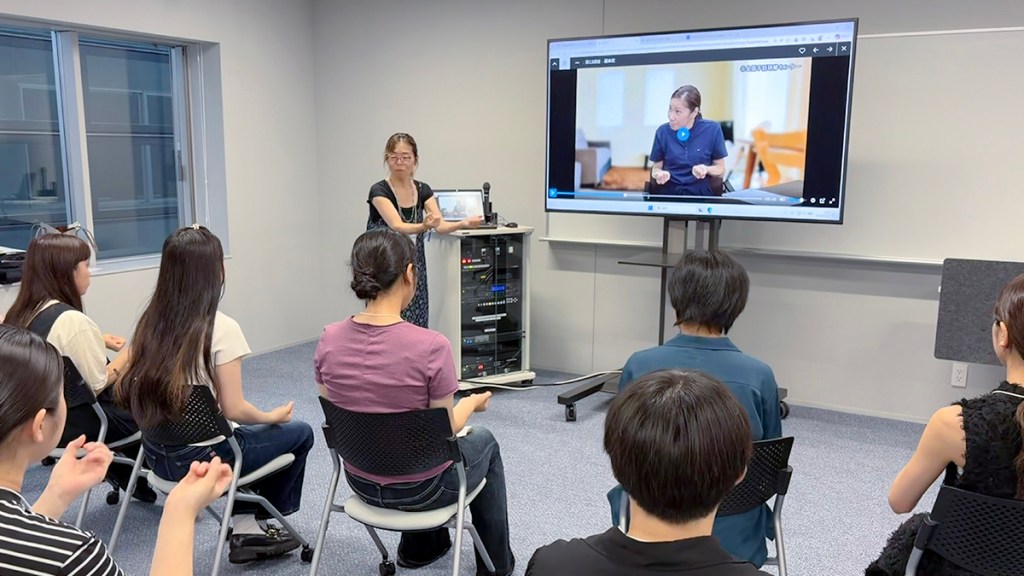
Ms. Akiyama:We operate three main divisions. First, under our Sign Language Interpreter Services, we provide human resource development (training seminars), administer the National Unified Examination for Sign Language Interpreters, and conduct sign language research. Next, we offer disability welfare services and specialized consultation support under the Services and Supports for Persons with Disabilities Act. Finally, as public benefit projects, we administer the National Sign Language Proficiency Test, promote sign language awareness, offer scholarships for overseas study, and manage the Kameoka City Living Consultation Support Center, among other initiatives.
Launching Without Major Setbacks Through Continuous Communication
Did the transition from setup to full rollout proceed smoothly?
Ms. Akiyama:Whenever questions arose, we addressed them immediately with support, allowing us to launch without any major setbacks.
You also implemented the "EC (E-Commerce)" module for content sales and payment processing.
Ms. Akiyama:Yes. With a core administrative team of just 2 to 3 staff members serving roughly 20,000 learners a year, it was clear that manual payment verification would be impossible to maintain.
Currently, in addition to the eCommerce option, we have upgraded to the Enterprise tier to accommodate our growing user base and enforce stronger security protocols.
Centralized Information Sharing: The Cloud Advantage
What specific features of learningBOX do you find most convenient?
Ms. Takei:Because we serve around 20,000 users annually, inquiry types vary greatly. When updating order statuses in the sales management dashboard, we make a point of leaving detailed records in the internal "Notes" field (Sales management). Being able to instantly share customer details and response histories across multiple staff members is a major advantage unique to cloud-based systems.
How has your experience been with customer support?
Ms. Takei:The support team is consistently thorough and responsive. When answering our queries by email, they often include screenshots and direct links, which makes everything very easy to understand.
Are there any features or enhancements you would like to see added in the future?
Ms. Akiyama:Having an AI chatbot that allows users to independently resolve basic operational questions, as well as built-in safeguards to prevent accidental duplicate purchases, would be extremely helpful.
Thank you for the valuable feedback. We will certainly evaluate these features internally.
Mobile-First Design: A Viewing System Powered by 390 Sign Language Videos
Could you describe the specific educational services you offer through learningBOX?
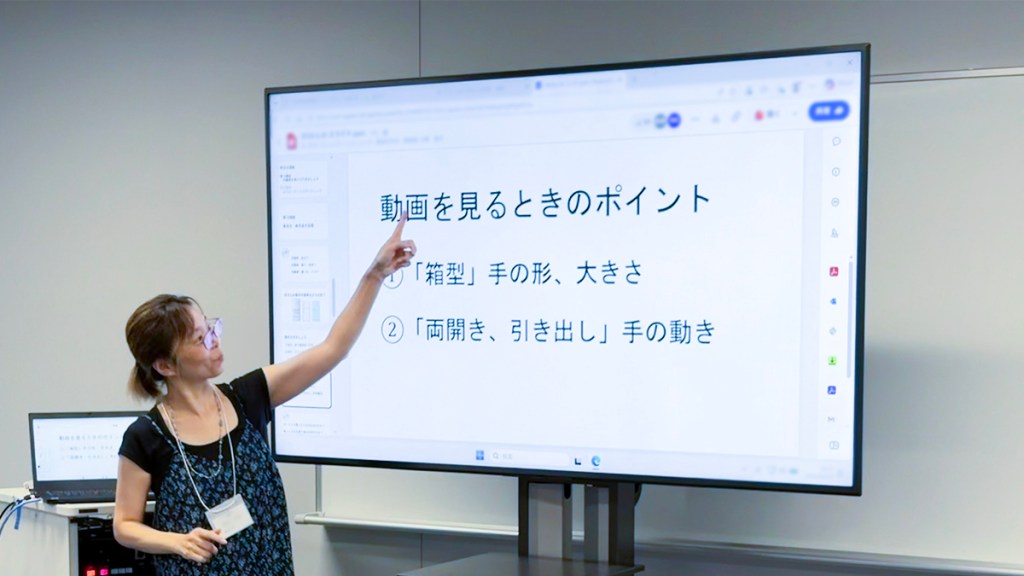
Ms. Takei:We offer a dedicated video platform called the "Sign Language Video Viewing System." For general learners, the course encompasses both the Introductory and Basic Curricula of the "Sign Language Attendant Training Course," covering Lessons 1 through 40 with a total of 390 video assets.
We have also created "Homework" modules using interactive quizzes to assess comprehension after each lesson. Since sign language relies heavily on physical movement, the vast majority of our content is video-based.
Who makes up your primary student demographic?
Ms. Takei:Most users are enrolled in municipal Sign Language Attendant Training Courses across Japan. Because many municipalities set a minimum age requirement of high school age or older, younger demographics represent a smaller share. Based on customer inquiries, the majority of our learners are middle-aged to older adults.
What were your key priorities when producing content?
Ms. Takei:Since the platform was designed primarily for mobile learning, we kept individual video lengths relatively short. Additionally, we expanded our content library to let students tailor their learning experience—for example, choosing between videos with sign language only or videos with combined sign language and Japanese text.
Content development was handled in-house alongside textbook creation, managed by two core content creators and three system administrators.
What are the specific advantages of e-learning for sign language instruction?
Ms. Takei:The biggest advantage is that students can learn at their own pace. We receive positive feedback from users emphasizing how convenient it is to study anytime and anywhere, how effective it is for previewing and reviewing lessons, and how helpful it is to adjust video playback speeds.
Payment Verification Workload Reduced to Under 10%: The True Value Lies in Content Quality
What has been the most positive outcome of adopting learningBOX?
Ms. Takei:Seeing our learners stay engaged over time. When we receive emails or phone calls from students saying, "This material is fantastic, I'm working hard on my sign language!" it makes the entire implementation worthwhile.
What changes have you observed among students and instructors?
Ms. Takei:A segment of our student base is still less familiar with digital technology, so offering dedicated onboarding support remains essential.
On the other hand, instructors using these materials report a noticeable increase in teaching effectiveness. As we enter our third year with this platform, we feel that continuing to refine these resources will allow us to serve an even broader range of generations moving forward.
How much administrative time has been saved by implementing the EC module?
Ms. Akiyama:Direct historical comparisons are difficult because sales conditions were previously different. However, considering that two staff members used to oversee payment reconciliations for 20,000 users, operational processing times have been reduced to less than 10% of what manual processing would require. That said, assisting users who struggle with digital technology continues to require dedicated support time.
Are there other tangible benefits you have experienced?
Ms. Akiyama:Annual operational costs, such as server management, have increased. However, there is no question that the system has drastically improved the accessibility and quality of our video materials. Being able to establish a future-proof educational foundation has proved immensely valuable.
Leveraging New Legislation to Expand Services as Japan's Primary Sign Language Hub
What are your goals for the future?
Ms. Akiyama:With the unanimous passage of the Act on the Promotion of Measures Concerning Sign Language (enacted and implemented in June 2025), national and local government bodies are actively promoting sign language acquisition initiatives.
Furthermore, with sign language appearing more frequently in news broadcasts, television dramas, and movies, public interest in sign language is growing rapidly both in Japan and internationally. As a central hub for sign language education, the National Sign Language Training Center will continue to expand and enhance its services, centered around our Sign Language Attendant Training Courses.
References.
■ Cabinet Office:Promotion of Measures Concerning Sign Language
Start by Having an Open Conversation
Finally, what message would you give to organizations considering learningBOX?
Ms. Akiyama:By adopting learningBOX, we successfully resolved long-standing challenges in our educational material development. To anyone hesitating, I encourage you to simply start with an initial consultation. The team will listen sincerely to your goals and provide practical, well-tailored recommendations.
Thank you very much for your valuable insights!

・Sign Language Interpretation Services
・Disability welfare services and designated consultation support services under the Comprehensive Support Act for Persons with Disabilities
2. Social Contribution Initiatives
Overseas Scholarship Office / Director
Ms. Nami Akiyama
Sign Language Services Division, Awareness and Promotion Section
Ms. Tomoko Takei


-
 Information is immediately shared with all staff! Keep up with the latest cell phone trendsNTT Marketing ACT ProCX
-
 Next-Generation AI Athletes | An Inclusive, All-Accessible Online TournamentSingularity Battle Quest Executive Committee
(Future Kids Content Research Institute) -
 Cost Reduction & 32 Hours Saved Weekly: The Impact of Micro-Learning on Student RetentionTOKYO LEGAL MIND K,K.