
[Achieved a Completion Rate of 961 TP3T–981 TP3T] Centralized Management of E-Learning for 23 Companies and 1,600 Employees | Flexible Permission Settings
 Employee Training (Training Management)
- Knowledge Sharing
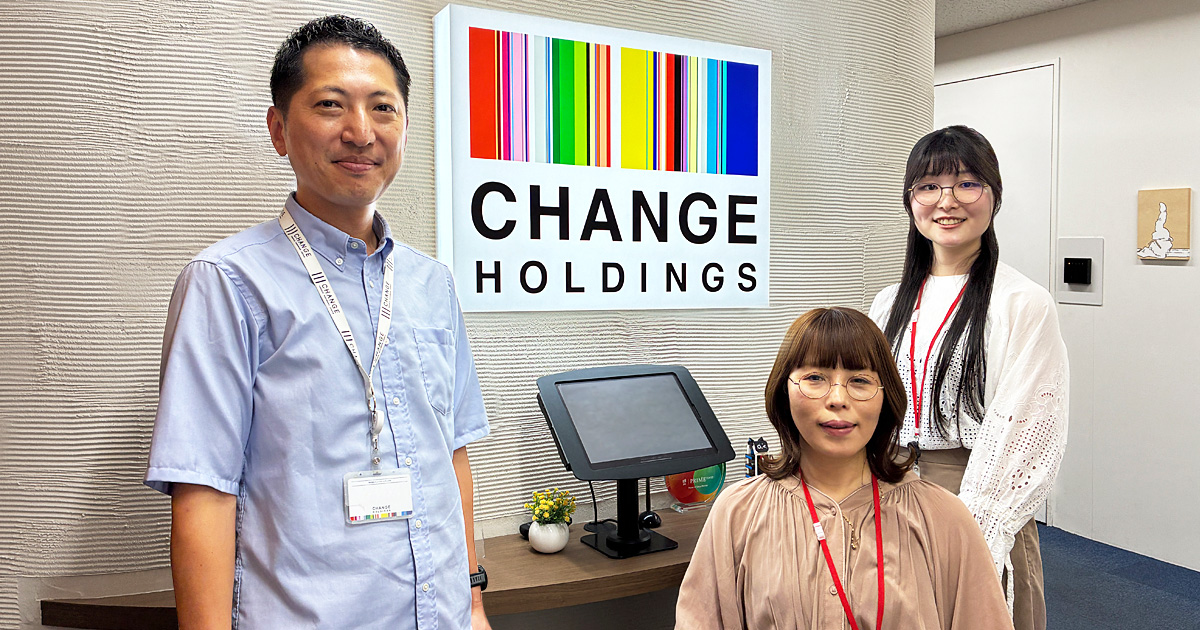
"Change Holdings Co., Ltd." is a holding company responsible for the management of group companies and shared services. Focusing on the two areas of "NEW IT Transformation" and "Publitec," the group as a whole provides a wide range of solutions. As the number of group companies expanded to around 20 over a period of two to three years, the company faced governance challenges due to the lack of a platform capable of tracking training participation across the entire organization. Consequently, they implemented learningBOX in fiscal year 2025. Led by three administrators, they built a training infrastructure serving 23 companies and approximately 1,600 employees. For mandatory training, they have achieved a high completion rate ranging from 96% to 98%. We spoke with the individuals in charge.

・Private-Sector Digital Transformation (DX) and M&A Brokerage
・Cybersecurity
2. PubTech Business
・Regional Revitalization
・Public Sector Digital Transformation
Director
Mr. Naoki Moriyama
HR Team
Ms. Ayana Yamaguchi
HR Team
Ms. Kanako Takihara
- There was no way to comprehensively track course participation across the 23 companies in the group.
- It was difficult to verify that everyone had completed the compliance training.
- There was no framework for group-wide training as such; it was left up to each company.
- There is a wide range of employment types, from full-time employees to temporary and part-time workers.
- Led by three administrators, we are able to manage the educational infrastructure for 23 companies and approximately 1,600 people.
- Achieve a completion rate for mandatory training of 961 TP3T to 981 TP3T and ensure it is verifiable.
- We were able to build a framework for group-wide training—something that had never existed before—from the ground up.
- It is now possible to flexibly design the scope of training for each employment type.
- A single system made it possible to control access for 23 companies
- Hierarchical permission design was also supported as a standard feature.
- Users could choose between two options: registration by an administrator or self-registration (a paid option).
- Change Co., Ltd., a for-profit company, had a track record as a partner of learningBOX.


Over the next two to three years, the number of group companies is expected to increase to about 20.
How are roles divided within the HR team?
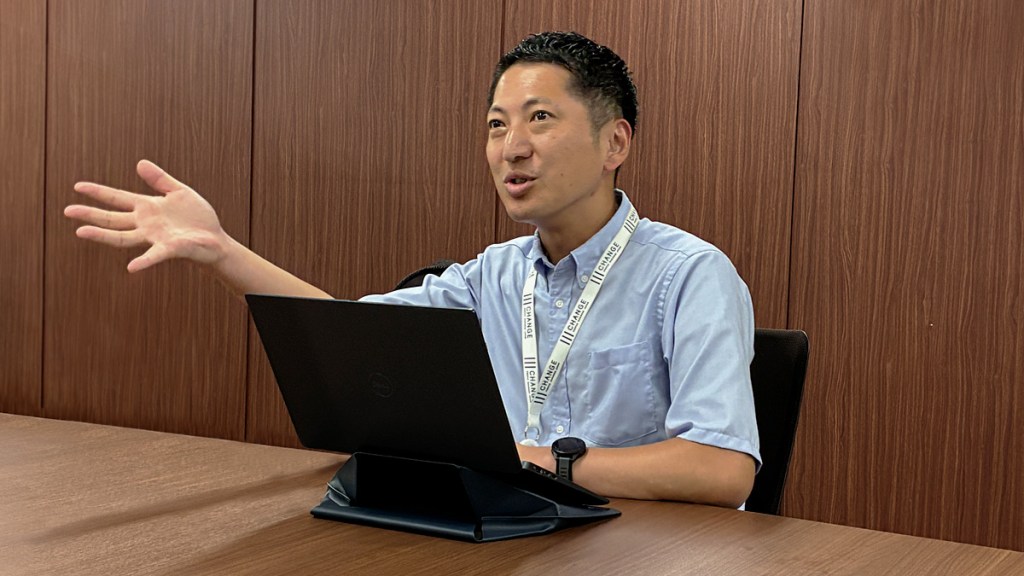
Mr. Moriyama:As the team director of the HR team, I oversee the entire department. learningBOX, which we use for group-wide training, was introduced last year, and I have been involved in its operation longer than any of the other two team members since its launch.
Mr. Yamaguchi joined the company last May and began participating in the administration of the group-wide training program partway through the program. Mr. Takihara joined the team during the preparation phase for this fiscal year’s training and is currently playing a central role in managing “CAMP” (the learning platform for the group-wide training program that utilizes learningBOX).
In leading the group, what mission has the HR team set for itself?
Mr. Moriyama:The company became a holding company in April 2023, and I joined shortly thereafter, in June of that same year. At the time, the HR team consisted of about two people, including myself, and the group still had fewer than five subsidiaries.
Over the next two to three years, the number of group companies grew to about 20. Rather than having a clear plan from the outset, this expansion was driven by the need to establish a system to properly manage and oversee the entire group as the number of companies increased.
At the same time, our company has always valued a “federal management” approach that respects the autonomy of each group company. Consequently, we currently operate with a conscious effort to strike a balance between maintaining the necessary group-wide controls and preserving the autonomy of each company.
A Governance Gap: Training Status of 23 Companies Remains Unclear
Please tell us about the circumstances that led to the decision to implement the e-learning system.
Mr. Moriyama:For fiscal year 2025, the Group as a whole has decided to implement learningBOX with the following three objectives in mind: First, as part of human resources initiatives to strengthen the Group’s competitiveness; second, to enhance the shared services provided to Group companies; and third, to consolidate and utilize educational content and know-how within the Group.
Another reason for the implementation was that, prior to its introduction, there was no platform capable of managing course enrollment and tracking progress across the group, nor was there a system in place to coordinate training for the 23 companies as a unified group.
Mr. Takihara:Since there had never been a system for group-wide training before, the introduction of learningBOX also marked the launch of a new training initiative.
Prior to implementation, there was no way to track training participation across the 23 companies within the group, and the group was unable to demonstrate or prove that all employees had completed the compliance training. This issue was recognized as a gap in group governance.
Were there any challenges you faced when launching the group-wide training program?
Mr. Moriyama:Even when it comes to how companies grow, not all growth is driven by M&A; there are also cases where companies are newly established, formed through joint ventures, or acquired and made into subsidiaries.
We did not encounter any significant opposition from stakeholders, including the executives and presidents of each subsidiary. The Group-wide training program includes topics—such as compliance training—that all employees across the Group are required to complete. As a result, we did not face any major hurdles in implementing the program.
It can also support the design of permissions required for cross-group operations.
What were the deciding factors for the introduction of learningBOX?
Mr. Moriyama:The deciding factor was the ability to deploy the system across the group’s 23 companies while properly managing access permissions on a single platform. Since viewing and administrative permissions can be configured in detail at each hierarchical level, we can operate a common training platform without having to set up separate environments for each company.
Furthermore, in addition to the fact that the operating company “Change Co., Ltd.” was a learningBOX partner, we confirmed that the platform could accommodate the authorization structure required for group-wide operations. Based on these factors, we decided to implement learningBOX as the group-wide training platform.
How long did it take from the initial evaluation to the start of operations?
Mr. Moriyama:It didn't take long to decide to implement it. One major factor was that "Change, Inc." was already using learningBOX for its external sales operations.
During the initial launch phase, members with expertise in learningBOX joined us in a supporting role. Because we had knowledgeable members on board, we were able to finalize our strategy after just two or three meetings and get operations up and running quickly.
We organized the training into three categories and established it as the "CAMP" learning platform.
What kinds of training programs are you implementing using learningBOX?
Mr. Takihara:We operate our Group-wide training platform under the name “CAMP.” Our Group-wide training programs are organized into three categories: mandatory training (covering topics such as compliance and security, and intended for all Group executives and employees), recommended training (optional learning opportunities utilizing KaWaL eLearning), and in-person training (synchronous training conducted online or offline).
Starting this fiscal year, we have also begun posting the president’s address—under the theme “Getting to Know the Group”—as video content.

How exactly is the hierarchical authorization structure implemented?
Mr. Takihara:The system is structured so that there are multiple tenants, each with its own administrator. Because the system is organized hierarchically, the basic design ensures that Company A’s learning progress is not visible to Company B’s administrator.
Even when I want to share something on an ad hoc basis with only a select few people, I find it very easy to use because creating a new group allows me to include members from different companies.
Please also tell us about how you accommodate various employment arrangements.
Mr. Takihara:The 23 companies in the group employ a diverse range of workers, including not only full-time employees but also contract employees, temporary agency workers, and part-time and casual workers. One of learningBOX’s major strengths is its ability to flexibly tailor the target audience based on the training topic.
For this fiscal year's security training, we plan to implement a process for issuing one-time accounts to approximately 2,500 part-time employees at a group company.
There are two ways to register an account: one where the administrator registers and invites the user, and another where the user registers on their own, “Self-registration" (Paid option "Customization"")—I use it because I think the ability to choose between these two options is one of its strengths.
Reproducing Both the Font and Color Scheme of "Change"—Content Design with a Distinctive Worldview
You mentioned that one of the benefits is the ability to create “content with a distinct worldview”—but how exactly is this achieved?
Mr. Takihara: Site customizer" (Paid option "CustomizationUsing “”), the HR department of the operating company “Change, Inc.” is expanding the training services it provides externally to the entire group.
The Site Customizer offers a high degree of design flexibility, allowing us to incorporate the fonts used in "Change" for the body text. Since we could also design the colors and layout to match our group’s brand image, we were able to build a training site with a consistent look and feel.
Are there any examples of people who have successfully made studying a habit?
Mr. Takihara:There is a group company that sets aside a specific time each morning for learning and participates in the recommended training programs on a daily basis. Judging by their usage statistics, they are taking a very proactive approach.
Mr. Moriyama:The company in question is “B-Cap Co., Ltd.,” a group affiliate, with a staff of just over 20 employees. Basically, everyone comes into the office, and we work side by side on a daily basis. I believe that the relatively small size of the company and the close relationships among employees have contributed to making learning a regular habit.
I believe the key to our success was that, rather than imposing a morning study session on everyone through a top-down approach, we were able to establish it as a “rule we all follow.”
Are there any specific things you keep in mind to enhance learning effectiveness?
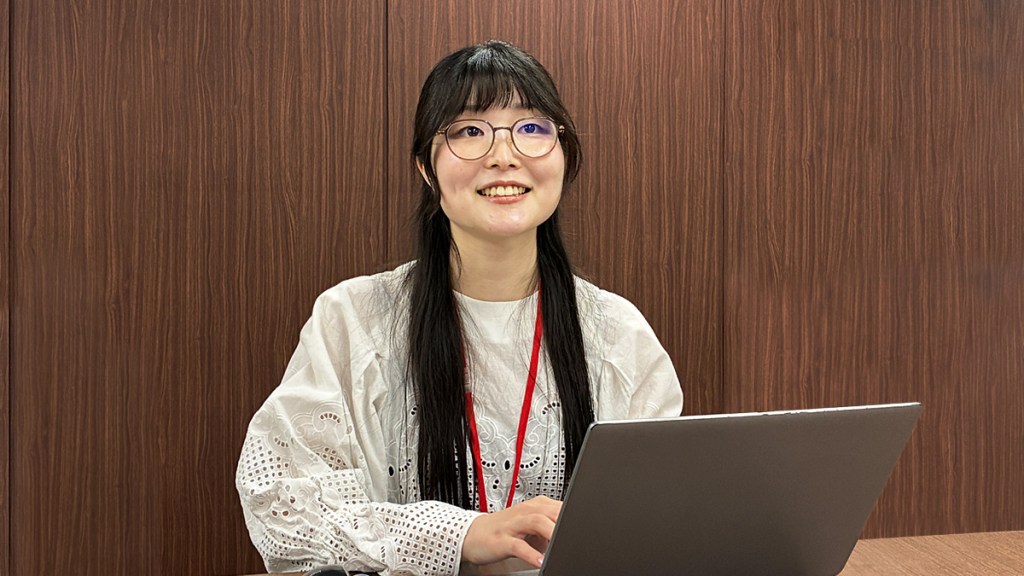
Mr. Yamaguchi:In group training sessions in particular, we place the highest priority on ensuring that participants not only understand the training content but also apply it to bring about actual behavioral changes. We have been conducting our training programs based on this approach since last year.
Specifically, we conduct surveys of participants twice: immediately after the training and one month later. We send out emails via “CAMP” to assess what behavioral changes, if any, have resulted from the training.
Visualize course participation in real time and make it easier to reach out to those who haven't taken the course
What factors contributed to achieving a completion rate of 961 TP3T to 981 TP3T for the mandatory training?
Mr. Takihara:Three administrators and training coordinators from each of the 23 Group companies work together to manage the training infrastructure, which serves approximately 1,600 employees. By establishing a new, previously nonexistent system for Group-wide training, the completion rate for mandatory training has reached a high level of 96% to 98%.
A major factor is the ability to immediately check the progress of each company and each participant. Because participation status is visible, training coordinators at each company are able to follow up with participants who have not yet completed the course at the appropriate time.
Going forward, we expect that being able to send notifications directly to the chat tool used by our group will allow us to follow up with participants who haven’t taken the course even more quickly, leading to smoother operations.
Please also let us know about any other benefits you’ve seen since implementing learningBOX.
Mr. Takihara:During interviews with group companies, some respondents mentioned that it was helpful when business partners inquired about the status of their employee training programs. Particularly in businesses involved in public-sector digital transformation (DX), the status of employee training can be one of the factors used to assess a company’s reliability.
With the implementation of learningBOX, we can now immediately check training completion status, which has enabled us to respond quickly to inquiries from business partners. In addition, the completion rate for mandatory training within the group has reached 96% to 98%, and we are utilizing these results in our J-SOX (Internal Control Reporting System) reports.
As the group’s sole shared tool, it serves as a hub for reporting, communication, and consultation
Please share your outlook for the future.
Mr. Takihara:Currently, there is no common platform—such as a portal site—that can be used across the entire group. As a result, “CAMP,” the learning platform for group-wide training that utilizes learningBOX, is one of the few common tools available for use across the group.
Going forward, we intend to manage this platform more proactively—not merely as a training resource, but also as a space that fosters connections within the Group. For example, just as we made the CEO’s address during new employee training available to the entire Group, we plan to increase the number of content offerings and initiatives that help employees at each company deepen their understanding of the Group.
The flexibility of permission design is particularly beneficial for organizations that operate multiple legal entities and multiple locations.
Finally, could you share a message for companies and organizations considering implementing this system?
Mr. Moriyama:For organizations with multiple corporate entities or locations, it is important to have flexibility in permission settings with an eye toward post-implementation operations. Since learningBOX allows for granular configuration of viewing and management permissions for each company or location, we find it easy to adapt to group-wide operations.
I believe this will be a strong option for organizations that want to go beyond simply using training within a single company to establish a group-wide talent development foundation and a shared services-based learning environment.
Thank you very much for your valuable insights!

・Private-Sector Digital Transformation (DX) and M&A Brokerage
・Cybersecurity
2. PubTech Business
・Regional Revitalization
・Public Sector Digital Transformation
Director
Mr. Naoki Moriyama
HR Team
Ms. Ayana Yamaguchi
HR Team
Ms. Kanako Takihara