
Leading Students to Success through Mobile-Optimized Learning
 Cram Schools

Shoryo Gakushu-juku (cram school) specializes in small-group instruction, strictly limiting enrollment to 10 students per grade to provide "Individualized Optimization." For two consecutive years, every student at the cram school has successfully passed their public high school entrance exams. A key driver of this success has been the transition from traditional paper-based methods to a smartphone-integrated learning style, which has successfully solidified daily study habits. The academy utilizes learningBOX to host its proprietary content, smartphone learning, providing an optimal environment tailored to each student's progress. We spoke with the school's representative about the implementation process, specific use cases, and the future vision for the smartphone learning.

Mr. Shogo Akimoto
- Needed to secure consistent learning opportunities and solidify student study habits.
- Needed to provide a reliable alternative when in-person sessions are no longer feasible.
- Paper homework made it difficult to track real-time progress or identify genuine areas of weakness.
- The workload on instructors and improve operational efficiency needed.
- Smartphone learning has become a daily habit, ensuring continuous learning even when in-person classes are restricted.
- Successfully established an environment that ensures learning continuity, even when in-person instruction is restricted.
- Learning progress is now visualized in real-time, making it impossible for students to skip steps and clear where they struggle.
- Homework verification time was reduced by approximately 70%, significantly alleviating the burden on instructors.
- Intuitive interface for students
- A clean UI that boosts student motivation
- Accurate tracking of learning history and performance
- Ability to execute the academy’s core philosophy: "Thorough Review"


Delivering Individualized Optimization
Please tell us about the unique characteristics of your school.
Located in Uraga, Yokosuka City, we are a preparatory school limited to 10 students per grade. With a team of four instructors, we ensure that every student receives meticulous, personalized support.
Our focus is on making their dream come true by ensuring students develop the disciplined study habits necessary to win their own success.
Please tell us your background.
Beginning in 2010, I served as an instructor at a major preparatory academy in Kanagawa Prefecture, where I managed large-scale group instruction for dozens of students. Driven by a vision to provide truly personalized, 'individualized optimization' for every learner, I established this academy in 2018.
What are some of the advantages of small classes?
The biggest advantage is knowing exactly who understands what, and to what degree. In large-scale schools, there is a limit to how deep you can dive into an individual’s specific weaknesses.
In our small-group setting, we identify the exact point where a student is struggling and provide targeted guidance.
Creating a System for Bulletproof Study Habits
What was the background behind the need for an e-learning system?
Our primary objectives were to secure consistent learning opportunities for our students and to further solidify their study habits. There were periods when social shifts made in-person instruction difficult, but I was determined to avoid any environment where learning might come to a halt.
Consequently, I recognized that establishing an e-learning infrastructure, one that enables study regardless of location, was an urgent priority, which led us to begin evaluating potential systems.

Could you describe the challenges you faced prior to implementing the system?
With paper-based homework, it was exceptionally difficult to track student progress in real-time. We had no way of verifying if work was actually completed on the stated date, where students were struggling, or their actual level of mastery.
To be perfectly honest, paper assignments are easy to "fudge"—if I were a student, I would likely look for the easiest way out as well. We often encountered cases where a student’s work was marked with perfect scores, but upon further review at the cram school, it became clear they hadn't truly grasped the material.
I realized we needed an e-learning system that provided real-time learning logs to rectify this. Additionally, providing individualized, optimized instruction can be a significant burden for less experienced instructors, so optimizing staff operations was another primary goal.
Usability, Visibility and Management
How did you first discover learningBOX, and what sparked your interest?
I have always prioritized "thorough review" and was already using simple, self-made fill-in-the-blank materials. I wanted to elevate these into a more professional, user-friendly format.
When I searched for "e-learning systems," learningBOX was the first result. I tested the system by uploading my existing questions, found the operation to be seamless, and then introduced it to my students.
Their positive response and the clear potential for improved learning outcomes led to the final decision for full implementation.
What were the ultimate deciding factors?
First was the visual clarity and intuitive interface for students. During the trial phase, seeing students feel that they could "keep this up every day" was a major factor.
Since I believe repetitive learning is the only way to ensure retention, it was vital that the platform was easy to use at home on days they don't attend the cram school.
From an administrative standpoint, the management features were highly attractive. Being able to review learning history and grades at a glance gave me confidence that we could achieve both "solidified study habits" and "thorough review." The system records exact timestamps, which significantly reduces the monitoring burden on our instructors.
An Evolving Platform from Student Feedback
Did the transition from implementation to full-scale operation go smoothly?
It was very seamless. Our stance was simply to "learn by doing," and we didn't encounter any technical hurdles.
Tell us about the smartphone learning platform you developed.
"Smartphone learning" is an online exercise series hosted on learningBOX, primarily for junior high students. While we value daily study habits, paper exercises reached their limit.
We call the platform "Pochi-gaku," combinning the tapping sound (pochi-pochi in Japanese) on a smartphone with "study" (gaku).
What are the key features and priorities of Pochi-gaku?
Our focus is on empowering learning. Every question includes detailed explanations that encompass not just the answer, but relevant peripheral knowledge.
We found commercial workbooks for high school entrance exams often lacked sufficient detail, so we focused on ensuring students understand the "why."
In our region, exams often require combining multiple pieces of knowledge, so we’ve designed the content to help students memorize related concepts collectively.

How frequently do you update the content?
Essentially, we update daily. During exam seasons, we accelerate this based on student requests for specific problem types.
It’s a never-ending process of improvement, often handled during late-night hours. We’ve recently added elective subjects like music, and we believe that the most important thing is to continue without giving up. Our database now exceeds 9,600 questions.
No Installation Required, Instant Start from your Browser
What specific features do you find most useful?
The fact that it is browser-based and requires no installation is a huge advantage. It eliminates setup barriers for both students and teachers.
Additionally, being able to verify homework in a matter of seconds is invaluable. For deeper analysis, we can export data via CSV export, allowing us to balance quick daily checks with thorough periodic reviews.
What features would you like to see enhanced?
Data analytics and the accuracy of recommendation engines are our top priorities. I would love to see the system evolve to analyze not just "what" was missed, but "why," and then automatically present the optimal review content for that individual.
What is your impression of the sales and support team?
The manual and support site (How to Use) are so comprehensive that we haven’t encountered any major difficulties. Because we can usually resolve issues ourselves by simply exploring the platform, we actually haven't had to contact support directly yet.
Solidifying Study Habits and Improving Instruction Quality
What specific results have you achieved since implementing learningBOX?
The most significant change has been the definitive establishment of student study habits. Learning via "Pochi-Gaku" has become a daily norm. As a result, there has been a dramatic increase in students arriving at class having already mastered the foundational material.
With paper-based homework, there were cases where a student’s work was technically correct, but lacked true understanding—or they had simply copied the answers. Now, because learning history is recorded in real-time, students feel a sense of accountability. This shift has led to a clear improvement in the quality of their learning.
Consequently, we no longer need to spend the beginning of each class reviewing or redoing homework, allowing for much smoother lesson progression. Seeing the results of "Pochi-Gaku" translate into higher grades has also deepened the bond of trust between students and instructors.
What changes have occurred on the administrative side?
Digitalization has eliminated the need to print or copy homework and quizzes, reducing preparation time for paper materials to zero. While we previously kept our printers running at full capacity, paper and ink costs have now been entirely eliminated.
Furthermore, because we can instantly verify homework via a centralized list, the time required for checking assignments has been reduced by approximately 70%. This time is now reallocated to lesson preparation, significantly optimizing our operations.
As a result, we have created an environment where we can finish work earlier than the industry average. Being able to leave while restaurants are still open has allowed our staff to enjoy dinner together after work.
Additionally, our graduates often return to work as instructors, which effectively mitigates any labor shortage concerns.
What kind of feedback have you received from the students?
Students tell us that the platform makes it easy to study anytime, anywhere. They appreciate being able to see their progress and weak points, and having a visible goal keeps them motivated. In the classroom, we see students encouraging one another, asking things like, "What’s your completion rate so far?"
Also, parents have noted a visible change in their children's motivation. We’ve received a great deal of positive feedback regarding our transition to e-learning and the increased enthusiasm for study it has fostered.
Collaborative Content Development
Please share your outlook for the future.
We aim to evolve "Pochi-Gaku" both in content and functionality, with a view toward external distribution. Beyond the five core subjects for junior high students, we plan to expand into specialized practice for entrance exams and periodic tests. I also hope to collaborate with other academies for joint content development to meet diverse learning needs.
If our requested feature enhancements are realized, I believe we can eventually provide high-quality, individualized learning to students nationwide.
See the Difference it Makes
Do you have a message for those considering learningBOX?
You don’t need to master complex features right away. We started with the simple step of uploading questions and letting our students use them.
learningBOX provides a powerful foundation from day one, and its value becomes even more apparent the longer you use it. If you are on the fence, I highly recommend simply trying it for yourself.
Thank you very much for your valuable insights!

Mr. Shogo Akimoto




-
 first shotSupporting individual students by visualizing their learning statusHokuriku Gakuen Educational Corporation
 -
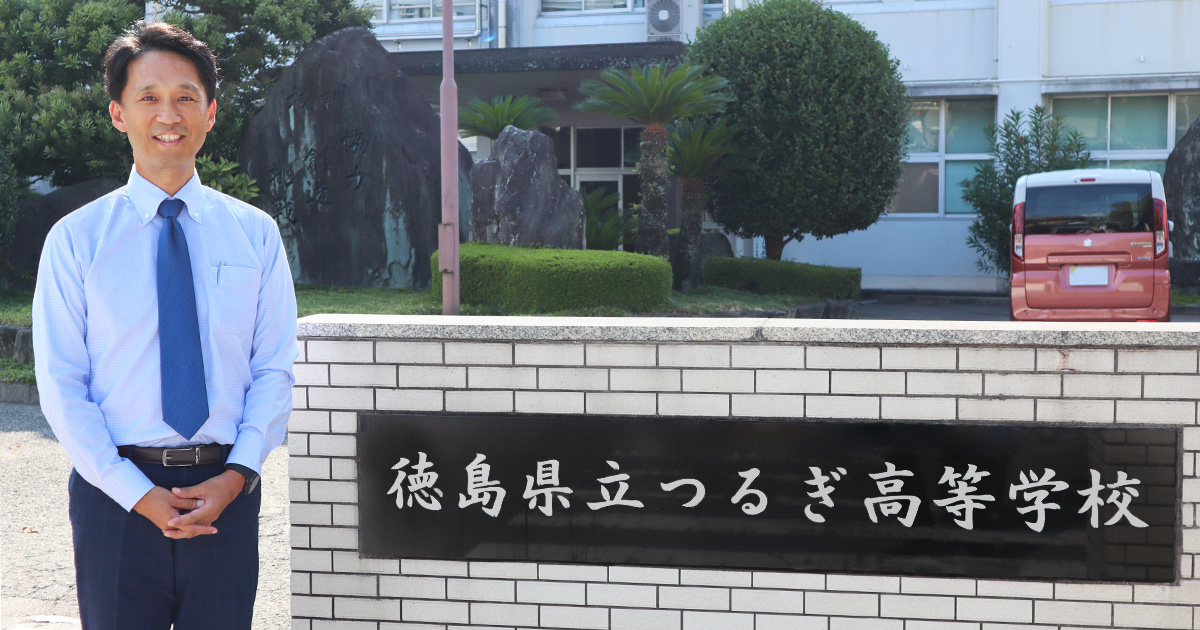 Special article availablePublic High Schools: Smartphone Learning Improves Basic Academic Skills and Motivation of Students Who Are Not Good at StudyingTokushima Prefectural Tsurugi High School
 -
 [Small Start] Credentialing Business | E-Learning Strategies for Stable Operations with Minimum StaffingiBridge Japan