
Turn Teacher Feedback into Student Confidence
Build Stronger Bonds with learningBOX

Tokushima Prefectural Tsurugi High School is a vocational high school with technical and commercial departments. A teacher who introduced learningBOX and struggles daily to improve the basic academic skills of students who do not know how to learn and have little motivation to study. This article is an interview with the teacher about the deepening of the bond between the teacher and students through learningBOX and concrete changes in the learning environment, which could not be fully described in the case study page.
Click here for a case study of Tokushima Prefectural Tsurugi High School
 participant
-
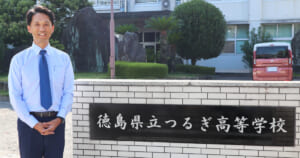
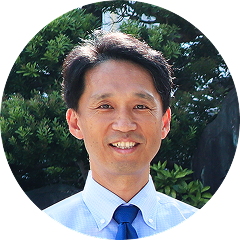 Tokushima Prefectural Tsurugi High SchoolChief of Education Information SectionOsamu YamadaHis subject is science, specializing in physics. As head of the Department of Educational Informatics, he has been instrumental in promoting the use of learningBOX on campus. Advisor of the mountain club.
 -
 listenerDeputy General Manager of Planning Department and PdM, learningBOX Co.Tomohiro Otani
As a "learning partner" for high school students, we also prepare them for examinations and certification tests.
Otani:After learningBOX was actually introduced, did everything go smoothly until the start of operations?
Mr. Yamada:Yes, it was very smooth. learningBOX service itself is really easy to use and I have never asked for support before.
Otani:Thank you very much. What were some of the important points that you considered when implementing learningBOX, especially in a high school environment?
Mr. Yamada:In particular, we thought that it would be very effective in the preparation for the certification exams that we are working on at the vocational high schools. The reason for this is that the questions can be created by themselves and can be given in a variety of formats.
In the preparation for examinations, not many exercises are available. We thought that if each teacher could create their own questions, it would lead to more opportunities for students to study independently.
Otani:I see. So in addition to use in club activities and subject guidance, you are also planning to prepare for qualification exams.
Mr. Yamada:I am right in the middle of a job search right now, and I know there is a section on my resume where I can list my qualifications. We want to make sure that you get as many certifications as possible to help you get a job.
Since many of the examinations are in five- or four-question format, the learningBOX is the perfect place to practice.
Otani:We have a proven track record of being used by universities and other institutions to prepare for certification exams, and we would be happy to help you.
Tracking the progress of assignments and using the percentage of correct answers has led to deeper instruction.
Otani:In your daily use of learningBOX, what do you find "easy to use" and "convenient" about this function?
Mr. Yamada:The student's " State of ProgressBefore using learningBOX, we used to distribute work and hand in handouts for students to submit, but in this case, we could not see how much the students were working on until they submitted their work.
With learningBOX, you can also see the progress of the work in progress, so if a student is approaching the submission date but has made little progress, you can talk to him or her before the deadline and guide him or her to meet the due date.
Also, since the percentage of correct answers can be checked for each question, it is possible to ascertain which questions the students understand well and which they do not, and reflect this information in future study guidance. We strongly feel that these benefits are beneficial to both teachers and students.
Since I can immediately see how the students are doing, it is easy for me to talk to them, and I feel that this motivates them.
Otani:It is good for the students to have a sense of security that they are being watched. Are there any problems or points that you would like to see improved after the introduction of learningBOX?
Mr. Yamada:As I said, the biggest problem is the time and effort required to create questions. If a question creation service can be provided for a fee, the number of teachers who use learningBOX may increase. I believe that if students see their students working on content that I have been involved in, they will overcome their difficulties.
We would also like to be able to easily output in CSV the growth rate of each student's grades, etc. for use in evaluation. It would be useful to display the percentage of correct answers for each class, etc., and to have attendance numbers for tallying the results for use in the school setting.
Moreover,Creating questions in the textoften and would like to see more detailed explanations on the official website.
Otani:Indeed, it would be easier to manage if attendance numbers could also be linked. We will bring your request back to the company for further consideration.
I feel that the quality of the exercises has improved through repeated study. Test scores also changed.
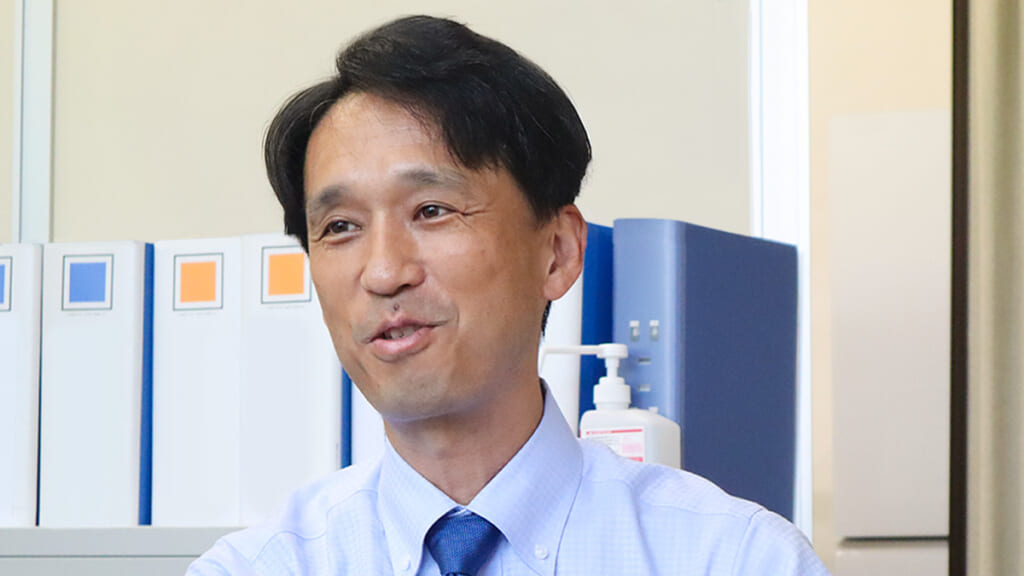
Otani:Please tell us about the features of learningBOX that teachers often use and the format of the questions.
Mr. Yamada:Basically, "multiple-choice questionThere are a lot of "I'm not sure what you mean by "I'm not sure what you mean byShort answer and Sequencing", "Fill-in-the-blank", "Multi-short answersI also use the "I'm a good person" and so on. I think it is very good to be able to create questions in various formats.
Solve the same problem over and over until the achievement rate is 100% (master mode) This is a great way to consolidate knowledge, right?
Otani:You said that about 20% of the teachers are using learningBOX, but how are other teachers using it?
Mr. Yamada:Recently, a young teacher in charge of social studies has been using the learningBOX to have his students do exercises before a test, and he said that overall the test scores were too high and that he may need to adjust the level of difficulty.
I think that society and learningBOX are a good match, as they can also build a foundation of knowledge and develop applied skills.
We are working hard to expand the use of the learningBOX for other teachers to use.
Otani:The effect is excellent. It is also quite difficult to set the questions at just the right level of difficulty. Do you yourself feel a difference in the percentage of correct answers by your students when you are using learningBOX and when you are not?
Mr. Yamada:Yes, I have found that the number of correct answers to simple memory questions increases. For example, simple memory questions, such as the names of cell parts, increase the percentage of correct answers. However, if the question is one that was covered in class but not in the learningBOX, the percentage of correct answers will drop dramatically.
The students also seem to realize that they can get some points if they do the learningBOX and not if they do not. We feel that the quality of the problem practice has improved through repeated work.
Otani:There is a good trend developing.
Expanding use of learningBOX among teachers and the creation of teaching materials
Otani:It sounds like your students are responding well, but how are you encouraging other teachers to use the learningBOX?
Mr. Yamada:First, we explain to teachers newly appointed in April that we are using such a service (learningBOX). For those teachers who are personally interested, we explain the details to them individually.
Even now, several teachers have expressed interest in using the new system. The principal has also said that we should promote learningBOX, so we are also thinking of forming a study group-like organization with young teachers as the core.
Otani:I would like to see the use of LearningBOX spread from young professors. The teachers are sharing case studies of its use with each other.
Mr. Yamada:I myself am in the process of creating a format that teachers can utilize when creating questions. And I am committed to creating a wide range of content for other teachers to use as a reference.
If we have a large number of questions available, students will be able to choose the questions (courses) that are appropriate for their level of study, right? It still requires more than a little effort on the part of the faculty, but the response from the students has been positive, so we are eager to do our best.
Repeated learning deepens understanding and increases motivation
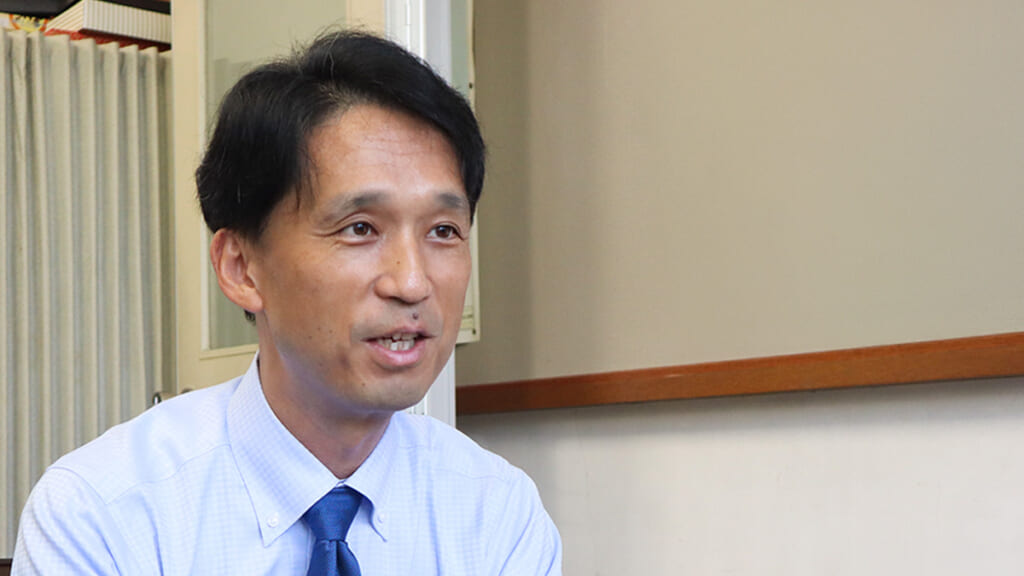
Otani: Have there been any changes in your students before and after the introduction of learningBOX?
Mr. Yamada:Many students did not know how to learn, but by using the learningBOX, I believe they have come to understand the key points. I feel that the students are now able to see the lines of the assignments clearly, which makes it very easy for them to work on them.
In the past, when I only had work assignments, some students would end up copying the answers as they were. Even serious students worked hard to solve the problems and ended up correcting their mistakes with a red pen.
However, since the learningBOX questions are repeated until the achievement rate reaches 100%, I think the quality of study has improved. It is a big change to see students motivated to study.
Otani: That is a pleasant change. Has the way you communicate with your students changed?
Mr. Yamada:Yes, I do. As mentioned earlier, I can tell when a student is close to a submission deadline but has not made any progress, so I ask, "Are you okay? I say to them, "It's not done.
Then, when I am sure that they are learning properly, I may ask them to tell their homeroom teacher, "00-kun, you are doing well. The students are very happy when I do so.
Otani:Your teacher really checks your learning status very carefully.
Mr. Yamada:Students who are not good at studying or do not know how to learn often forget to do it. Just by saying a few words to such students, they will make it a priority and do it. The students will also know that you are watching them.
During a long vacation, I once gave a personal make-up assignment to a student who did not perform well on a final exam. They were contacted through their homeroom teachers. It is good that they can do it at home with their smart phones without having to come to school to take the make-up work.
Otani:It is a great advantage of e-learning that it does not depend on location. Do all of your students use smartphones?
Mr. Yamada:The overwhelming majority of students use personal smartphones rather than tablets distributed by the school.
From "I don't know" to "I got it! to "I got it!" The learningBOX brings out the potential of students.
Otani:Have you seen an increase in the number of students who study independently since the introduction of the learningBOX?
Mr. Yamada:I think the number of students has increased. Even students who are not good at studying are working hard. During self-study time, some students just sit around or sleep, but when I give them assignments on the learningBOX, I can see who has done what and how far they have gone, so they can't skip class.
It seems that a sense of competition is also emerging as students glance at the progress of other students and say, "She's already done a percentage of the work, so I'll do my best, too.
In the past, some students would submit assignments after the test that should have been submitted before the test, but with the learningBOX, they can now submit them after the test.Access periodI started to study hard to meet the deadline because I had to set up a "no-access" system.
Otani:Surely, if you don't work on it, you will soon find out. do you have any memorable episodes with your students related to learningBOX?
Mr. Yamada:As mentioned earlier, we utilize the "Master Mode," which displays the level of understanding in percentages, but we also enjoy working on it with students as if it were a game.
In a lively class, when the students watch their progress in real time and say things like, "XX-san has reached a certain percentage," or "□□-kun has cleared the test," the class gets very excited and works on it without losing a beat. The students are very excited and are working hard to beat the others. I think the students feel a sense of accomplishment because they can visualize their level of understanding.
This is a side note, but in the past we have held quiz competitions using the learningBOX at cultural festivals.
Otani:That sounds like a lot of fun. What do you actually hear from your students?
Mr. Yamada:Some of the students said, "It's good that I can learn the wrong problems over and over again," or "I can get good scores on the tests because of the hard work I put in. At first, some students complained, "I don't understand this at all," but they found it rewarding because they could easily see their mistakes and repeat them until they got them right.
In fact, we receive quite a few requests from students to incorporate the learningBOX into classes that do not have it. We also hear from teachers that they have been asked by their students to make use of learningBOX.
Otani:I see that there is a strong demand from students. We would like to expand from these places, little by little. Do you have any other comments or requests from students?
Mr. Yamada:In fact, for this interview, I conducted a brief survey of the forty or so students I am in charge of, asking them how they feel about using learningBOX. Let me introduce some of their comments.
When asked what they liked about using the system, the following responses were given: "I was able to get above average scores on tests," "I liked being able to go home and study on my phone," "My grades on the basic chemistry and biology tests improved," "I was able to review the material many times, which was convenient," and "I could quickly remember when I took the test. The answers were "It was good that I could study more than the average on the test.
When asked what improvements they would like to see in the program, some respondents said, "I would like the display of unanswered questions to be easier to see," "I would like the achievement rate to be easier to understand," and "I sometimes skip questions when moving on to the next question.
Otani:Thank you for taking the time to give us your feedback. It is very helpful to hear your real voice. We will share your requests internally and consider them in the future. Thank you very much for sharing various valuable stories with us.
Thank you very much for your valuable insights!
▼Use Case in Education

-
Discover rich featuresService Guide

-
Feel free to contact usGet in Touch

-
Try our Free PlanTry Free Plan