Reskilling for Regional Revitalization| Reducing Operational Load through Tool Integration
 Content sales (B2C)
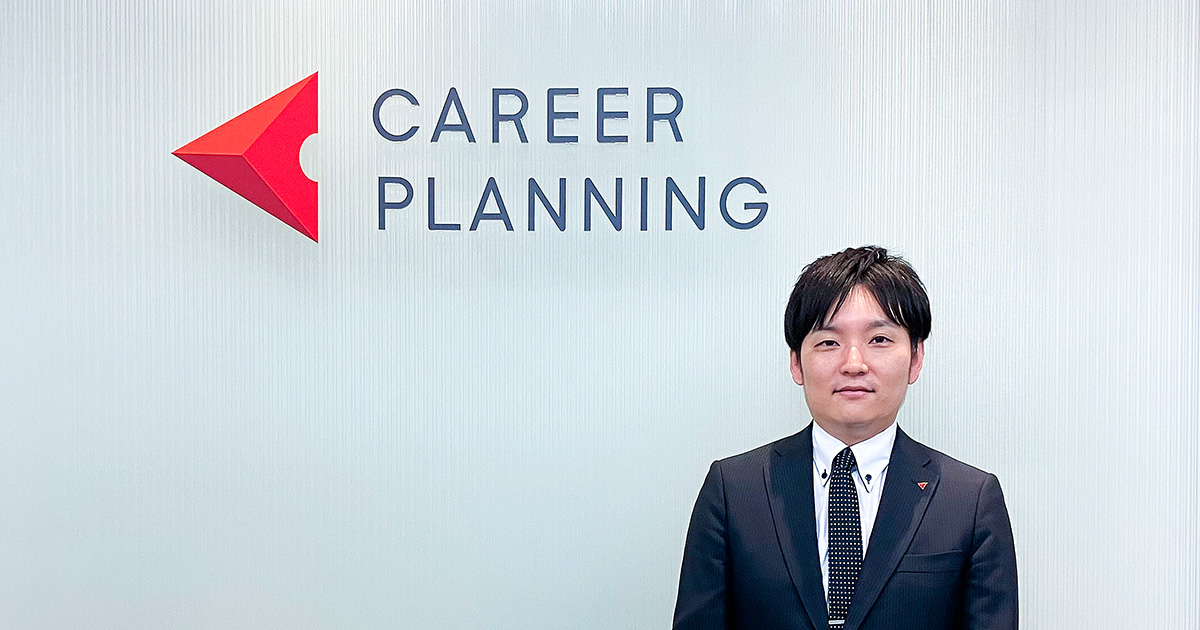
CAREER PLANNING Co., Ltd. serves as the "External HR Department for Local Companies," primarily in Okayama Prefecture and extending to Hiroshima, Kagawa, and Ehime. The company is dedicated to job creation and human resource development within these regions. In response to the chronic shortage of IT talent in local areas, they established the "Capla Engineer School." However, they initially faced challenges such as recruitment being limited to once a year and a high operational burden. To overcome these obstacles, the company implemented "learningBOX" to centralize their learning management. As a result, they now accept new students four times a year and have established a cycle where graduates successfully find employment at local companies. We spoke with Mr. Tomoyuki Yamamoto, the project lead, about how the school has evolved into a "reskilling foundation" that aids regional revitalization, the results achieved through learningBOX, and their vision for the future.

2. Job placement
3. Human resource development
4. Outsourcing
Career Development Group
Manager
Mr. Tomoyuki Yamamoto
- Management burden was heavy due to the use of multiple tools for school operations.
- Recruitment was limited to once a year because of live classes, leading to missed opportunities.
- The shortage of local IT talent was becoming serious, necessitating increased training opportunities for inexperienced individuals.
- The consolidation of systems led to improved operational efficiency and a significant reduction in workload.
- Increased enrollment opportunities led to a decrease in missed opportunities. Indirectly contributed to revenue from staffing and recruitment through job placement support for school graduates.
- Realized the construction of a reskilling foundation that benefits both companies and job seekers, aiding regional revitalization.
- Sufficient learning functions were available.
- Low operating costs
- There were detailed functions that improved learning effectiveness and a sense of ease of use felt through hands-on experience.
- Customer support during the trial period was prompt and polite, providing a sense of security.


Opening a School that Connects Local Companies with People Aiming to Become IT Engineers
First, please tell us about your company's business and your own responsibilities.
As the "External HR Department for Local Companies," we provide services primarily in Okayama Prefecture, as well as Hiroshima, Kagawa, and Ehime, working on regional employment creation and human resource development. Through our staffing, recruitment, human resource development, and business contracting businesses, we support the growth of both people and companies.
As the person in charge of the Capla Engineer School, an online school for those aiming to become IT engineers from an inexperienced background, I am responsible for a wide range of tasks including content development, recruitment and marketing, operational design, and serving as a sub-instructor for grading assignments, supplementary lectures, and counseling.
Please tell us about the features of the "Capla Engineer School."
We launched it in June 2022 with the aim of resolving the IT talent shortage in regional areas. A key feature is that, in addition to providing support for programming learning, as a comprehensive human resources service company, we can consistently provide support all the way through to career changes.
Could you tell us about the demographics of your students?
About 80% of the students are women, primarily in their 30s. Many people join the school while continuing their current jobs, thinking about their future careers and aiming for a career change to become an IT engineer.
Since our main business is human resources services, I have the impression that many people proceed to enrollment following a consultation about switching careers to IT engineering. Furthermore, after graduation, the main cases involve people changing jobs to local IT companies.

I heard that the background of the school's launch involved requests from local companies.
For local system developers, recruiting IT engineers has grown increasingly difficult each year, as 'job-ready' talent remains concentrated in urban hubs. Conversely, we noted a rising number of local companies expressing a willingness to train motivated individuals, even those without prior experience. This led us to develop a framework where we provide the foundational education ourselves, bridging the gap between local businesses and aspiring engineers who have mastered the necessary basics.
Aiming to Reduce the Operational Burden of Multiple Tools and Expand Recruitment Opportunities
What challenges led you to consider implementing a new e-learning system?
During the first and second terms of the "Capla Engineer School," the program relied primarily on weekly live sessions via Zoom. We used a combination of tools such as Slack for communication and Box for file sharing, to manage assignment submissions.
This fragmented approach created a heavy administrative load. Furthermore, the live format made it difficult to run multiple cohorts simultaneously, restricting our recruitment to just once a year. This meant that even when we received inquiries about career changes outside of those windows, we were unable to accommodate them, leading to missed opportunities to provide essential learning to the community.
That challenge became the catalyst for considering an e-learning system, didn't it?
Exactly. To offer more flexible start dates, we decided to transition to an online learning format centered on video content from the third term onward.
We began looking for an e-learning system that could centralize both learning management and material distribution, allowing us to create an "anytime, anywhere" learning environment.
learningBOX for the perfect balance of functionality and cost
How did you first learn about learningBOX, and what specific features caught your interest?
We started by defining the essential functions we needed. While we used a different system for internal employee training, the costs didn't align with the budget for this school project, so we needed a more suitable alternative.
We discovered learningBOX through an online search and were immediately impressed by its low implementation cost, robust feature set, and industry awards. We decided to start with the Free Plan to test its reliability.
I understand that it took about three months from initial consideration to full implementation. What were the final deciding factors?
First and foremost, the platform met every technical requirement for our specific learning environment while offering exceptional cost-performance. Another major factor was the support; during the trial period, the team's responses were prompt and professional, giving us great confidence in the service.
Once you actually used the system, which features stood out to you?
Initially, we focused on basic needs like video hosting and student management. However, once we started using the platform, we discovered high-value features like Prerequisites and Disable skip playback. These specialized functions are incredibly effective at ensuring learning integrity and were a major plus from an operational standpoint.
Efficiently Operating an Online School with an All-in-one System
How do you currently utilize and operate learningBOX?
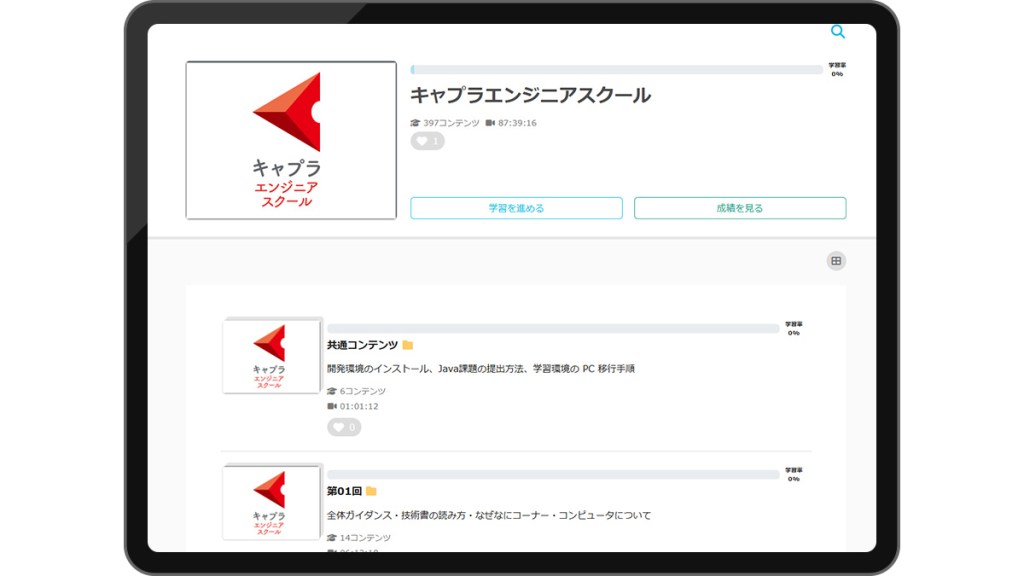
It serves as the primary platform for the Capla Engineer School. Students watch training videos and submit programming assignments directly on learningBOX, where instructors grade them and provide feedback.
We also use the platform to distribute an Information Technology Newsletter once or twice a month, keeping students updated on the latest IT trends and technologies.
Which types of content and functions do you find yourself using most frequently?
We primarily use video and PDF for core content and Report assignment for student submissions.
In technical education, steady progress is vital. By using prerequisites, we’ve built a structured path where a student must watch a specific video to unlock an assignment, and pass that assignment before moving to the next module. This ensures they truly understand each step before proceeding.
Could you describe the structure of a typical learning session?
Each session is divided into four videos: previous assignment explanation, review digest, main lesson, and next assignment overview. This flow guides students smoothly through the material. The main lesson usually runs about an hour.
Enriching the Student Experience
What aspects of learningBOX do you find most convenient?
The UI is intuitive and very easy to navigate. On the administrative side, the permission settings are highly granular, and from the student side, the learning path is clear and logical. As mentioned before, features like prerequisites and disabling skipping playback have been instrumental in improving overall learning outcomes.
Are there any areas where you would like to see improvements?
Overall, we are very satisfied, but there are a few technical requests. For programming assignments, we currently have students package ".java" files into ZIP folders because they cannot be attached directly to reports. It would be much smoother if those file types were supported natively.
Is there anything else that would help your operations?
More flexible learning time management would be a great addition. If we could aggregate self-study time alongside the time spent on learningBOX, we could get an even more accurate picture of student engagement.
We’d also love to see more complex logic in the completion requirements, such as linking multiple conditions together.
Thank you for that feedback; we will share it with our development team. How has your experience been with our sales and support teams?
The support has been excellent—very prompt and helpful. Since there are still many features we haven't explored yet, it would be wonderful to have a regular consultation a few times a year.
Getting advice on how to combine specific functions to achieve our goals would provide us with great new insights.
A Learning Foundation that Drives Growth for Students, Operations and the Region
What kind of impact has learningBOX had since its introduction?
While we are still gathering long-term data, the immediate effects are clear. Operational efficiency is the biggest win. Moving from multiple disparate tools to a centralized platform means everything is easier to manage, find, and track.
Has it changed how you manage your day-to-day operations?
Significantly. When we did live classes, staff had to be present for evening sessions once a week. Transitioning to video-on-demand has freed us from those irregular hours. Instructors can now reallocate that time to developing even better course materials.
Furthermore, we’ve reduced opportunity loss by increasing enrollment from once a year to four times a year.
This has also had a positive indirect effect on our recruitment and staffing revenue as more graduates enter the workforce.
What changes have you seen in regional human resource development?
In regional areas where IT talent is scarce, companies often struggle to hire. Now that we are producing graduates regularly, local companies have told us how much they appreciate the more frequent recruitment proposals.
Many people want to become engineers but can't move to Tokyo; providing them an option to build a career while staying in their hometown is deeply meaningful.
By creating a reskilling mechanism that benefits both the individual and the local employer, we are truly contributing to regional revitalization.

What kind of feedback have you received from the students?
The feedback has been very positive. Students appreciate being able to watch videos repeatedly for review and the flexibility to study on any device during their spare time.
Supporting Career Growth through Accessible Reskilling Content
What are your plans for future content development?
We want to develop new content that further supports individual career paths and reskilling. The IT field can seem intimidating to some, so we’re focused on creating "light" introductory materials that make technology more approachable for everyone.
What is your long-term vision for regional human resource development?
As a company rooted in this region, we want to provide learning opportunities that match the local market's needs. Our goal is to help people gain foundational digital literacy and skills, then build a pipeline where those skills can be immediately put to use at local companies.
A System that "Hits the Mark" and Evolves with your Needs
Do you have a message for those considering learningBOX?
I describe learningBOX as a system that "hit the mark"—it provides exactly what you need, right where you need it. The platform is constantly updated with a market-in perspective, meaning it evolves based on what users actually want. It’s versatile enough for almost any scenario, so if you’re on the fence, I highly recommend starting with the Free Plan to see it for yourself.
Thank you very much for your valuable insights!
2. Job placement
3. Human resource development
4. Outsourcing
Career Development Group
Manager
Mr. Tomoyuki Yamamoto



-
Discover rich featuresService Guide

-
Feel free to contact usGet in Touch

-
Try our Free PlanTry Free Plan