Next-Generation AI Athletes | An Inclusive, All-Accessible Online Tournament
Published on
 Events & Conventions
Published on
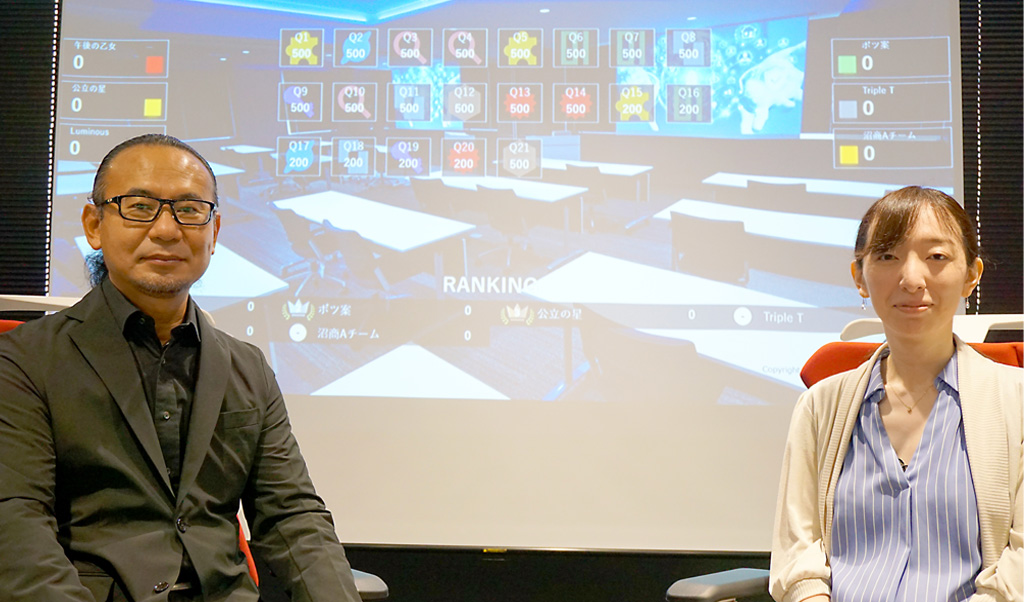
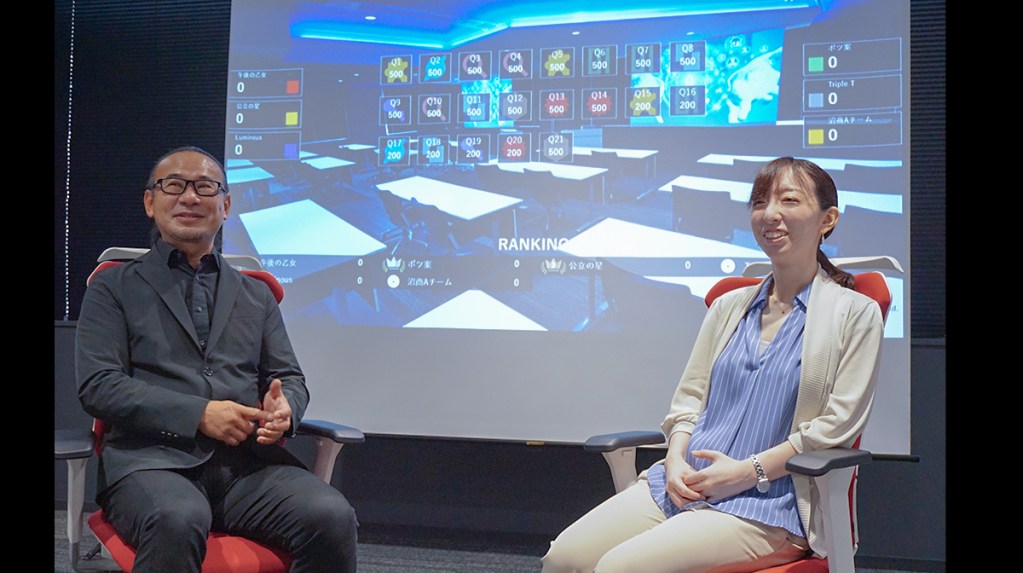
Mr. Yusuke Muto (Left) Ms. Rika Shirasaka (Right)

- A massive volume of participant answers required accurate grading within a highly constrained timeframe.
- Organizers sought a viable way to host the tournament despite pandemic-related travel restrictions.
- Seamless, centralized management of participant data was critical.
- System contingencies were necessary to mitigate potential network disruptions.


- Instant, error-free grading was achieved, completely independent of examinee volume.
- The entire tournament successfully transitioned online, even as numerous alternative events faced cancellation due to the pandemic.
- All participant information was comprehensively structured into a database right from the registration phase.
- Enabling participation via smartphones successfully insulated the event from local network failures.
The National High School AI Athlete Championship, "Singularity Battle Quest," is a competitive tournament dedicated to discovering and nurturing high school students into "AI Athletes" with highly developed, comprehensive AI/ICT skills, ultimately crowning the nation's top talents. While the inaugural "Season 0" in 2019 was hosted offline, the tournament fully transitioned to an online format starting with Season 1 in 2020 in response to the COVID-19 pandemic. To achieve precise and efficient large-scale grading and participant management, the organization implemented learningBOX under the strategic premise of leveraging Computer-Based Testing (CBT), thereby establishing a robust operational foundation for the online tournament.
Tournament URL:https://singularitybattlequest.club/


A Gateway to Success for Youth Shaping the Future of AI and ICT
Could you start by introducing the "Singularity Battle Quest"?
Mr. Muto:High school extracurriculars are traditionally split between athletic clubs, such as baseball, soccer, and basketball, and cultural clubs, like drama, art, and brass band. We categorize clubs that revolve around computers—such as computer, programming, and more recently, e-sports clubs—under a new banner called "geek clubs," and since 2019, we have hosted the "Singularity Battle Quest" (hereafter "Singularity") as a national inter-high school tournament for these students. I serve as the executive committee chairman.
Existing competitions tailored for tech-oriented high schoolers include NHK's "Robocon," various programming contests, and the "IT Passport Exam," which is a national qualification certified by the Ministry of Economy, Trade and Industry.
Singularity is a next-generation competitive arena centered on the theme of "AI/ICT," where teams compete entirely online to test their skills and teamwork through AI/ICT events designed by Japan's leading tech enterprises.
Within Singularity, we have framed five distinct disciplines—[AQ] AI Quest, [CQ] Cyber Quest, [DQ] Data Quest, [RQ] Robo Quest, and [XQ] X Quest—as the "Pentathlon for the Homo Deus Generation," structured as a team-of-three challenge.
Furthermore, Ms. Rika Shirasaka has graciously supported us with the network and cybersecurity-themed event, [CQ] Cyber Quest, contributing her expertise to competition development, player coaching, and serving as our official commentator.
The tournament spans a fascinating variety of disciplines. Could you elaborate on the Cyber Quest event that Ms. Shirasaka is involved with?
Mr. Shirasaka:Cyber Quest is a competition where participants pit their cybersecurity knowledge and technical skills against each other in a CTF format. CTF stands for "Capture The Flag," an event where diverse categories of problems are presented, and participants must uncover a specific string of text, known as the "flag," hidden within those challenges. Once a flag is discovered, points are awarded based on the difficulty of the question, and teams are ranked by their cumulative score.
The degree of difficulty varies by problem, with tougher challenges commanding higher point values. Crucially, the point value of a question depreciates as the number of correct solvers increases, meaning that relying solely on low-hanging fruit can cause a team's ranking to drop. Consequently, formulating a sound team strategy regarding which problems to prioritize becomes vital.
Could you also tell us about the "Hitachi Cybersecurity Center" operated by the Hitachi Group?
Mr. Shirasaka:The facility was established as a joint venture among three entities: Hitachi, Ltd., Hitachi Solutions, Ltd., and Hitachi Solutions Create, Ltd. It was founded as part of a broader initiative to cultivate talent equipped with advanced security knowledge and technical expertise within the Hitachi Group.
The center is actively utilized to elevate the security capabilities of Hitachi Group employees, offering training programs rooted in the latest research on contemporary cyber threats.
During Singularity Season 0, we gathered the competing high school students at this very facility to conduct preparatory workshops for Cyber Quest and AI Quest ahead of the finals. I believe it served as an excellent opportunity for the students to experience such a state-of-the-art facility firsthand.

What originally motivated Hitachi Solutions Create to partner with Singularity?
Mr. Shirasaka:It was driven fundamentally by our desire to contribute to human resource development. As the global importance of cybersecurity intensifies, Japan is projected to face a critical shortage of ICT talent, let alone specialists in security and AI.
By engaging in an event of this caliber, high school students can gain immediate awareness of surrounding cyber risks and appreciate the vital importance of security. We sincerely hope this tournament serves as a catalyst that inspires more young minds to pursue careers in the ICT sector.
Driving Operational Efficiency via CBT and Realizing an Online Event
What initially prompted the adoption of learningBOX for the Singularity tournament?
Mr. Muto:The preliminary rounds for our inaugural Season 0 in 2019 were held offline by gathering participants at a physical venue. In truth, we actually utilized learningBOX during those physical qualifiers as a strategic dry run for future online competitions.
Prior to Singularity, we had been hosting the "GP League"—a programming competition for elementary school students—since 2017. Having struggled immensely in those regional qualifiers with the burden of accurately grading hundreds of paper answer sheets within tight windows, I was determined to anchor our high school tournament around CBT.
I was introduced to learningBOX by an acquaintance, and upon receiving a demonstration from your representative, I felt it was the perfect fit for Singularity and moved forward with its adoption.
What were your impressions after putting the system into practice?
Mr. Muto:While instant, error-free grading is a baseline feature of CBT, experiencing it firsthand regardless of examinee volume was profoundly impactful for us, especially after years of grueling manual grading marathons.
That said, at this juncture, we had absolutely no inkling that a novel coronavirus pandemic would soon disrupt the globe. Consequently, our deepest appreciation and gratitude for the platform materialized shortly thereafter.
For Season 1 in 2020, the declaration of the global pandemic triggered widespread school closures and restricted club activities, forcing the cancellation of not only sports tournaments but also nearly all scheduled academic contests.
Against this challenging backdrop, Singularity maximized the inherent strengths of learningBOX to establish a remote competitive environment where students could join the qualifiers directly from their respective high school clubrooms, allowing us to execute the tournament without a hitch.
Given that last year marked our official debut, the tournament had zero brand recognition, yet we attracted top-tier schools in the information processing field, such as S High School in Yamagata and U High School in Saitama. We later learned that they discovered Singularity specifically because they were searching for online alternatives after their usual annual competitions were canceled due to the pandemic. This feedback powerfully reaffirmed that implementing learningBOX was the right decision.

How do you evaluate the platform from a functional perspective?
Mr. Muto:In Singularity, learningBOX serves as the foundation starting right from the participant onboarding phase. Candidates can independently input all requisite fields during registration, including their name, email, prefecture, school, and grade level.
Because we can seamlessly generate a database from this data and manage everything—from tracking learning histories to administering and grading the preliminary exams—entirely within learningBOX, we find it to be an exceptionally sophisticated and user-friendly system.
Singularity encompasses five distinct disciplines with different students assigned to each, so we segment the players into specific competition groups beforehand. The notice management feature, paired with its automated timer settings, proved incredibly convenient, enabling us to broadcast targeted announcements to specific competition cohorts at designated times.
Additionally, though it may diverge from standard use cases, leveraging the internal message box for individual inquiries allowed us to build, share, and archive structured FAQs for each discipline without generating any administrative confusion.
Furthermore, we discovered an unexpected lifesaver last year: the platform’s absolute compatibility with mobile devices. On the day of the qualifiers, one participating school suffered a sudden local network failure that rendered their campus PCs completely unusable. However, the instructor on-site made a swift, tactical decision, and the students successfully completed their qualifiers using their personal smartphones.
Remarkably, that very team went on to secure a top prize in the grand finals. As an organizer, I am immensely grateful for learningBOX's robust mobile optimization.
Regarding content authoring, the system naturally supports multiple-choice and dropdown queries, but it also allows us to craft drag-and-drop fill-in-the-blank questions and open-ended text inputs that intelligently accommodate variations in phrasing; thus, once you clear the initial learning curve, it dramatically outpaces paper-based test creation.
While we have yet to deploy it, we understand the platform features a Python execution environment, and we are actively evaluating questions that incorporate programming for our next cycle.
Dedicated to Eliminating Educational Disparities
The 2021 tournament sounds incredibly promising.
Mr. Muto:For the 2021 tournament, we are actively securing official endorsements from boards of education across all 47 prefectures, leading us to forecast a substantial surge in applicant numbers. In prior iterations, we had to finalize our participant counts before we could even order the printing of exam papers and answer sheets, which then had to be physically shipped to regional hubs.
With CBT, the complete elimination of print production and logistics has not only dramatically streamlined our workflow but has also yielded significant cost savings. We can now reallocate the capital previously tied up in printing and shipping toward higher-leverage initiatives, such as marketing and promotion.
On a deeper level, while Singularity is fundamentally a showcase for AI/ICT excellence, our overarching mission is to help eliminate educational disparities. Up until last year, entries were restricted strictly to three-member teams, but we have revised our regulations this year to accommodate individual participants.
Now, students can participate seamlessly from home, regional areas, or remote locations, regardless of whether they belong to an established tech club or attend a correspondence high school. Naturally, factors like gender, grade level, or disabilities present no barrier to entry whatsoever. Our ultimate goal is to foster an inclusive online tournament where any high school student residing in Japan can participate, provided they possess the drive to compete and an internet-connected computer or smartphone. We warmly encourage everyone to submit their entries.
To conclude, could you share your final thoughts on your experience with learningBOX?
Mr. Muto:Since integrating learningBOX, we have been incredibly grateful for its intuitive user interface. Beyond ensuring that daily workflows like quiz creation, grade tracking, and athlete management run seamlessly, the frontend user interface is meticulously designed, which noticeably minimizes operational friction and user navigation errors.
Above all, the most critical asset has been the exceptional after-sales support. Whenever we encounter an operational bottleneck or technical query, your team responds with impressive immediacy, which directly translates into a better experience for our end-users.
As we look to scale our tournament infrastructure in the future, we are exploring various custom integrations, and because your team always approaches our consultations with genuine care, we feel we have found a truly dependable business partner. We look forward to a long and prosperous collaboration.
Thank you very much for
sharing your valuable insights with us!