[Full-scale introduction in 2024] Thorough explanation of the digital textbooks that will start soon!
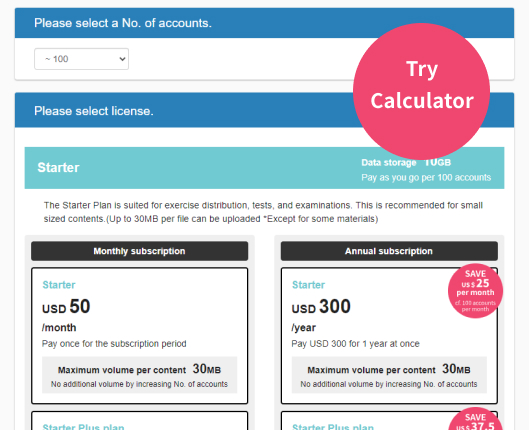
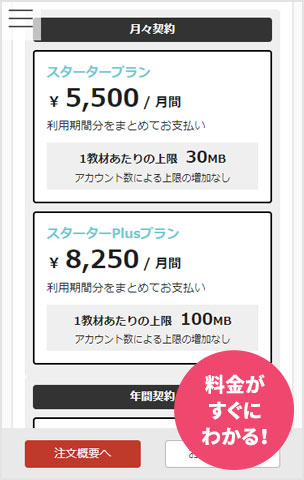
Full-scale introduction in 2024] An in-depth look at digital textbooks now, which will begin soon! My name is Kidaoka, and I am in charge of marketing. I find myself entering my third year of life in Hyogo Prefecture! With the start of the new fiscal year, our company has gained yet another new member and is becoming more and more active. To all the new members who have joined our company, I look forward to working with you to make our company more exciting! Putting aside the chit-chat, I'd like to get right into the content of this issue. For those of you who work in the school industry! Digital textbooks will be available in the near future. The Ministry of Education, Culture, Sports, Science and Technology is steadily preparing for the introduction of digital textbooks by the year 2024. In this article, we will introduce digital textbooks, which are likely to become a pillar of education in the future. We hope you will continue to read this article with us. Table of Contents 1. The "age when studying with digital textbooks is the norm" is coming 2! 5. Summary The "age of course" to study with digital textbooks is coming Digital textbooks are electronic teaching materials that are recorded directly from paper textbooks, the introduction of which was institutionalized in April 2019. Digital textbooks are literally learning materials designed for digital devices and information terminals such as PCs, tablets, and smartphones. Although most people have the impression that they are digital versions of books and reference books that have been used in the classroom, digital textbooks are convenient textbooks that allow students to edit and write in the textbook and connect to the Internet. According to the Ministry of Education, Culture, Sports, Science and Technology (MEXT), a digital textbook is defined as "an electromagnetic record of the entire content of a paper textbook." This is defined as Citation: Institutionalization of Digital Textbooks for Learners from MEXT/Ministry of Education, Culture, Sports, Science and Technology Institutionalization of digital textbooks will start in April 2019 In April 2019, the "Law Partially Amending the School Education Law and Other Laws" came into effect. This law is intended to introduce digital textbooks for learners in elementary schools, junior high schools, high schools, and special-needs schools for the purpose of improving classes and assisting learning based on the new Courses of Study to be implemented in FY2020. The institutionalization of digital textbooks has made it possible to conduct classes using digital textbooks in combination with paper textbooks, while treating them as the main source of instruction. Laws and regulations related to the institutionalization of digital textbooks are as follows: 1. Law for Partial Revision of the School Education Law, etc. (Law No. 39, 2008) 2. Ministerial Ordinance for Partial Revision of the Enforcement Regulations of the School Education Law (Ministerial Ordinance of the Ministry of Education, Culture, Sports, Science and Technology, No. 35, 2008) 3. (Ministry of Education, Culture, Sports, Science and Technology Notification No. 237, 2008) Reference: "Outline of Laws and Regulations Concerning Institutionalization of Digital Textbooks for Learners," Ministry of Education, Culture, Sports, Science and Technology Merits of Introducing Digital Textbooks If digital textbooks are introduced in earnest, a major change will come to the educational field and the way classes are conducted at schools. It is expected that the one-way teaching style from teacher to student, which is currently the main form of teaching, will change to an interactive style where children learn independently and teachers provide support. Even if the content is difficult to convey through textual information alone, information can be pinpointed to the "visual and auditory senses" through the use of IT technology, allowing for efficient learning while having fun at the same time. It is expected that easy-to-understand lessons using images, animations, and videos will "increase children's interest and attention" and motivate them to learn even more. Advantages of Digital Textbooks (for Learners/Administrators) Digital textbooks are equipped with many features. Here we will introduce the features and advantages of digital textbooks in detail. 2. Learning with audio and video 3. Visualization of individual learning progress and performance history 4. Elimination of carrying textbooks and notebooks If it becomes possible to teach using only digital textbooks, a single tablet can replace all textbooks, reducing the burden on students. Students with learning disabilities and visually impaired students will be able to receive support that was not possible with conventional textbooks, such as "text enlargement, text color change, and voice reading out loud. 3. Digital textbooks can be used to improve the quality of education by providing access to class records and numerical data on student learning. Digital textbooks enable sharing of learning information and more efficient class preparation. To briefly summarize the features of digital textbooks, they allow students to "learn while deepening their knowledge through text, audio, video, and various types of data. In addition, it is expected that digital textbooks can be used to promote deeper understanding that is not possible with conventional textbooks, for example, by allowing children to look up individual questions in more detail on the Internet. ICT Education in Japan for Realization of Digital Educational Materials ICT education refers to educational methods that utilize the Internet and other information and communication technologies, such as PCs, smartphones, and tablet terminals. The history of ICT education was developed by the Ministry of Education, Culture, Sports, Science and Technology in 2005 as an instructional method to realize "easy-to-understand classes" for students. Through the effective use of ICT in educational instruction, we aim to improve children's independent and inquisitive learning and academic skills. In fact, many schools that have adopted this teaching method have reported improvements in students' motivation to learn and academic performance. Reference: Effects of ICT-based education - from the Ministry of Education, Culture, Sports, Science and Technology Why is ICT education necessary now? The reason why ICT education is attracting attention is related to the rapid development of information and communication technology. In order to cope with today's rapidly changing society, "information utilization skills" are becoming increasingly important. Today, the Internet has become widespread and information is easily accessible. As technology advances in the future, it will become more important to know how to gather information efficiently, rather than to have knowledge as was done in conventional education. For more information on ICT education, please refer to this article. GIGA School Concept: The Role of Schools in the Age of 2022 by the Ministry of Education, Culture, Sports, Science and Technology The GIGA School Concept refers to a reform plan for ICT education in schools proposed by the Ministry of Education, Culture, Sports, Science and Technology (MEXT) in 2019. GIGA stands for "Global and Innovation Gateway for All" and aims to open the way for globalization and innovation for all students. For children living in the age of 2025, the use of ICT-based advanced technology in education will be indispensable in the future. In addition, in order to survive in this era of rapid change, it is important to realize not only conventional, one-size-fits-all education, but also individually optimized education that fosters creativity and ensures that no one is left out of a diverse group of children, and ICT education must be used to foster the next generation of human resources. Changing School Education with "IT" x "Education" learningBOX, an e-learning system from Tatsuno Information Systems, Inc. is a learning management system that is ideal for the "GIGA School Concept" because it can be easily set up to "add/create/manage digital teaching materials. LearningBOX is "an e-learning system designed to make it easy for anyone to build a web-based learning environment," and is easy to start using in terms of both cost and operation. It is a learning management system (LMS) that covers all the functions required for school education, such as creating learning materials, creating tests, grading, and managing grades, and can create e-learning materials with a focus on price and ease of use. The system also allows users to create their own original typing materials, as well as a web-based version of the "Red Sheet," a standard memorization tool, called the "Mushigai Notebook. (Official website: https://learningbox.online/) Easy operation without technical knowledge! Even those who are not good at PC operation can easily add contents to learningBOX through the dedicated creation form, and it is also possible to set up distribution by groups. Detailed settings tailored to each user are possible, such as course settings for teaching materials, group management of learners, and a function to distribute teaching materials to each group. The ▼learningBOX function allows you to easily digitize printed materials as well. We also recommend the "quiz function" and "report assignment function" that can be implemented on the web! The quiz function has a new feature starting from learningBOX Ver. 2.12. Using the test creation function, you can easily set a limit on the number of times a test can be administered, as well as the date and time when the test will be open to the public. You can also display or hide the results of students who are taking a test, depending on the situation you are in. Even 100 accounts can be easily used for as little as 33,000 yen per year! Our greatest advantage is that our prices are the lowest in the industry. Most e-learning systems on the market today are very expensive and are mainly designed for large corporations. With our Starter Plan, 100 users can use e-learning for as little as 33,000 yen per year (plus tax), or 2,500 yen per month. The learningBOX concept is a "cheap and easy-to-use" system. Up to 10 accounts can use the system "free of charge all the time." This plan allows up to 10 users, including the administrator, to use almost all functions free of charge, with the exception of optional functions that require a fee. For those in charge of school education who are considering introducing this system! Please take this opportunity to try our learningBOX. Conclusion In this article, we introduced digital textbooks, which are likely to become a pillar of education in the future. Digital textbooks are teaching materials that promote students' independent learning motivation and have the potential to lead to deeper learning. The introduction of digital textbooks is likely to bring about major changes in the educational field and in the way classes are conducted. For children living in the age of 2025, the use of advanced ICT-based technologies in education will become indispensable. For those who are considering the introduction of ICT in school education, please take this opportunity to learn more about our learning technologies! Please take this opportunity to try our learningBOX.

 Choose the Right System to Train Global Talent - 3 key factors for SMEs
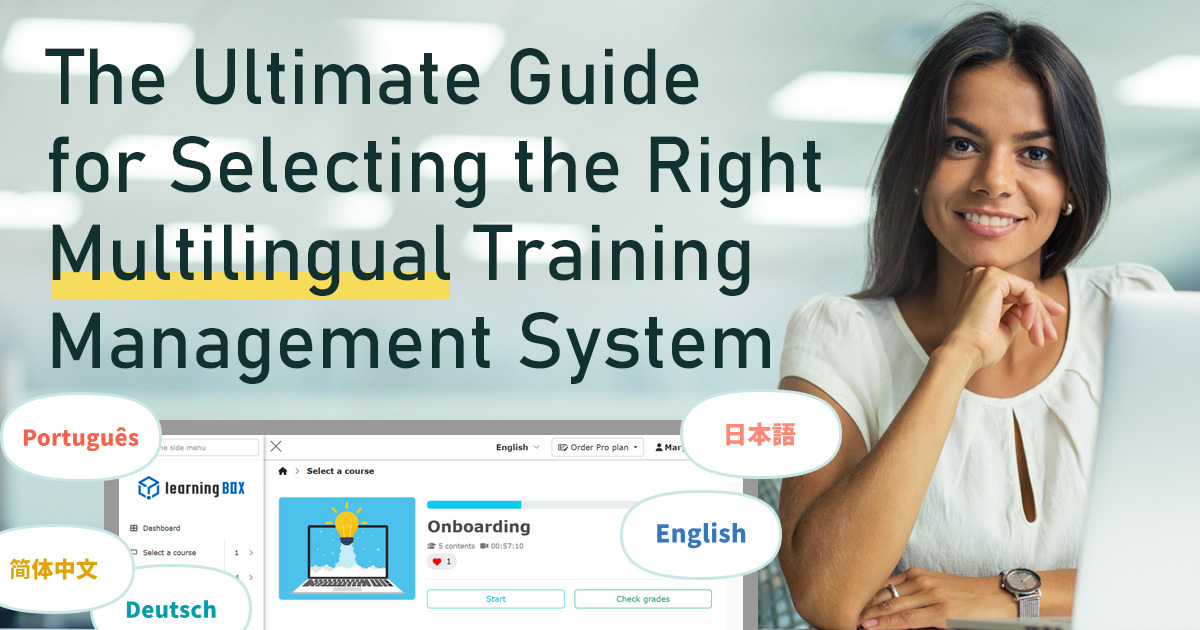 The Ultimate Guide for Selecting the Right Multilingual Trainng Management System
 Human Resource Development Grant for e-Training
 Memorization Strategies
 How to Create Your Own Aptitude Test