Others

12 articles

Choose the Right System to Train Global Talent - 3 key factors for SMEs
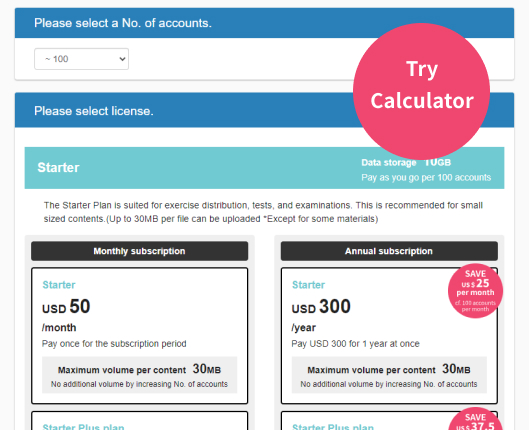
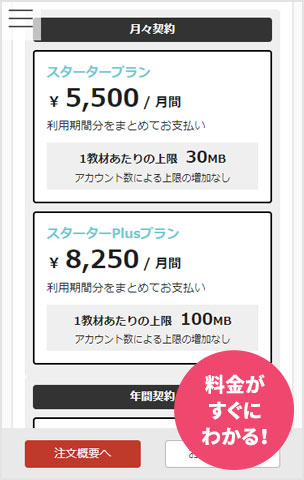
With the urgent need to develop global human resources, the selection of a "global human resources training system" is an important issue for SMEs that will determine their future growth. In this article, we will explain in an easy-to-understand manner the purpose and role of introducing a training system, as well as the three selection criteria that SMEs should focus on, including cost performance, multicultural compatibility, and ease of use. Basics of Global Human Resources Training System|Clearly Define the Purpose of Introduction The Global Human Resource Training System is an essential tool for companies to develop a diverse workforce and enhance their ability to perform in overseas locations and multicultural environments. In today's globalized world, training systems must go beyond mere language training and knowledge imparting to provide a wide range of cross-cultural understanding, communication skills, and on-site readiness. Therefore, the first step to success is to identify in advance what kind of results you are aiming for and what specific issues you want to solve by introducing the system, and reflect them in the system selection and operation policy. Clearly set objectives The success or failure of implementing a global human resources training system depends on how clearly you can set objectives in the initial stages. For example, it is important to specifically define goals that meet the needs of the field, such as "making local employees at overseas sites more capable of making immediate contributions," "strengthening cross-cultural communication," and "centralized management of training progress at multiple sites. If the objectives are left unclear, operation and effectiveness measurement after the system is introduced will easily become a formality, and the motivation of those in charge will tend to decline. By verbalizing the current issues and the ideal image, and sharing them with the parties concerned, prioritizing system requirements and formulating operation rules will become smoother. These steps will lead to a sense of conviction about the investment required to implement the system and foster a cooperative framework within the company. Concretization to achieve goals is important. Once the objectives have been determined, it is important to concretize the goals at a numerical and action level. For example, set KPIs that can measure achievement, such as "increase the attendance rate to 801 TP3T or more in six months," "increase the average score by 10 points on the cross-cultural understanding test," or "improve the on-site retention rate of newly hired employees by 201 TP3T. This not only enables objective evaluation of the effectiveness of the training system implementation, but also clarifies action plans for on-site personnel. Clarified goals will also make it easier to optimize operational aspects such as selection of teaching materials, progress management, and analysis of learning data. It is essential to concretize goals from both quantitative and qualitative perspectives for continuous review and improvement. Understanding the Role of the Training System The role of a training system goes beyond mere delivery of course materials and course management. It is important for on-site personnel to understand the role of training itself and to be aware of the connection points with the company's internal education issues and human resource strategy. By utilizing the system, it is possible to support the growth of each employee and raise the skill level of the entire organization. In order to achieve optimal operation, it is advisable to share the system's functions and an image of how it will be utilized after its introduction with all parties concerned prior to its introduction. Back to Table of Contents Three Selection Criteria for Global Human Resources Training Systems The following are three important selection criteria for SMEs when selecting a global human resources training system. Cost performance Multicultural flexibility Simple operation Each of the three conditions will be discussed in detail below. Cost performance For corporate human resources and education personnel, the cost of implementing and running a global human resources training system is a critical decision factor. Especially for small and medium-sized companies, a fee structure that can smoothly manage a large number of trainees while minimizing the initial investment is required. High cost performance is also directly related to the ease of ongoing training operations and accountability to management. A system with free plans, low-cost plans, and clear pricing will provide peace of mind in managing costs after implementation. Flexible multicultural support. A system that can flexibly accommodate cultural and language differences is essential for training a global workforce. Multilingual display, regional customization, permissions for each location, and management of course materials will help create an environment in which all participants can learn equally easily. Such a system with high multicultural adaptability will prevent confusion and communication loss in the field and maximize training effectiveness. Simple operability. Ease of use is a factor that should not be overlooked when selecting a training system: an intuitive interface that can be operated without hesitation from a variety of devices, even by personnel and trainees unfamiliar with IT. A system that is easy to use will help reduce training and support costs, and increase overall company productivity. Back to Table of Contents Comparative Points of Global Human Resource Training Systems While the operational costs of implementing a global human resources training system can easily balloon, the time and effort required to manage the system and create teaching materials cannot be ignored. This section provides specific points of comparison that small and medium-sized companies should focus on in terms of both cost and operational efficiency. Cost-effectiveness and future scalability In many cases, small and medium-sized enterprises (SMEs) face barriers to continued use not only in terms of initial costs at the time of introduction, but also in terms of running costs over the long term. Specifically, these costs include monthly per-account fees that tend to be set for large companies, costs for procuring and updating content, costs for adding accounts, and additional costs for adding educational materials and using support. In order to select the best system, the first step in maximizing cost-effectiveness is to make sure that the fee structure is clear and can be scaled without difficulty according to corporate growth and scale of use. In addition, to minimize initial implementation risk, choose a service that offers free trials or low-cost plans to reduce initial costs and the burden of starting operations. Design to reduce operational burden The operational burden of the system is directly related to the time and effort required for daily tasks such as creating teaching materials, managing courses, and tallying grades. If the person in charge is not familiar with IT, the complexity of the operation may hinder the introduction of the system. A system that reduces operational burdens is equipped with functions such as intuitive operability, automatic tallying and reporting of course status, and so on. In addition, multi-device compatibility and centralized group management functions will enable efficient training at multiple locations and with multiple participants. The level of operational support and the quality of manuals will also help reduce the burden on the field, so be sure to include these in your comparisons. High system scalability In the field of global human resources training, system scalability is required to accommodate business expansion, the establishment of new overseas offices, and an increase in the number of participants. A highly scalable system not only allows for flexible account addition and functional expansion, but also supports multilingual support and API integration with external services. Comparison PointContentsFlexible scalabilityEasy to add accounts and expand functionsMultilingual and external linkageMultilingual support and API linkageOptions and customizationFlexible addition and customization of non-standard functions This allows the system to smoothly accommodate future changes in the size of the organization and new training needs, thereby increasing the long-term return on investment. It is also important to confirm in advance whether there is flexibility in adding options and customization, even when standard functions cannot be used. If you are unsure about choosing the best system for your company, please take advantage of our white paper summarizing the key points of global human resources training! Download Now Back to Table of Contents Essential Functions of a Global Human Resource Training System for Multi-Location Support It is not enough for a global human resources training system that supports multiple locations to simply distribute training materials online. In order for companies to effectively train employees with different languages, cultures, and work habits at each location, it is essential that operations are optimized for each local site. Here, we will explain the essential system functions from the perspectives of "multilingual support," "region-specific customization," and "cultural considerations" that should be kept in mind when actually introducing and operating the system, regardless of the size of the company. Multilingual Support Multilingual support is one of the basic functions of a human resources training system for companies that are expanding globally. By providing an environment in which local staff can learn in the language of their choice, you can expect to increase the level of understanding and attendance. The accuracy of information transfer through multilingualization determines the performance of the entire global organization. Regional Customization Capabilities The ability to adjust training content to suit regional business practices, laws and regulations, and on-site conditions is also essential for a global human resources training system. For example, each location must have the flexibility to distribute its own training materials, group courses, and schedule management. Distribution of educational materials by location and centralized management of progress and grades Grouping and authorization by region Adjustment of training content according to the needs of each location This allows for local optimization while maintaining a sense of uniformity, greatly improving site acceptance and training retention. Back to Table of Contents Features of Global Human Resources Training System Easy for Even IT Challenged Personnel When introducing a new system, such as a global human resources training system, many people in charge tend to be concerned about whether they will be able to use it. In particular, HR and education departments are often required to operate the system in addition to their daily work, and a system that is not easy to use will increase the workload on the frontline. What is important here is an intuitive operation screen and excellent customer support. The following is a concrete explanation of the actual points that should be emphasized. Intuitive interface The system screen that the person in charge first touches determines how easy it is to operate. An intuitive interface refers to a design (operation screen) in which buttons and menus are arranged in an easy-to-understand manner, so that the user can determine at a glance which functions can be used by pressing which buttons and menus. For example, the ideal design should allow users to complete major operations, such as uploading teaching materials, managing students, and checking grades, with just a few clicks from the top screen. By choosing a service with simple and clear Japanese language display and easy-to-understand icons, even IT novices will be able to proceed with their work without hesitation. Well-organized user guides A well-developed user guide is also essential for smooth operation. Especially in the field of human resource training, sudden changes in settings or the addition of new teaching materials often occur, and having easy-to-understand procedural manuals and video guides available each time is a great source of reassurance. A manual that provides detailed explanations for each operating screen and covers frequently asked questions and troubleshooting will increase opportunities for personnel to solve problems on their own. This will greatly reduce stress during system operation and the number of external inquiries. Full support system The availability of a support system that can be relied on in the event of problems or questions is an important criterion in selecting a system. If multiple contact points are available, such as telephone, e-mail, and chat, you can consult with the person in charge in the most appropriate way for your situation. In addition, there are an increasing number of services that support operations regardless of on-site IT literacy, such as support for initial setup at the time of introduction, operation on behalf of the client, and manual preparation on behalf of the client. With such a system in place, you will be able to operate your global human resources training system with peace of mind, as you can calmly respond to daily operations and sudden problems. Back to Table of Contents Why learningBOX can solve SMEs' global human resources training system implementation challenges Implementing a global human resources training system involves a number of challenges, including cost, creation of training materials, management and operation, security, and operability. SMEs, in particular, require flexibility to accommodate multiple locations and a diverse workforce with limited budgets and personnel. Intuitive design that can be operated without the need for specialized knowledge AI assists in the creation of teaching materials and grading Affordable plans and robust security Ability to centralize the management of multiple locations and multiple employees Generous support system With these features, "learningBOX" contributes to the improvement of on-site work efficiency and the quality of education, and encourages the promotion of global training by small- and medium-sized companies. Low cost and immediate availability LearningBOX" can be used free of charge for an unlimited period of time for up to 10 accounts. Furthermore, even 100 accounts can be used from 5,500 yen per month (tax included), significantly reducing initial installation and operation costs compared to other companies' services. Creation of teaching materials and learning management are available even with the free plan. Initial cost is 0 yen, and can be used immediately after registration Abundant paid options available These points are appreciated by many small and medium-sized companies. AI functionality makes it easy to create teaching materials By utilizing the AI assist function of "learningBOX," quizzes, memorization cards, and courses can be automatically generated simply by uploading videos, PDFs, and other teaching materials. Even if you do not have advanced IT knowledge or e-learning experience, you can create a wide variety of educational materials in a short time with intuitive operations. AI speeds up the question creation process. Greatly reduces the workload of educators Quickly adapts to diverse training curricula This allows us to provide the structure required in the field. Easy multi-site management One of the features of "learningBOX" is the ability to centrally manage multiple locations and groups across the country and overseas. Users and groups can be created to distribute and manage course materials and course content by location and department. Track progress and grades in real time Utilize data through CSV output and API integration Administrators can be designated for each location, facilitating smooth operations It is easy to visualize the status and results of training at each location away from the administrative headquarters. Security Measures LearningBOX" implements the latest security measures such as SSL/TLS communication and unauthorized access countermeasures. Account lock for suspicious login attempts Two-factor authentication via email IP address restriction per group/content The Enterprise option, a paid option, supports individual security requirements such as Deep Security and WAF, etc., and is safe for industries that require compliance with laws and regulations and information protection. Intuitive operation LearningBOX is designed to be easy to use, even for personnel unfamiliar with IT. The administration screen is simple and highly visible, and can be operated intuitively for everything from registering course materials and managing students to checking grades. Create teaching materials by following the form Drag-and-drop support eliminates complicated procedures Full operation manuals and support Even companies introducing an e-learning system for the first time can smoothly start operations. For more information about "learningBOX" and its free trial, please visit the official website. Please feel free to contact us about introducing learningBOX. We will propose the best utilization method and recommended fee plan according to your company's issues. Free consultation Back to Table of Contents LearningBOX Case Studies Showcase Achievements in Improving Operational Efficiency and Responding to Diverse Training Needs In the field of global human resources training, there is a need to improve operational efficiency and respond flexibly to diverse training needs. LearningBOX" has been highly evaluated for its intuitive operability and multifunctionality, and is being introduced at companies and educational institutions. Here, we will introduce specific examples of how LearningBOX has improved operational efficiency, reduced the burden of training operations, and accommodated a diverse workforce, based on actual case studies. By learning about the challenges they faced before and the changes they have made since the introduction of the system, you will be able to gain hints for improving your own training operations. Efficient training and management of foreign human resources with specific skills using learningBOX→Click here to see the case study of ONODERA USER RUN Co. Effective legal training in the transportation industry through e-learning, and handling the increasing demand for foreign human resources → Click here for a case study of Nippo Kosoku Unyu Co. Back to Table of Contents SUMMARY When implementing a global human resources training system, three conditions are particularly important for HR and education staff at small and medium-sized companies: cost performance, support for multiple locations, and ease of operation. By selecting a system that meets these requirements, you can expect to improve the operational efficiency of training operations, centrally manage progress and results, reduce the man-hours required to create teaching materials, and improve the quality and participation rate of training programs. LearningBOX" offers intuitive operability that even inexperienced IT staff can use easily, AI-based support for creating training materials, and industry-leading low costs, with up to 10 accounts free for an unlimited period and 100 accounts starting at 5,500 yen per month (tax included). The system covers all functions required for global human resources training, including multilingual and multi-site management, anti-fraud measures, and certificate issuance. As demonstrated in our case studies, one of its major strengths is its flexibility to meet the diverse training needs of small and medium-sized enterprises (SMEs). If you are looking to improve the efficiency and quality of your global human resource development and internal training, why not start with the free "learningBOX" plan? For details, please see the service details page. Please feel free to contact us about considering and introducing learningBOX Inquiry Form Free useful materials on global human resources training Download Materials Back to Table of Contents

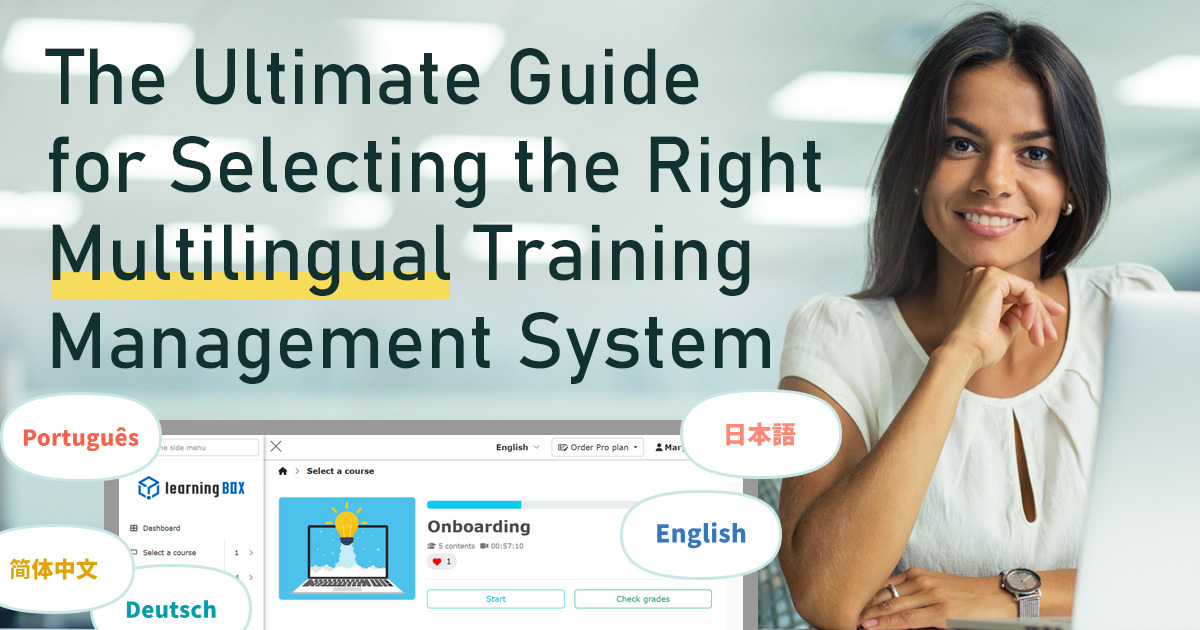
The Ultimate Guide for Selecting the Right Multilingual Trainng Management System

In the field of corporate training, where globalization is progressing, training management systems that support multiple languages are indispensable. However, many people in charge must be wondering which system will meet their needs and whether the cost and support system will be sufficient. This article provides a thorough comparison of the latest features, prices, and support systems, including multilingual display, AI-assisted material creation, and security, and explains the key points that even those unfamiliar with IT can introduce with confidence, along with actual examples. What is a Multilingual Training Management System - Basic Functions for Global Human Resource Development Multilingual training management systems are indispensable tools for companies seeking to expand globally and for organizations with multinational audiences. These systems create an environment in which participants can learn in their own language and ensure the quality of education in line with local needs. Multilingual Displays Ensure International Compatibility Multilingual training management systems differ in various ways depending on the service, but the main feature is the ability to switch between screen displays in multiple languages. This allows employees at overseas locations and foreign staff to intuitively operate the system in their own language. By making the educational materials themselves available in multiple languages, uniform educational content can be accessed without language barriers, which will help correct international educational disparities and promote equal opportunities in education. Language selection is possible for each student. When managing a multinational team, it is essential for corporate HR professionals to be able to select the appropriate language for each participant. A multilingual training management system allows you to set the language for each account so that you can effectively support employees with diverse cultural backgrounds with a single system. This not only minimizes the operational burden on site while providing a learning environment suited to each participant, but also leads to smoother training at each location. Ideal tool for companies with global operations Multilingual training management systems are ideal for companies with multiple locations and organizations with overseas subsidiaries. It enables local staff to be trained at the same level as at the headquarters and ensures uniform quality of training throughout the company. In addition, the ability to centrally manage learning progress across language and location barriers makes it easy to measure the effectiveness of training on a global scale, and to create an organization with a sense of unity and human resource development. Contributing to the motivation of participants to learn The introduction of a multilingual training management system also makes a significant contribution to the motivation of participants to learn. This is because providing a learning environment in their native language enables participants to understand the training content more deeply and accurately. By breaking down language barriers, the stress and alienation of "I don't understand what you are saying" are eliminated, and positive attitudes and motivation toward learning are increased. It also increases trust in the company, as people feel that their language is respected by the company. Back to Table of Contents Latest Trends and Selection Points for Multilingual Training Management Systems As the number of employees becomes increasingly multinational, there is an urgent need to create an environment in which all employees can learn equally. Recently, there are a variety of points to keep in mind when introducing new products, such as support for access from mobile devices, enhanced security, a full support system, and products with excellent cost performance. This section details the latest trends in multilingual training management systems and points to keep in mind when selecting one. Whether it is multi-device compatible or not Mobile support is becoming an essential requirement when considering the efficiency of in-house training. When choosing a multilingual training management system, select a system that is fully compatible with smartphones and tablets so that employees can continue learning not only in the office, but also on the road or at home. This will enable effective use of travel and spare time, which will directly lead to higher attendance rates. Another important selection point is whether the system is intuitive and easy to use, even for learners who are concerned about IT literacy. Is the security system secure? Security measures are essential when putting corporate training online. Since highly confidential information such as personal data, course data, and course materials are handled, it is necessary to select a system with multi-layered security features such as SSL/TLS communication, access restrictions, and measures against unauthorized access. In addition, it is also important to check whether the system meets the security standards required by your company. Check in advance whether the system has the following "basic security functions". Basic Security Functions Encryption by SSL/TLS communication Access control and authority management WAF (Web Application Firewall) By choosing a system with these features as standard equipment, you can deploy online training with peace of mind while minimizing cyber attacks and unauthorized access. Does the system offer extensive online support? For personnel unfamiliar with IT, a support system during system implementation and operation is a great source of reassurance. Recently, an increasing number of services offer extensive support, not only through chat, e-mail, and telephone support, but also through manuals and FAQs, demonstrations of how to use the system, and data registration and operation on behalf of the customer. Especially when multiple locations or a large number of people need to be managed, support that reduces operational burdens can significantly improve the work efficiency of those in charge. Is it a low-cost, highly functional system? The cost of implementation is the most important factor when selecting a multilingual training management system. The monthly cost of a multilingual training management system varies depending on the number of users, functions, and implementation format, but generally costs anywhere from several tens of thousands of yen to several hundred thousand yen. In particular, the more multilingual support and advanced security features are required, the higher the cost tends to be. However, "learningBOX" can be installed at one of the lowest prices in the industry, well below the industry market rate. LearningBOX" offers a free plan for up to 10 accounts, and even for 100 accounts, the price starts at 5,500 yen per month (including tax), yet it covers all the functions necessary for corporate training, such as multilingual support and security management functions. You can start global human resource development without having to worry about expensive initial investment and operation costs. Item Details (as of January 2026)Free PlanFree for an indefinite period for up to 10 accountsLow-cost PlanFrom 5,500 yen/month (including tax) for even 100 accountsMain FeaturesInterfaceMultilingual display, automatic creation of teaching materials with AI assist, enhanced security If you are not sure which system is best for your company, please take advantage of our white paper summarizing the key points of global human resources training. Download Now! Back to Table of Contents Thorough Comparison of Features, Pricing, and Support of Major Multilingual Training Management Systems When considering the implementation of a multilingual training management system, it is generally important to know what features it offers and what the price range is. In this chapter, we will compare and explain the major multilingual training management systems in terms of price range, features, support system, security, and more. Functional Comparison: AI Assist A notable feature of multilingual training management systems is the availability of AI Assist to assist in the creation of teaching materials. With the AI assist function, quizzes and courses can be generated automatically from existing content such as videos and PDFs, significantly reducing the time required to create educational materials. Price Comparison: Free Plan vs. Cost is an important point that directly affects the hurdle to introduction and the possibility of continued use. While many services offer free trials, some do not disclose their price lists, so be sure to check the actual costs as early as possible. Make sure you understand the limitations of the free plan and the range of functions available in the low-cost plan, and confirm that the plan matches the scale and objectives of your company's operations. It is also important to have some idea of the costs involved in transitioning to a paid plan or increasing or decreasing the scale of use. The e-learning system "learningBOX" is available for free for an unlimited period for up to 10 accounts, and for as little as 5,500 yen per month (tax included) for 100 accounts, offering both multiple functions and low cost. For more information, please visit the official website. Support Comparison: Operational Support and Manual Provision Support is essential for smooth implementation and operation of a training management system. Check for the following support systems. Providing operation manuals and FAQs Multiple support systems: email, chat, phone, etc. Contact for troubleshooting Availability of substitute services: e.g., data registration, manual preparation, etc. Comparison of security features Protection against cyber attacks and unauthorized access is an important factor in selecting a training management system. Security function contentSSL/TLS communicationCommunication content encryptionAccess controlSecurity enhancement through authority settings and user managementWAF (Web Application Firewall)Prevention of unauthorized access to the systemIP restrictionsLimit IP addresses that can access the systemLimit concurrent accessLimit the number of accounts that can access the system at one time Specify the number of accounts that can access the system at one time Compare the security policies and compliance standards of your company, as well as vulnerability countermeasures. Centralized student management functionality Centralized management of participant information, grouping, and automatic tabulation of progress and performance data are indispensable functions for corporate training programs for large numbers of participants. Creation of groups by department or location Batch distribution of educational materials Flexible management functions such as setting administrative privileges and CSV output Points of comparison include scalability, integration with other systems via API, and ease of use of the management screen. Selection must be made in light of the company's operational flow. Back to Table of Contents multilingual support and functional advantages of learningbox When selecting a training management system, not only operability and cost performance, but also multilingual support and full functionality are important points of comparison for corporate human resources and education staff. LearningBOX" offers a wide range of functions at a low price, including a design that can be used intuitively even without specialized knowledge, grade management including progress status, creation of teaching materials using AI, and consideration for security. Here, we will explain in detail the features of the main functions of "learningBOX," which are also suitable for global companies. Multilingual display for international use Multilingual support is an essential feature for companies seeking to expand globally. LearningBOX" can be displayed in 18 languages, including Japanese, making it possible to use a single system for training at overseas locations and for foreign employees. Language switching can be flexibly set for each participant. Centralized management of progress and grade aggregation Smooth establishment of training programs for each country/region and educational systems that accommodate diversification Automatic creation of teaching materials with AI Assist The time and effort required to create and grade training materials is a major challenge for training staff. LearningBOX's AI Assist function can automatically generate quizzes, memorization cards, and courses from videos and PDFs, as well as automatically grade long reports based on model answers and create feedback texts. This greatly reduces the burden of material preparation and grading compared to conventional manual work. Security measures come standard As online training becomes increasingly popular, security measures and measures against unauthorized access to courses are also becoming more important. LearningBOX" is ISMS certified (ISO/IEC 27001, JIS Q 27001), and we are continuously working on various security enhancements such as SSL/TLS communication and unauthorized access measures. Enterprise services are also available as an option. Enables secure management of student data and educational material content Provides a secure operating environment by publishing a security checklist Simple operation, even for IT novices The complexity of the system is a major barrier for personnel who lack confidence in their IT literacy. LearningBOX features a simple UI design that does not require advanced IT knowledge, allowing anyone to operate it without hesitation. Intuitive operation from creating teaching materials to progress management Even first-time e-learning users can smoothly start using the system. Manuals and support systems are also available. Please feel free to contact us about introducing earningBOX, and we will propose the best utilization method and recommended fee plan according to your company's issues. Free Consultation Back to Table of Contents Multilingual Features and Operational Support to Focus on When Selecting a Training Management System Here, we explain checkpoints for system selection, focusing on multilingual functions and operational support. Multilingual display is important The multilingual functionality of a training management system must be able to flexibly switch the display content to match the native or business language of the trainees. Some systems have both the administration screen and the course screen in multiple languages. By taking into consideration the size of your workforce and the diversity of your locations, you can maximize learning retention and training effectiveness by selecting a system with the optimum flexibility for your site. Efficient implementation support through operational representation When selecting a multilingual training management system, the man-hours and resources required for actual implementation and operation should not be overlooked. In particular, the initial setup, data migration, and registration of teaching materials often place a heavy burden on on-site personnel. Selecting a system that offers an operation service to reduce these burdens will ensure a smooth and quick introduction of the system. For companies with limited human resources or personnel who are mainly unfamiliar with IT, focusing on an operation support system is a key to success. With "learningBOX," an e-learning system that offers both multilingual support and an operation support system, you can operate the system intuitively without advanced IT knowledge, and customer support will assist you throughout the implementation and operation of the system. The cost performance is one of the best in the industry. For more information, please visit the official website. Back to Table of Contents Case Studies and Operational Effectiveness of Multilingual Training Management by learningBOX For companies considering the introduction of a multilingual training management system, actual operation cases and concrete effects are very helpful. Here, we introduce examples of companies and educational institutions that have used "learningBOX" to address diverse human resources and business issues. Improving work efficiency onsite Learning retention Streamlining of legal training Reduction of teacher workload Through the background of each introduction and the results obtained, we will clarify the power and operational effectiveness of the multilingual training management system. Efficient training and management of foreign human resources with specific skills using learningBOX→Click here to see the case study of ONODERA USER RUN Co. Effective legal training in the transportation industry through e-learning, and handling the increasing demand for foreign human resources → Click here for a case study of Nippo Kosoku Unyu Co. Back to Table of Contents SUMMARY A multilingual training management system is an indispensable tool to improve the efficiency of global human resource development, employee education at overseas locations, and training for foreign employees. When selecting a system, it is important to compare and consider a wide range of perspectives, such as the system's multilingual capability, automatic generation of training materials with AI assistance, centralized course management, security measures, and mobile compatibility. LearningBOX" is a multilingual training management system that enables easy creation and management of training materials without the need for specialized knowledge. What are the features of "learningBOX"? Easy to use: Even if you do not have advanced IT knowledge, you can easily create and manage teaching materials. AI assist function: Supports the creation and operation of complicated learning content. Full security: Full security management functions provide peace of mind. Unparalleled cost performance: Up to 10 accounts are free indefinitely, and even 100 accounts start at 5,500 yen per month (tax included) If you are interested in global human resource development or streamlining training for multinational teams, please visit our service details page. Please feel free to contact us about considering and introducing learningBOX Inquiry Form Free materials to help you consider implementing a multilingual training management system Download Materials Back to Table of Contents

Report on Employee Training Survey by Industry - Manufacturing, Retail, Finance, Medical Care, and Municipalities

One of the main purposes of employee training is to increase productivity and corporate profits by improving the skills of employees. Due to social factors such as the declining birthrate and aging population, it is expected to become more difficult to secure a workforce in the future. In recent years, the need for employee training to strategically develop an organization's limited human resources has been increasing. LearningBOX therefore conducted a survey of men and women in their 20s to 60s working in manufacturing, retail, finance, medical care, and local government who have attended employee training. A portion of the survey results are disclosed in this article. The full report of the survey results, which provides hints for better training implementation, including issues that participants felt through the training and points that they consider important in training, can be downloaded from the link below. Survey Summary Survey method: Web-based questionnaire using monitors from General Research Corporation Survey targets: Among the registered monitors of General Research Corporation, men and women in their 20s to 60s who work in manufacturing, retail, finance, medical care, and local government throughout Japan. Number of valid responses: 1,086 (264 manufacturing, 191 retail, 199 financial, 218 medical care, 214 local government) *Number of valid responses per question is indicated by "n=". Date of survey: March 2, 2023 (Thursday) - March 6, 2023 (Monday) How to conduct employee training Q. In what format do you conduct employee training? (Single answer) In the industry as a whole, face-to-face stand-alone training accounts for more than 40%, while online stand-alone training is less than 10%, with face-to-face training being the main focus. More than 70% of those in the financial industry have experienced online training, including both online and face-to-face training, suggesting that the shift to online training is more advanced than in other industries. On the other hand, compared to other industries, the medical care industry mainly conducts face-to-face training. Back to Table of Contents Types of training courses you have attended Q. What types of employee training have you received? (Multiple answers) Compared to other industries, the financial industry has the highest percentage of respondents with over 60% having attended compliance training, while the medical care industry and municipalities have a higher percentage of respondents having attended job-specific training. Back to Table of Contents Extent to which training content is utilized in the workplace Q. Do you think the content of employee training is applied to your work? (Single answer) Around 70% of respondents in each industry answered that they "make use of the content of employee training in their work or make use of it a little," indicating that employee training has a certain effect on their work. On the other hand, 30% of the respondents in each industry did not feel that the training was effective. It is necessary to interview the employees about what kind of knowledge and skills they want to acquire, and review and improve the training content. Back to Table of Contents SUMMARY (1) Percentage of training format varies by industry While face-to-face training methods still dominate, the majority of training methods incorporate online. By industry, the trend toward online training can be seen in the financial industry. On the other hand, more than half of the respondents in the medical and nursing care industry still use face-to-face training, suggesting that some industries have yet to shift to online training. (2) Types of training are unique to each industry. In all industries, training is conducted mainly for new employees, mid-level employees, and managers, as well as for compliance training. Compliance training is prominent in the financial industry, which shows the reality of training unique to an industry that deals with "money" such as loans, asset management, and the sale of financial products. The full report, which includes survey results not published in this article, such as issues that participants perceived through the training and points of importance in the training, can be downloaded from the link below. We hope you will find it useful as ideas and hints for better employee training. Back to Table of Contents
blog

Memorization strategy

Memorization is an essential element for improving grades and speeding up learning, but some people may have trouble with memorization, or may forget quickly after memorizing. In this article, we will explain the different types of memorization, 8 tips to help you retain them in your memory, and tools to help you memorize more efficiently. We will also introduce memorization methods that should be avoided as much as possible, so please refer to this article if you want to improve your memorization efficiency. Table of Contents 01There are two types of memorization process Memorization with understanding first Understanding first, then memorization 02You can start today! 8 memorization methods to fix in your memory Memorize aloud Memorize by writing Memorize by checking again and again Memorize with diagrams and illustrations Memorize while exercising Memorize before going to bed Memorize by associating with a specific action Memorize by outputting to others 03Memorization methods that should be avoided as much as possible Memorizing the same subject in succession Overnight cramming 04Tips to improve memorization efficiency Get a good night's sleep Use your spare time for memorization Do not try to memorize everything in a short period of time 05Review frequently and get enough sleep to memorize steadily. The memorization process is divided into two types There are two main types of memorization flow: one is to memorize after understanding and the other is to memorize after understanding. Neither is necessarily superior to the other, but it is possible to memorize more efficiently by using both depending on the subject to be memorized. Below is an explanation of each flow and the study subjects suitable for each. Memorize after understanding The method of memorizing first and then understanding is suitable for English vocabulary and elemental symbols that can be memorized without explanations or understanding of the flow. It will be difficult to understand and memorize English words and their meanings, and element symbols and the roles of the elements at the same time if you do not have enough prerequisite knowledge. First, memorize from the unknown to the point where you feel you have seen it before, and from there learn the meaning and deepen your understanding. When the amount of memorization becomes large, it is a good idea to memorize while being aware of related derivatives. The key to remembering principles and principles that are difficult to grasp is to memorize them and then deepen your understanding. Understand first and then memorize. In some cases, it is better to understand first and then memorize than to memorize in the dark. Formulas and solution patterns in mathematics are examples of this. Since a solution is a logical process that leads to an answer, understanding is more important than memorization. It will be easier to remember if you understand "how the logic is developed" and "why it is used in this situation. The same is true for formulas. Remembering only formulas is meaningless if you do not understand how to use them. If you understand each formula and solution pattern, you will be able to solve more problems by applying them, and you will be able to rely less on memorization. For example, if you understand the rules of chemical reaction formulas and English grammar, the amount of memorization required will also be reduced. The amount of memorization for these also becomes huge if you try to memorize them in their entirety, so be aware that you need to understand them first and then memorize them. Back to Table of Contents You can start today! 8 Memorization Methods to Help You Commit It to Memory Memorization is not a natural talent, but an ability that can be improved with ingenuity. Memorization is often associated with staring at words on a piece of paper and trying desperately to memorize them, but by speaking out loud and being aware of the timing of memorization, you can make it easier to commit them to memory. Below we introduce eight memorization methods that utilize various senses, so you can learn efficiently by using a memorization method that suits your subject and your study style. Memorize aloud When you speak aloud, your voice enters your ears, so you receive more information than if you memorize with your eyes alone. In addition, to speak out loud, you need to be aware of what you are saying, which stimulates your brain and makes it easier to remember. If you are in an environment where you want to speak out loud but cannot, try memorizing by mumbling, even if it is just loud enough for only you to hear. Memorize by writing The act of writing also helps memory retention. If you just look at something, only visual information enters your brain, but by transferring the information you have obtained to the act of writing, you can memorize it more efficiently. Writing not only helps memorization, but by actually writing, you can find areas where your memory is fuzzy and check to see if you remembered something incorrectly or how well your memory is retained. By writing in a different color for areas that are difficult to remember, the visual information will be more memorable and easier to remember. However, please note that if the purpose of writing is to memorize, the memorization effect will diminish. Memorize by checking again and again The more times people are exposed to information, the less likely they are to forget it. Even once something has been memorized, checking it repeatedly will help to consolidate the memory, but if it is not reviewed, it will be forgotten over time, so frequent review is necessary to consolidate the memory. You can use memorization cards, memorization pens, and check sheets to help you remember more efficiently. Memorize with diagrams and illustrations Diagrams and illustrations are also effective for memorization. Diagrams and illustrations allow you to see a lot of information at once, so you can grasp the overall picture and flow of the situation at the same time. For example, if you are reading history, which is difficult to imagine the specifics of a situation using only text, reading manga will help you understand it more smoothly, and you will easily remember the movements of the characters and what they said. When memorizing math solutions, looking at commonly used graphs and diagrams together will not only help you understand, but also make it easier to pull the solution out of your memory when you are asked a question related to that graph or diagram. Exercise while memorizing Exercise improves blood flow and activates the brain, making it easier to retain memories. Sitting tends to reduce blood flow, so it is a good idea to stand up at the appropriate time and perform light exercise. When you lose concentration, memorizing while doing light exercise can help you change your mood and learn more efficiently. However, if you do heavy-duty exercises such as dashing, your attention will be focused on the exercise, so be sure to do moderate exercises such as jogging or light squats. Learning Before Sleep Since information in the brain is organized during sleep, it is effective to focus on memorization before going to bed. The relaxed state after eating and taking a bath is a very good environment for memorization. Use memorization cards or reference books for memorization before bed, and try to avoid using smartphones or computers that emit bright light, which can interfere with sleep. Memorize by associating specific actions Associating an action with the content you want to memorize will help you retain it more efficiently. A specific action triggers the memory and makes it easier to recall the corresponding memory. Typical examples are the word association when memorizing historical years or elemental symbols, but associating a more memorable action with a memory, such as a characteristic pose or rhythmic movement while saying the word you want to memorize, will make it even easier to retain the memory. Memorize by outputting to others Explaining the knowledge you have learned to others will help your memory to stick. You can also check if there is any information missing from the explanation and if the memorized content is correct, so you will know what you need to focus on. In order to explain things in a way that others can easily understand, it is necessary to logically assemble the information you have memorized. Output is not only memorization, but also the process of making the knowledge you have crammed into your mind usable as your own knowledge. Another benefit of output is the memory of having explained what you have learned to someone else. Back to Table of Contents Methods of memorization to be avoided as much as possible Memorization is meaningless if it is done incorrectly and does not stick in the memory. It is important to understand not only effective memorization methods, but also memorization methods that should be avoided and why. Below are two memorization methods that should be avoided as much as possible. Memorizing the same subject consecutively Memorizing the same subject in succession will not be very effective. Memorizing similar content at the same time makes it difficult to organize the information, and memory is less likely to stick. In addition, if you continue to study one subject, you will become bored and lose concentration. It is preferable to memorize multiple subjects, separated by time if possible, but if you wish to focus on a subject and memorize it, you will need to be creative by dealing with multiple areas of study. Overnight soaking Memorization by overnight soaking is not expected to be very effective, since sleep helps memory to take root. It is advisable to memorize the material steadily on a daily basis to avoid overnight soaking. Even if you are able to remember, overnight knowledge tends to be forgotten after the test is over. Even if you memorize it the day before the test, be sure to get enough sleep and focus on a specific area of the test. Back to Table of Contents Tips for Improving Memorization Efficiency The key to improving memorization efficiency is to get a good night's sleep and to have long-term exposure to information. Below are three tips to improve memorization efficiency. Get a good night's sleep Sleep is an essential element for memory retention. It is undesirable to cut down on sleep time, such as staying up all night to study, just because you want to memorize a lot. Short sleep time reduces brain performance, which not only makes the memorized content less retentive, but also lowers study efficiency. Although the optimal amount of sleep varies from person to person, try not to overdo it and get enough sleep. Use skimming time for memorization If you have difficulty finding a specific amount of time to study, use your study time for memorization. If you use your spare time for memorization, you will be able to memorize information by repeating it frequently, which tends to make it easier to retain your memory. The more frequently you are exposed to information, the easier it will remain in your memory and the more efficient your memorization will be. Since unused information is forgotten, it is important to maintain a balance between learning new information and reviewing it. Find and use the time you have available, such as while commuting to and from work, using the restroom, or taking a bath. Do not try to memorize everything in a short period of time. It is important to memorize a large amount of information in order to get results, but if you cram too much into a short period of time, it will not remain in your memory. For example, even if you memorize a book of English vocabulary in one week, you will probably find many words that you do not remember at all when you go back and read it again from the beginning. If you spend a lot of time memorizing but forget a lot of information, you will lose motivation. In order to remember well, it is necessary to memorize steadily, little by little. If you make a mid- to long-term memorization plan that includes review, you will be able to memorize more efficiently. Back to Table of Contents Memorize steadily with frequent review and sufficient sleep! There are two ways to memorize, understanding first or later. It is more efficient to memorize English vocabulary and element symbols first, and to understand mathematical formulas and solutions first. It is important to review frequently and get a good night's sleep in order to consolidate what you have learned. If you need to memorize a large amount of material, do not try to do it in a short period of time, but work on it systematically and gradually. Our e-learning system, "learningBOX," allows students to study and take tests using memorization cards. It is also ideal for reviewing weak areas, as it is possible to study repeatedly and keep track of grades. The system is easy to use and can be implemented at a low cost, so those who want to efficiently advance their memorization as well as those who are unsure about implementing e-learning should first try the free plan available at no charge. We also recommend this one! Also read Back to Table of Contents

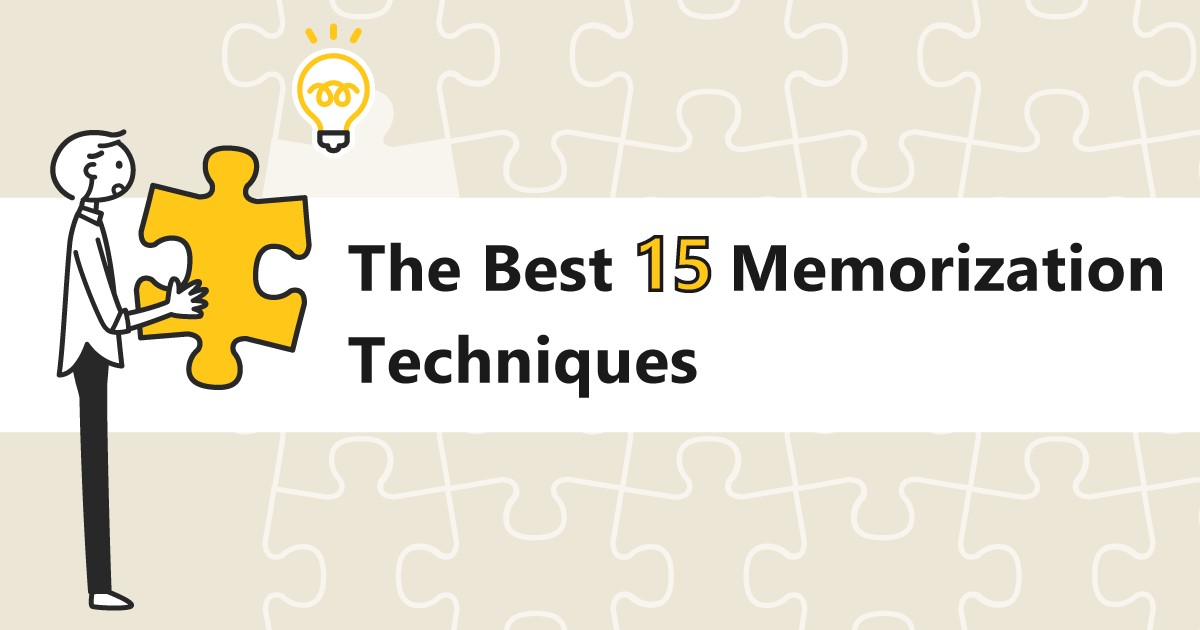
The Best 15 Memorization Techniques

What methods do you use to memorize things? Not only students, but even working adults are sometimes required to memorize things for certification exams, promotion exams, and so on. Since memorization is something that you will be dealing with throughout your life, it is a good idea to know how to memorize things more effectively for yourself. In this issue, we would like to pick up 15 recommended memorization methods and introduce in detail the mechanism of memorizing and tips on how to memorize efficiently. If you are about to start memorizing something, please take a look at them. 15 recommended memorization methods Here are 15 recommended memorization methods. Learn about the characteristics of each and choose the memorization method that suits you best. Memorization Method 1] Writing First of all, writing makes it easier to memorize. This is because moving your hands stimulates your nerves and activates your brain. In particular, English words and ancient vocabulary are memorized more vividly by writing. Writing is a more effective method of memorization than following words with the eyes. Memorization Method 2] Reading Aloud Reading aloud is also recommended. This will help you remember more easily, not only by providing visual information but also auditory information. It is more effective than silent reading, so when studying at home, try to memorize by actively speaking aloud. However, if you are in an environment where it is difficult to speak out loud, even whispering is effective enough. Memorization Method 3: Physical Exercise It is also recommended to memorize by doing squats, stretching, and other physical exercises. Exercise will help you relax and activate your brain. Sitting in a chair is effective for memorization, but if you find that it does not help you remember as much as you would like, try going outside and doing some light physical exercise. Memorization Method 4] Tell others When you tell others what you have learned, you will be able to memorize it easily. This is because your mind will be organized by explaining it in your own words. Also, by talking to a third party, you will be able to grasp your own level of understanding and see how much of what you have learned has been retained in your memory. Memorization Method 5] Memorize by association One of the most effective methods for memorizing words in ancient Japanese and English is to memorize them by associating them. Try to memorize words and sets of words that are related to each other. For example, if you memorize "round-trip," you should memorize its synonym "one-way. This is more efficient than memorizing a single word and will help you retain the word in your memory. Memorization Method 6: Use colored pens. Using colored pens makes memorization easier. By using red for words you want to remember and yellow for important sentences, you will be able to memorize them more easily. However, be careful not to use too many colored pens directly on the text, as this will make it difficult to tell which parts of the text are important. Memorization Method 7] Use Red Sheets The use of a memorizing pen and red sheets that can hide letters is also effective in memorization. You can memorize important words and phrases while hiding the part you want to memorize. Memorization Method 8: Use diagrams, illustrations, and videos We recommend memorizing not only by writing, but also by using diagrams, illustrations, and videos. Especially in science and social studies (history), studying together with video images makes it easier to visualize and memorize terms. Nowadays, there are channels on YouTube that provide easy-to-understand explanations. Let's combine memorization by watching with memorization by writing. Memorization Method 9] Use Sticky Notes We also recommend using sticky notes for memorization. First, write the word on the front, write the answer on the back, and post it in a place where you can see it in your daily life, such as the bathroom or refrigerator. The key is to always post around 10 sticky notes, keeping the ones you get wrong and peeling off the ones you get right after checking the answers to the words and their meanings. Repeating this process will help your memory to stick. Memorization Method 10] Create a word list Matching words is an effective way to memorize. It can be used to memorize historical timelines and mathematical formulas while stimulating the brain. In addition to the standard "Ii-no-Kuni (1192) Tsukurou Kamakura Shogunate" and "Fill up (1851) Te Taihei-Tengoku", you can also make up your own words for terms you find difficult to remember. Memorization Method 11] Reflective Answers If you can get a third party to help you, ask them to give you a question in a question-and-answer format and answer it reflexively. By answering the question immediately, it will be easier to retain the answer in your memory. If you are doing this alone, practice answering questions quickly using sticky notes or check sheets. Memorization Method 12] Use the Squat Study Method The "squat study method," in which you study over and over again, is also useful for memorization. The memorization procedure is as follows (1) Cover the page of words you want to memorize with a checklist or a large sheet of paper, and answer the questions in order (2) If you make a mistake, understand the meaning and start over (3) When you have memorized all the words without making a mistake, move on to the next page. By repeating the above steps (1) to (3), you will be able to consolidate your memory. The squatting study method is an effective method of memorization, as it eliminates one by one the common "I-think-I-remembered-things" that tend to occur in memorization. Memorization Method 13: Use the Mille Crepe Study Method The mille crepe study method is recommended for use in combination with the squat study method. The name "Mille Crepe Study Method" comes from the fact that you study in layers, just like a mille crepe. For example, if you want to memorize 30 words in 2 days, follow the steps below. (1) Memorize 30 words in one day (2) Memorize 30 new words on the second day (3) Review the 30 words memorized on the first day Repeat steps (1) through (3) until you reach your target number of words. When you think you have memorized all the words, start over again from day 1 for the second week. Memorization Method 14: Use the Memory Palace Memory Technique There is a method of memorization using Memory Palace Mnemonics. In Memory Palace, you place the things you want to memorize in buildings. You order the streets and buildings that you see in your daily life and associate the location with what you want to memorize. For example, let's say that when you leave your house in the morning, you set the entrance as 1 and the street in front of your house as 2. You then set up the words you want to remember for each location. The key is to include a story that weaves a strong image or emotion around each location. Tying it to an unrealistic story will leave an impact on your memory. Memorization Method 15] Use an Application Nowadays, there is a way to memorize using an app on your smart phone. The advantage of using an app is that you can memorize in your spare time while commuting to and from school or work. Also, they do not require bulky luggage like reference books or notebooks. There are an increasing number of apps that allow you to record and highlight your study results, so you can choose the one that best suits your purpose. Back to Table of Contents Subject-Specific Memorization Recommendations Memorization methods vary depending on the subject matter covered. Next, let's look at the recommended memorization methods for each subject. Japanese In addition to writing, Japanese involves memorizing kanji characters. When memorizing kanji, it is important to first read the kanji aloud. Writing the kanji after reading it aloud will make it more effective. Also, simply reading books and familiarizing yourself with kanji will help your memory to stick. If you are not good at Japanese, choose a book of your favorite genre and read it once. Arithmetic and mathematics In the case of arithmetic and mathematics, you must learn how to use and apply formulas rather than memorize them. Being able to explain to a third party how you solved a problem using a formula will help you remember. Ancient Japanese In ancient Japanese, it is important to memorize words and phrases repeatedly. It is effective to increase the amount of memorization, so it works well with the squatting study method and the mille crepe study method, which allow you to memorize many words at once. In addition, the ancient Japanese language has unique rhythms and phrases. As with kanji, memorizing them aloud will help you remember them. Science For science, we recommend using diagrams, illustrations, and videos as a method of memorization. There are many aspects of science that can only be understood or experienced visually, such as diagrams and experiments. It is often difficult to understand just by memorizing words, and it will not lead to memory retention unless you understand the underlying "why this is so. Society (History) In social studies, try to memorize not only one matter, but also the content associated with it. For history, you can memorize the chronology of the year by using a word list. While using reference books, seek a method that is easy for you to remember. Also, watching movies, dramas, documentaries, etc. will help you memorize naturally with interest. If you are interested in something, it will be easier to grasp the cause-and-effect relationships and timelines before and after. English English vocabulary is the most important part of English that needs to be memorized. Instead of memorizing only one English word, you can memorize related synonyms and opposites by relating them to each other. Also, try to memorize them together with example sentences. If you know how the word is actually used, it will be easier to visualize the word and retain it in your memory. Back to Table of Contents The Mechanism of Memorization Memorization is largely related to brain memoryThe brain has two types of memory: short-term memory, which stores information temporarily, and long-term memory, which fixes information for a long time. In memorization, it is said that it is important to change this short-term memory into long-term memory as much as possible. By inserting information repeatedly during a certain period of time, the brain makes the mistake of thinking that the information is something to be remembered with priority. According to an experiment conducted by Hermann Ebbinghaus, a 19th century German psychologist, people forget 66% of what they have learned after one day. (Ebbinghaus' Forgetting Curve) Therefore, it is important to repeat and memorize through repetition using the squat study method, the mille crepe study method, and so on. Back to Table of Contents Tips for Efficient Learning We have introduced specific memorization methods. Next, let's look at tips on how to memorize them efficiently. Stimulate the five senses Stimulating the five senses activates the brain and increases memorization. Those who have trouble remembering may just be following the text with their eyes and not using auditory information. By speaking out loud and moving your body, you will be able to memorize more efficiently. Memorize repeatedly The brain has a "hippocampus" where information is imprinted as long-term memory by repeating it over and over again. Therefore, try to memorize the same words and terms over and over again. Even if you think you have memorized a word or term, it becomes difficult to recall it after a few days. Don't try to memorize them all at once. It is not effective to try to memorize everything at once and cram it into your head. This is because there is a limit to how much a person can memorize in a day. Know that you cannot memorize everything right away, and repeat the lesson little by little every day to consolidate it in your memory. Get a good night's sleep. Memorization should be done with a good night's sleep. This is because lack of sleep will greatly reduce your concentration and memory, and you will not be able to fully benefit from the program. In addition, the human brain works to organize and consolidate what it has memorized during sleep. The best time to consolidate memories is immediately after waking up in the morning when the brain is in its freshest state, or at night before bedtime. Eat a brain-healthy diet. To memorize efficiently, eat a brain-healthy diet. In particular, blue fish contains DHA (docosahexaenoic acid), which activates the brain and helps with memorization. Fruits containing vitamin C and soybeans, which help memory and concentration, are also recommended. Combining Memorization Methods Let's combine the memorization methods introduced in this article. If you use only one memorization method, it tends to become monotonous and you will get bored. The point is to combine them in a way that allows you to use all of your senses. Choose memorization methods such as writing, reading, and physical exercise. Be interested in As much as possible, be interested in the genre you are memorizing. If you have an interest, you will be able to memorize while maintaining motivation. For example, for English, you can watch foreign dramas or foreign movies, and for science, you can visit museums or watch explanatory videos. If you are not good at a certain genre, you can ask your friends, acquaintances, or teachers how they memorize. Take advantage of your golden hours. It is said that there are other golden hours besides the morning when the brain can easily input information: before meals and before going to bed. Memorized information on an empty stomach is more likely to be input because the brain judges it to be life-threatening information. It is also effective to memorize before going to bed because the brain organizes information during sleep. It is important to be conscious of the time you memorize. Back to Table of Contents SUMMARY We have presented 15 recommended memorization methods and tips for efficient learning. It is important to memorize by reading aloud and using various useful tools, not just by following the words with your eyes. Recommended memorization methods differ for each subject, so be sure to choose the most effective one based on the genre you wish to memorize. Our e-learning system "learningBOX" can conduct e-learning studies and tests using memorization cards. You can also repeat the study and keep track of your grades, so you can keep track of how well you are absorbing what you have learned. The system is easy to use and low-cost, so it is sure to be useful for you. We also offer a free plan that you can try for free, so please feel free to start with a free trial. ▼Here's another recommendation! Also read Back to Table of Contents
blog

How to Create an Effective Survey Questionnaire

If you work for a company, you probably have the opportunity to create or answer questionnaires within your company. If you know what is going on in your workplace, you can improve employee satisfaction and identify problems. Furthermore, the results may lead to a reduction in employee turnover. They are also useful for conducting customer satisfaction and service surveys. Surveys are essential for both internal and external use, but it is important to know the points to keep in mind when creating them. In this article, we would like to introduce in detail the points to keep in mind when creating a survey within your company. If you are creating a survey within your company or are planning to do so in the future, please take a look at this article for reference. Table of Contents 01How to Create a Questionnaire to Understand the Current State of Your Company STEP1: Set the purpose of the survey STEP2: Set the questions to be asked STEP3: Set the types of questions STEP4: Set up the order of the questions STEP5: Create the text of the questions STEP6: Prepare the options STEP7: Final confirmation 02Example of Questionnaire (Template) ①Employee satisfaction questionnaire 2) 360-degree evaluation Stress check 03Points to consider when creating an internal questionnaire Be sure to include items related to basic information. Provide "Other" as an option. Do not mix similar choices. Be aware of the two-factor theory when creating employee satisfaction questionnaires. Explain the meaning of the questionnaire to employees. 04【Reference】Request text for internal questionnaires Example 1 Example Sentence 2 05【Reference】The use of the Web is recommended for in-house surveys. Increased collection rate Resulting in cost reduction 06Summary How to create a questionnaire to understand the current situation in your company It is important to create a questionnaire that will help you understand the current situation in your company and lead to improvements in the work environment. The following is a seven-step process for creating a specific questionnaire. STEP1: Set the purpose of the survey As a prerequisite, establish the purpose of why the survey is being conducted. Are the employees familiar with the management policies? Are there any dissatisfaction with the current working style? Are human relations with superiors and subordinates good? By taking a survey, you can obtain a variety of information as described above. Setting objectives is the most important factor in understanding the current situation in the company and resolving issues. STEP2: Set the questions to be asked Based on the set objectives, consider the questions to be asked. After creating the general framework of the survey, such as whether to use a choice or descriptive format, it is easier to think about the actual questions to be asked. Try to keep the questions as small as possible, so that they can be answered in about five minutes, which will make it easier for the employees to get the content in their heads and not overload them. After the survey is completed, the data will need to be analyzed, so the questions should be designed to be easy for the creator to analyze. STEP3: Set the question types Set the type of question to be asked. The following types of questions are mainly used in in-house surveys. Radio button type Check box type Matrix type Scale Type Text Box Create your survey using a combination of types as needed. Radio Button Type Radio buttons are the most popular type of survey. It is a circular button with the middle cut out, and is used when you want respondents to answer only one question. How do you commute to the office? Walking 0 Bicycle 0 Train 0 Bus 0 Other Check box type The checkbox type is used when you want to receive multiple responses. Use the square button with the middle out to indicate "multiple responses allowed. Please tell us what stresses you out (multiple answers allowed). □ Job description □ Relationships □ Commute time □ Overtime work □ Other Scale Type The scale is a type of scale that is used when you want to check the degree of satisfaction of an employee. It is often used to find out the level of satisfaction and feedback from employees. For example, "Are you satisfied with your current salary? 5-point scale Satisfied 0 Somewhat satisfied 0 Neither satisfied nor dissatisfied 0 Somewhat dissatisfied 0 Dissatisfied Matrix Type The matrix type is used when multiple items are asked to be answered with the same choices. It is often used when you want to ask the same question all at once. What is important to you in your work? 5 steps Applies to Somewhat applicable Can't say either way Does not apply to me very much Does not apply to me Outcome 0 Zero Zero Zero Zero human relations 0 Zeros Zero 0 0 Welfare 0 Zero 0 0 0 Text Box Type A textbox is an open-ended type. They may be placed at the end of the survey if you want to ask a previous question in more detail, or to get free opinions. Please tell us why you answered the question as shown in Q0. STEP 4: Align the order Align your internal survey in an order that makes it easy to answer. Respondents will feel uncomfortable if they have to think carefully or if difficult questions are asked first. Therefore, questions that are difficult to answer should be placed last. Also, placing questions out of order can cause a "carryover effect," where the earlier questions affect the answers to the later questions, which can reduce the accuracy of the analysis. It is important to consider the order of the questions so that they are easy for respondents to answer and for the creator to analyze. STEP5: Create question text Create the question text according to the question type. It should be written in simple, neutral language, avoiding words that are unfamiliar to the respondent and wordy phrases. The key is to keep the questions brief and easy to understand, with only one or two lines. STEP6: Prepare options Prepare appropriate options. Generally speaking, it is advisable to prepare at least 5 questions and at most 15 questions, depending on the content of the question. Try to prepare as many options as possible, since similar options make it difficult for the respondent to answer the question. STEP7: Final confirmation After completing Steps 1 through 6, be sure to do a final check. We will check for typographical errors and omissions, and that the text is easy to understand. Especially for internal questionnaires, be careful not to create a poor quality questionnaire, as this can lead to a loss of trust among employees. Back to Table of Contents Sample Questionnaire (Template) Let's take a look at some sample templates to see what kind of questionnaires are actually used in companies. In this section, we will introduce three templates that are often used for internal questionnaires: "Employee Satisfaction Questionnaire," "360-degree evaluation," and "Stress Check. Employee Satisfaction Questionnaire 1. what is your gender? 2. What is your age? 3. 3. what department do you belong to? 4. how long have you been with us? How many years have you been with the company? 5. How challenging is your current job? 6. How satisfied are you with the relationships in your current job? 7. How satisfied are you with your current job? 8. How much would you recommend your current job to a friend? 9. How much do the following items apply to you? (e.g., "freedom and discretion," "results and cooperation," etc.) 10. 10. would you like to continue working at your current place of employment? 11. if you have any problems or requests regarding your current workplace, please feel free to write them down (free answer). (Free description) The Employee Satisfaction Questionnaire provides information on job satisfaction and ease of working. By analyzing the results, it is possible to improve the workplace environment and prevent a decline in the retention rate. (2) 360-degree evaluation 1. what is your gender? 2. what is your age? 3. what department do you belong to? 4. how long have you been with us? 4. how many years have you been with the company? (5) What is your position in relation to Mr. 00? (6) How does the following apply to Mr. 00? (6) How much do the following apply to you? (e.g., honesty, responsibility, creativity, cooperativeness, etc.) 7. Finally, please feel free to write your opinion about Mr. 00. (Free description) A 360-degree evaluation is conducted on employees with whom you have a working relationship and is a method of evaluating a specific subject. By having the subject of the evaluation viewed from the perspective of someone in a different position, information about the subject's abilities and skills can be gathered. The questionnaire also has the advantage of providing an objective evaluation and allowing the employee to notice areas for improvement. Stress Check Please put a "0" in the most applicable item. 4. A. I would like to ask you about your job. (applies Somewhat applies Somewhat does not apply Not applicable)   I have a lot of work 2. it requires constant concentration 3. I can work at my own pace 4. 3. I can work at my own pace 4. the work suits me, etc. B. We would like to ask you about your condition. (Always Often Sometimes Almost never) 1.   1. energetic 2. irritable 3. always anxious 4. lack of appetite, etc. C. Please tell us about your relationships. (Very much Quite a lot Somewhat or not at all) 1.   1. have you ever asked your boss for advice about work?  2. have you ever talked to your coworkers about work?  Have you ever consulted with a friend about work? 4.  Have you ever talked to your family about work? etc. D. We would like to ask you about your level of satisfaction. (Satisfied Somewhat satisfied Somewhat dissatisfied Dissatisfied) Stress checks are now mandatory in workplaces with 50 or more employees as a result of revisions to the Occupational Health and Safety Law. By conducting the questionnaire on a regular basis, we can learn about employees' mental health problems and aim to create a safe and secure work environment. Back to Table of Contents Points to Consider When Creating an Internal Questionnaire Here are five key points to look for when creating an internal questionnaire. Be sure to include items related to basic information. Include "other" as an option. Do not mix similar choices. Utilize the two-factor theory in employee satisfaction questionnaires Explain the meaning of the survey to employees. Be sure to include items related to basic information In the first half of the survey, be sure to include items related to basic information. This is because it will allow for detailed categorization of attributes and analysis of individual trends. In the case of an internal survey, this would include gender, job title, department, length of service, etc. Include "Other" in the options. The "Other" option should be included in the choices. If there is no "Other," respondents may not be able to answer any of the questions. However, if there are only a few options, most respondents will choose "Other. The key is to set an appropriate number of items and then provide an "Other" option. Do not mix similar choices. Do not include answers with similar content in the choices. For example, "friend" and "acquaintance," which can be interpreted differently by different people. Putting them in the same option may cause respondents to make different choices and reduce the accuracy of the survey. If you want to include both types of responses in the survey, it is important to use a check box type question rather than a radio button type question. Be aware of the two-factor theory in employee satisfaction surveys. When creating an internal survey, be aware of the two axes proposed by clinical psychologist Frederick Herzberg: the motivational factor and the hygiene factor. Motivational Factors Motivational factors are those that bring satisfaction at work. Motivation to work, such as achievement, recognition, and promotion, fall under motivational factors. By incorporating these factors into your survey, you will be able to find ways to improve employee motivation. Hygiene Factors Hygiene factors are those that bring about a sense of dissatisfaction at work. Salary, relationships, and work environment fall under the category of hygiene factors. By incorporating these factors into your survey, you will be able to clarify "where employees are dissatisfied," and if you take action, you will be able to prevent a decline in turnover. Explain the meaning of the survey to employees. Explain the meaning and purpose of conducting the survey in advance of the in-house survey. If the company's purpose is clear, employees will be more willing to cooperate with the survey. In order to get the true feelings of the employees, be sure to provide information on whether the survey will identify individuals and whether it will affect their personnel evaluation. This will increase the response rate to the survey. Back to Table of Contents Reference] Internal survey request letter Before implementing an internal survey, a preliminary request letter is necessary. A well-crafted request letter will increase the survey response rate. In this section, we will introduce an example of an internal survey request letter sent via e-mail. Example 1 Subject: [Deadline: Monday, February 12, 1:00 p.m.] Request for questionnaire To whom it may concern Thank you for your cooperation. This is 00 from the Human Resources Department. The Human Resources Department would like to request a stress check questionnaire for all employees. The questionnaire form will be sent to you via internal mail, so please take a few minutes out of your busy schedule to respond by e-mail by 1:00 p.m. on Monday, February 12, 2012. Please allow about 20 minutes for a response. Thank you for your cooperation. Example 2 Subject: Request for an internal questionnaire Dear Mr. 00 Request for cooperation in new product questionnaire The Planning Department is currently developing a new product 00. Therefore, we would like to ask you for your impression and image of the appearance of the product in 00. The questionnaire will be sent to you in the attached file, so please reply to it by internal e-mail by 4:00 p.m. on December 10 (Fri.). Please note that the questionnaire is anonymous, and your answers will not be disclosed to any third party. We appreciate your cooperation. The key points to remember when sending an internal survey are to include a closing date and the time it will take to respond. Also, as in the second example, if you include a statement regarding the handling of personal information, respondents will feel more comfortable and will be more likely to answer honestly. Since respondents will be taking time out of their busy schedules to cooperate with your survey, try to make sure that all the details are available in a single email message. Back to Table of Contents Reference] We recommend the use of the Web for in-house surveys. We recommend using the Web for in-house surveys rather than paper surveys (survey forms). In addition to making it easier to tabulate the results, the Web is more suitable for analyzing the results and identifying issues. In addition, the use of a system makes it easier to manage the progress of responses and tabulate results. Other advantages include the following Reduction of typographical errors and omissions Increased response rates resulting in cost savings There are now a variety of free web-based survey services available. Increased collection rate Web-based surveys increase the response rate. Web-based surveys are easier on respondents because they no longer have to print out a survey form and handwrite it, and busy employees can answer on their computers or smartphones while traveling or taking a break, increasing the response rate. Resulting in cost reductions Web-based surveys can lead to significant cost savings. Not only do you save on the cost of printing out the survey forms, but you also save on time since the survey can be distributed simultaneously via email address. Back to Table of Contents Conclusion We have introduced some points to keep in mind while introducing a template on how to create an internal questionnaire. The point of the survey is not only to understand the current situation in the company, but also to provide content that will lead to the resolution of current problems and issues. If you know how to create them, you can use them in a variety of situations, including customer satisfaction surveys, as well as within your company. Web-based internal questionnaires have more advantages than written ones, and are now becoming mainstream. Our e-learning system "learningBOX" also includes a questionnaire function, which is easy to use and low-cost. If you are considering creating an in-house questionnaire including e-learning, please feel free to try our free service. We also recommend this service! Also read Back to Table of Contents
blog

How can companies reduce costs and increase efficiency?

How can companies reduce costs and increase efficiency? For companies, cost reduction is an indispensable element to maximize profits. However, since there are many different types of costs, it is not uncommon for companies to wonder which costs should be reduced and how to achieve cost reduction. This article will discuss specific ways in which companies can reduce costs and increase efficiency. The flow of implementing cost reductions and case studies will also be introduced, so those in charge of companies wishing to reduce costs are encouraged to refer to this article. Click here for Table of Contents Overview of Cost Reduction Flow of Implementing Cost Reduction Three ways to reduce costs Two examples of cost reduction Summary Cost Reduction Overview Cost reduction is the process of reducing wasteful expenses and costs incurred by a company in the course of its operations. Although the types of costs incurred vary from industry to industry, the following items are basically incurred as costs. Personnel costs Recruitment costs Office costs IT equipment costs Among costs, labor costs are particularly difficult to reduce. Personnel costs can be broken down into several categories, including transportation and training costs. It is not uncommon for managers to be concerned about reducing labor costs, as it is the most costly item, but also an essential part of corporate operations. Benefits of Cost Reduction There are a variety of benefits that can be realized if cost reductions can be achieved. Typical examples of benefits include ...can increase profits. Cost reduction is necessary to increase a company's profit. A company's profit is sales minus costs, and the more costs are reduced, the more profit is earned. ... leads to increased operational efficiency. Cost reductions not only increase profits, but also improve operational efficiency. Cost reduction efforts may result in the elimination of wasteful operations as a result of reviewing the way business is conducted. Increased corporate value. Costs saved by cost reduction can be allocated to new business development. If innovation can be realized, corporate value will be enhanced. Flow of Implementing Cost Reductions Cost reductions are generally implemented in the following flow. Assess the current situation and set goals Determination of plan and dissemination of goals Implementation and analysis of the plan Improvement of the plan Each of these steps is explained in detail in this section. Let's make cost reduction a reality by understanding the key points of cost reduction. STEP1: Grasp the current situation and set goals When working on cost reduction, it is important to understand what costs are currently being incurred. Without clarifying what and how much costs are being incurred, it is impossible to determine the types of costs that need to be reduced. It is important to understand the types and amounts of all costs being incurred. It is also essential to set cost reduction goals. If you proceed with cost reduction without setting goals, employees may not know how far they should go and this may lead to a loss of motivation. STEP2: Decide on a plan and communicate the goals After deciding which costs are to be reduced, a cost reduction plan is created. When creating a plan, it is important to make projections to ensure that cost reductions will not cause any disadvantages to the company. If you do not make a forecast, you may end up reducing costs that do not need to be reduced, which may in turn have a negative impact on your company. Employees should be informed of the plan. Cost reductions can sometimes cause inconvenience to employees. Communicating the reasons for and goals of the cost reductions will help employees understand and cooperate. STEP3: Implement and analyze the plan This step is to implement the plan and analyze its effectiveness. Cost reduction efforts do not always produce immediate results. Be sure to check regularly to see what results have been achieved by your efforts. It is important that the analysis of the plan be conducted in a concrete manner. Simply stating that "we did not reach the expected goals" does not clarify the next action to be taken. Make it easy for everyone to check, for example, by expressing the percentage of achievement in figures. STEP4: Improve the plan If cost reductions are not producing the desired results, efforts must be made to improve the plan. First, think of improvement plans and choose the ones that are easy to implement. When considering improvement plans, soliciting ideas from as many employees as possible may generate innovative ideas. It is also important to ask for the cooperation of employees again in situations where improvement ideas are to be implemented. Without the cooperation of each and every employee, it will be difficult to make improvements. Three ways to reduce costs There are three main ways to reduce costs. Each is detailed below. Manualize your operations If you want to proceed with cost reduction, make your operations manual. The first burden for employees is to learn their work. If the work is not manualized, the content of training may vary from trainer to trainer. As a result, employees may have questions about the content of the training, and extra time may be required to resolve them. If the work is manualized and a separate manual for training is prepared, training can be implemented relatively smoothly. Going paperless Another way to reduce expenses is to promote a paperless work environment. Costs can be reduced if IT-based business processes can be implemented, such as using chat tools and sending documents in PDF format instead of paper. However, promoting a paperless workflow tends to take time. Let's start with something easy to start with, such as proactively using lined paper. Use e-learning One way is to use e-learning so that employees can study on their own. With e-learning, learners can use digital devices such as smartphones and tablets to study when and where they want. There are many advantages, such as no need to gather employees for training and development, and no costs incurred in preparing materials. Company personnel who want to reduce training and development costs should consider using e-learning. Two Cost Reduction Case Studies When working to reduce costs, it is important to review case studies ahead of time. Here are two examples of successful cost reductions. Case 1: Big A Co. Big A Co., Ltd. is a company that operates a number of hard discount stores nationwide. The company had previously faced the problem of spending too much time on training. The company changed from paper manuals to manuals that allow users to check the contents with images and videos using smartphones, thereby reducing the amount of training time. Case 2: EarlyCross Tax Corporation EarlyCross, a licensed tax accounting firm, hired inexperienced staff and had to train them on the same content each time they were hired. Therefore, the company introduced a system that makes it easy to create manuals, and as a result, succeeded in reducing the time required for human resource development. If you want to create manuals that are easy for your employees to understand and highly effective in educating them, you can use learningBOX. learningBOX has many effective features for manual creation, including the ability to grasp the learner's learning status at a glance and the use of a quiz format to increase the learner's level of understanding. The quiz format can be used to increase learner comprehension. SUMMARY In addition to the methods and processes for reducing training and development costs, this article has also introduced the benefits of cost reduction and case studies. Cost reduction is important for companies. Cost reduction has a variety of benefits, such as increased profits and operational efficiency, so let's work on it as much as we can. Due to the impact of the new coronavirus, online education is now the mainstream. If you want to work on online education, we recommend learningBOX, which can achieve effective development and training even online! First, try our free plan, which is available for up to 10 users, including the administrator, free of charge.  
blog

What is "Japanese-Style School Education in 2021"? Explanation of Japanese-style school education, future direction, and use of ICT

Have you ever heard of the term "2021 Japanese-style school education"? Most educators have heard of it, but most readers of this article have probably never heard of it, or have heard of it but do not know much about it. In this article, we will provide an easy-to-understand overview of "Japanese-style school education in 2021," from the achievements and challenges of Japanese-style school education to its future direction and basic concepts regarding the use of ICT. If you are interested in what kind of education the children who will support Japan in the future will receive, please refer to this article. About Japanese-style education at 2021 The term "2021 Japanese-style school education" originated from the Central Council for Education (Chukyo-kan), an organization of experts established by the Ministry of Education, Culture, Sports, Science and Technology. Briefly, when the Minister of Education, Culture, Sports, Science and Technology, who is in charge of educational administration, enacts an important policy, he or she first asks the Chukyo Council for its opinion in the form of a "consultation" (shimon). After repeated deliberations, the Chukyo-kyo Council publishes a report in the form of a "report. In January 2021, the Chukyo Council, which plays an important role in the future of education in Japan, issued its "Report" in the form of the phrase "Japanese-style school education in 2021. Reference] Aiming to establish a "Japanese-style school education in 2021" - Optimal individualized learning and collaborative learning that draws out the potential of all children (Report) What is Japanese-style education? So what is "2021 Japanese-style school education"? Let's take a look at the outline of this concept in accordance with the report compiled by the Central Council for Education. Even in an era that is becoming increasingly complex and unpredictable, it is necessary to ensure that children's qualities and abilities are nurtured. Steady implementation of the new Courses of Study" and "the use of ICT" are considered indispensable for their development. On top of this, new trends are emerging based on the role that Japanese school education has played to date and the results it has achieved. Based on the above, we define the school education we aim to realize throughout the 2020s as "2021 Japanese-style school education. Qualities and abilities to be fostered in the future Society is undergoing accelerating changes such as "Society 5.0" (*1), and the spread of new types of coronavirus infection is making it difficult to predict the future. What are the qualities and abilities that should be nurtured in a rapidly changing society? In the report compiled by the Council for Middle Education, the following qualities and abilities should be nurtured through the steady implementation of the new Courses of Study and the use of ICT. To enable each student to recognize his/her own goodness and potential, as well as to respect all others as valuable beings. To enable students to overcome various social changes in cooperation with diverse people, to create a rich life, and to become the creators of a sustainable society. 1 Society 5.0 refers to a new society following the hunting society (Society 1.0), agricultural society (Society 2.0), industrial society (Society 3.0), and information society (Society 4.0) (Cabinet Office: Society 5.0). Back to Table of Contents What is Japanese School Education? Before considering "Japanese-style school education in 2021," we would like to introduce what Japanese-style school education was like until the Heisei era. In its "Report," the Central Council for Education defines Japanese-style school education as school education that nurtures children's intellect, virtue, and body in an integrated manner. The three elements of knowledge, virtue, and body are as follows. Knowledge: Guarantee of learning opportunities and academic skills Virtue: Guarantee of holistic development and growth Body: Guarantee of physical and mental health After the promulgation of the "school system" in 1872 (Meiji 5), the school attendance rate was low in the early days of the compulsory education system. Under such circumstances, the common learning contents were minimal, such as reading, writing, and arithmetic, and a grading system (a thorough course-based system for advancement) was adopted. Around 1890, a curriculum was systematized to nurture knowledge, virtue, and body in an integrated manner, and the classroom was established as a group of classes. After the war, in 1945, the School Education Law established the basis of the school education system, which continues to this day with nine years of compulsory education. Furthermore, a system was established to provide a foundation for equal educational opportunities and the maintenance and improvement of educational standards, making high-quality school education available anywhere in Japan. The schools have played a major role not only in academic instruction but also in student guidance, and have provided guidance based on a comprehensive understanding of children's circumstances, thereby forming a Japanese-style school education system that nurtures knowledge, virtue, and body in an integrated manner. The report also presents the achievements and challenges of Japanese-style school education to date, so let's take a closer look. Achievements of Japanese School Education The following three points are listed as outcomes of Japanese-style school education. Top class international academics Narrowing regional differences in academic performance High level of normative and moral awareness Schools play an important role not only in academic instruction but also in student guidance. Japanese-style school education is highly regarded in other countries for its comprehensive understanding of children's situations and guidance. According to the OECD (Organization for Economic Cooperation and Development) Education Policy Review, Japanese students and adults are among the highest performing of all OECD countries, and the success of Japanese education is attributed to the extensive holistic education it provides, including school lunches and extracurricular activities. The "2049 National Survey of Academic Performance and Learning" also reports that the gap between the average percentage of correct answers in the lowest-performing prefectures and the national average is shrinking. Reference】 National Survey of School Achievement and Learning, 2049 The Role of Schools Reaffirmed by the Corona Disaster The role of schools has been reaffirmed by the temporary closure of schools due to the spread of the new coronavirus infection. The role of schools was reaffirmed in the following three areas Guarantee of Learning Opportunities and Academic Achievement Guarantee of holistic development and growth Guarantee of physical and mental health (a place where people can feel safe and connected, a safety net) The temporary school closure reminded us that schools play a role not only in guaranteeing learning opportunities and academic achievement, but also in ensuring holistic development and growth, and in playing a welfare role as a place to be and a safety net. At the same time, we can see that these three points are the strengths of conventional Japanese-style school education. Challenges Facing Japanese School Education Schools today face the following six challenges Diversification of children Decreased student motivation to learn Exhaustion of teachers due to long working hours Delayed response to the accelerated progress of informatization Impact of declining birthrate, aging population, and population decline Challenges highlighted by the spread of new coronavirus infections Many issues have been raised, including the increase in the number of students enrolled in special-needs schools and special-needs classes in elementary and junior high schools, the increase in the number of foreign students, as well as the rise in the relative poverty rate for children under 18 and the increase in the number of students who are bullied and truant from school. Under these circumstances, schools are required to provide a safe and enjoyable environment for all children to attend school, and to play an ever more important role in welfare and as a place for children to stay. Furthermore, according to a survey conducted by the Ministry of Education, Culture, Sports, Science and Technology (MEXT) on public schools during the coronavirus disaster [MEXT, "The situation of academic guidance in public schools in light of the impact of the new coronavirus infection (as of June 23, 2020) The report also found that the implementation status of "simultaneous interactive online instruction" was only 15% for public schools in each establishment unit due to insufficient ICT environment. Schools are required to make active use of ICT by students and teachers on a daily basis, and to ensure that children have learning opportunities even in times of emergency. New Movements in Japanese School Education The goal of "Japanese-style school education in 2021" is to realize a new era of school education that inherits and further develops the advantages of Japanese-style school education. The following three new movements for the future development of education are indicated. Full implementation of new curriculum guidelines Reform of work styles in schools GIGA School Concept Steady implementation of new curriculum guidelines The Courses of Study are curriculum standards established by the Ministry of Education, Culture, Sports, Science and Technology and revised every 10 years. The new curriculum will be fully implemented in elementary schools from FY2020, junior high schools from FY2021, and high schools from FY2022. Reform of Work Styles in Schools Recently, long working hours of teachers and staff have become an issue, and the Ministry of Education, Culture, Sports, Science and Technology (MEXT) is working to solve this problem. Specific efforts include thorough management of working hours, clarification and optimization of work duties, improvement of the number of teachers and staff, and expansion of the assignment of specialized staff and outside personnel. GIGA School Concept The GIGA School Initiative is an effort by the Ministry of Education, Culture, Sports, Science and Technology to provide one computer and high-speed network for every student in Japan. The reform is being promoted based on three pillars, including not only the improvement of the hardware environment, but also "software" such as digital textbooks and AI (artificial intelligence) drills that allow students to individually concentrate on areas of weakness, and the strengthening of "instructional systems" that utilize outside personnel such as local instructor training and ICT support personnel. Back to Table of Contents Japanese School Education in the 2021s In its report, the Council for Middle and Secondary Education (C.E.O.S.) stated that the type of school education it aims to realize throughout the 2020s, "Japanese-style school education in the 2021s," is "the realization of individualized, optimal learning and collaborative learning that draws out the potential of all children. The following is a summary of the three perspectives that should be realized. Three perspectives of "2021 Japanese School Education The following items are considered important for the realization of "Japanese-style school education in 2021. Children's Learning Optimal individualized learning" and "cooperative learning" are integrated and enriched. The learning style that each school aims to achieve is realized at each school level. Faculty and Staff Positively accepting changes in the environment and continuing to learn throughout his teaching life. Serves as a teacher who maximizes each child's learning Has the ability to act as a companion to support children's independent learning Environment that supports children's learning and faculty ICT environments are enhancing instruction and support and streamlining school operations in schools across Japan. The school education environment that supports learning in the new era is being developed. An attractive educational environment has been realized even in areas with declining populations. The emphasis is on breaking away from the "correctness principle" and "peer pressure" that have been practiced in the social structure up until now, and facing the diversity of each child, to realize school education that makes each child the subject of its own education. Reference] Aiming to Establish "2021 Japanese School Education" (Report) [General Commentary]|Ministry of Education, Culture, Sports, Science and Technology Children's Learning in Japanese School Education in 2021 At first glance, "individualized optimal learning" and "collaborative learning" may seem to be contradictory, but the report indicates that the best of both is to be combined appropriately. Individualized Optimal Learning To enhance "individualized instruction" by improving instructional methods and systems, as well as to promote the use of ICT environment and the development of a detailed instructional system with a small number of students. Collaborative learning In order to ensure that "individualized learning" does not fall into "isolated learning," through inquiry-based learning and experiential activities, etc., students should respect others as valuable while collaborating with others to create better learning through the combination of different ways of thinking. In order to realize these two types of learning, ICT is mentioned as being indispensable, and it can be said that schools are about to change. Back to Table of Contents Future Directions for the Construction of "2021 Japanese School Education In order to nurture the intellect, virtue, and body of all children in an integrated manner, regardless of regional differences or the economic status of their families, the role that Japanese-style school education has played in the past must be carried on. In order to realize the "Japanese-style school education of 2021," the following reforms are necessary. Refine, reduce, and focus the scope, content, and amount of work, roles, and guidance that schools and teachers should provide. Support children's growth through cooperation and collaboration between schools and local communities An education that does not fall into a "dichotomy", but rather combines the advantages of both in an appropriate manner. The report calls for the steady promotion of the PDCA cycle for these education policies, and states that the Central Council for Education will conduct necessary verification mainly by the Elementary and Secondary Education Subcommittee. Six Directions for Reform The following six specific directions have been identified for the realization of "individualized optimal learning" and "collaborative learning" that will bring out the potential of all children. To improve the quality, diversity, and inclusiveness of schooling and to achieve equal opportunity in education. Achieve school management through collaboration and sharing of responsibilities Achieve optimal combination of existing practices and ICT Appropriate combination of course completion, acquisition, etc. Guaranteeing learning overcoming infectious diseases, disasters, etc. Achieve sustainable and attractive school education in the midst of changing social structures While looking to the future, it is also necessary to consider how to allocate schools, maintain facilities, and collaborate among schools in order to provide high-quality and attractive school education in rural areas. Back to Table of Contents Basic Idea of ICT Application in "2021 Japanese School Education ICT is essential as a fundamental tool for school education. Based on the basic concept of optimally combining existing practices with ICT, the following three points are considered important for realizing school education appropriate for the Society 5.0 era. Resolve various issues in school education and improve the quality of education Be aware of the PDCA cycle and conduct appropriate effectiveness verification and analysis Be careful not to make the use of ICT an end in itself. As Japanese school education has lagged far behind internationally in the use of ICT, it will be necessary to resolve various issues and make significant changes in school education in the future to improve the quality of education. Reference] Aiming to Establish "2021 Japanese School Education" (Report) [Summary] Ministry of Education, Culture, Sports, Science and Technology Quality Improvement of School Education Based on the basic concept of ICT utilization, the following three specific directions are provided to improve the quality of school education. (1) Use of ICT to improve the quality of school education Utilize ICT to improve classes to realize independent, interactive, and deep learning, as well as to implement learning activities that were not possible before and to enhance learning outside of school, such as at home. Provide guidance that is tailored to each student, including detailed support for students with special needs and advanced learning opportunities that develop individual talents. (2) Improvement of teachers' qualifications and abilities for the use of ICT Achieve an environment in which teachers can acquire the necessary qualities and abilities through overall teacher training and development. Teacher training colleges and faculties will play a central role in building a teacher training model that responds to the new era, as well as a network of teachers who are constantly working to improve their teaching. (3) ICT environment development Terminals deployed under the GIGA School concept are assumed to access the cloud and utilize various services. It is hoped that each school (elementary, middle, and high school) will have one terminal per student and that students will be able to bring their own terminals home. It is important to utilize "one terminal per student" for the nine years of compulsory education, to accumulate, analyze, and utilize learning histories, and to enhance detailed guidance according to the characteristics of each student and his/her level of learning retention. It will also be necessary to systematically improve systems, facilities, and equipment to support learning in the new era, including measures to ensure physical distance based on "new lifestyles," a new guidance system, and the securing of human resources for teachers. Back to Table of Contents SUMMARY In summary, "Japanese-style school education in 2021" can be expressed as "Japanese-style school education + new movements = Japanese-style school education in 2021. In addition, it can be said that "Japanese-style school education in Reiwa" is to utilize ICT to realize individualized and optimal learning and collaborative learning that draws out the potential of all children. The overview of "Japanese-style school education in 2021" that we have introduced here may provide a hint for those who are involved in not only school education but also various types of education to think about the future of education. We recommend the e-learning system "learningBOX" for the realization of Japanese-style school education in 2021. learningBOX has all the functions for creating and distributing teaching materials, managing grades, and managing students. We recommend that anyone can easily build a web-based learning environment. We also offer a free plan, so you can easily try out the system to see what kind of effect it will have on your students. If you are interested in improving the quality of education through digitization while reducing the burden on teachers, please try the free trial first. ▼ We also recommend this one! Also read. Back to Table of Contents
How to create and add a block shuffling game

How to create and add a SCORM-compliant "block shuffling game

How to create and add a SCORM-compliant "Block Crashing Game"? Hello! This is Kobashi🌵 from Development. The temperature has dropped dramatically over the past few days, and the mornings and evenings have become colder. The season is slowly turning into autumn, and the year will be over in two months at the earliest. In this article, we would like to introduce a SCORM-compliant block-crunching game that will make autumn even more enjoyable. Our e-learning system [learningBOX] is a SCORM 1.2-compliant LMS! Therefore, if you add a code to send learning data to the LMS, you can have users use it as learning materials. Click here for Table of Contents 1. What exactly is SCORM? 2. SCORM-compatible block-crunching games 3. learningBOX is an LMS that supports SCORM materials 4. summary What exactly is SCORM? SCORM is an e-learning standard that defines the specifications for combining an LMS (Learning Management System) and teaching materials. SCORM was developed by Advanced Distributed Learning in the U.S. In Japan, the Japan E-Learning Consortium certifies LMSs and content, as well as SCORM-related qualifications. SCORM-compliant materials can be used in a SCORM-compliant LMS. Purpose of SCORM ▼ SCORM has two main objectives. 1. to register teaching materials in the system 2. to exchange grades and other information between teaching materials and the system If you would like to know more about SCORM, please refer to "What is SCORM? SCORM-compliant block-crunching game The content introduced here is not so much a teaching tool as it is a game. First of all, please watch this video! About the details of the "Block Crashing Game The "Block Crashing Game" introduced here is a slightly modified version of the one published by MDN Web Docs using "Canvas". If you know some javascript and html, please give it a try. Reference: https://developer.mozilla.org/ja/docs/Games/Tutorials/2D_Breakout_game_pure_JavaScript/Mouse_controls The changes to the block-crunching game are here. The game was automatically repeated after the game was over. The game was automatically repeated after the game was finished. To make the score 100 points, the number of blocks was changed from 15 to 20 for easier calculation, and 5 points were added per block. The message at the end of the game was changed from an alert to a text display. Changed to mouse operation only. learningBOX is an LMS compatible with SCORM materials SCORM materials can be quickly reproduced by anyone who has written simple programs. You can download the block-crunching game from here. Once you have downloaded the content, let's check the actual operation on learningBOX. ⇒[download id="61379" template="Download educational materials"]. Let's check how the block-crushing game works! Try the block-breaking game from the learning screen! The learning status of the material will change to Pass or Fail. After learning, the grade data will be reflected. Checking the grade data of the block-crunching game Since learningBOX is a SCORM compliant LMS, grade data is also stored. The administrator can check the user's course history on the grade management screen, and can also download grade data in CSV format. The grading criteria for this block-crunching game is 80 points or higher for passing the course. For more information on how to view and overview the grade management, please refer to the grade management page here. Let's customize the block-crunching game! When you are learning content, you may find that you want to modify it in various ways, such as "I would like this kind of movement better here. If you have basic knowledge of Javascript, you can customize the contents to your own specifications! Example of customization) Change the passing criteria. Change the speed of the ball Change the number of blocks Change the number of blocks. Try changing the start button so that the game starts when the button is pressed. Try changing the game to a different one Please click here to read articles related to ▼SCORM materials. Summary You can create game-like flexible contents by importing handmade SCORM teaching materials. With learningBOX, you can publish your own games and set up ranking displays, etc! The "block-crushing game" introduced here is just one example, but you can publish your one-of-a-kind program on learningBOX! With learningBOX, you can create a wide variety of SCORM-compliant content simply by adding SCORM. Why don't you start by creating simple SCORM contents while having fun? Our e-learning system is easy for learners to use. If you are interested in implementing an e-learning system or using SCORM materials as learning content, please give our learningBOX a try. You can use learningBOX for up to 10 accounts for free for an unlimited period of time. ⇒Try our free plan Thank you for reading this article.
Hash function, stretching salt

Hash function, stretching salt

Hello. Hello. My name is Nishimura. It is the end of the fiscal year and I am very busy, but I am managing. I don't know my password. One of the inquiries to the support team of learningBOX is "I forgot my password, can you tell me? I've forgotten my password. Customers may think, "If you are the service operator, you should at least know your password, right? However, in fact, we have no way of knowing what is set in the password. Passwords are hashed In learningBOX, passwords are hashed and stored. Hashing is the process of performing some operation on the original value to create a value whose characteristics are known, but whose original value is not. For example, consider a hashing function that "finds the sum of each digit for an integer. It is easy to find the left-to-right value, but not the right-to-left value, right? This is called the one-way nature of hash functions. In the above example, the left value cannot be guessed from the right value, but it is not safe for a password authentication system because the left value can be easily obtained such that the right value is the same. How difficult it is to guess the right value is said to be collision-resistant or collision-safe, and it is important to use an appropriate hash function. Stretching to buy time. Brute force attack. A so-called brute force attack, in which any password can be broken if every possible password is tried. Stretching is a method to extend the time required for this brute force attack. Modern CPUs are fast; GPUs are even faster. A GPU at the level of a mere gaming PC can do 10TFlops, or about 10 trillion calculations per second. 100,000 hash functions can be executed 100 million times per second. In other words, an 8-digit password can be broken in one second. That's not good. If alphabets and numbers are used, it might take a day or so, but it can be broken in a day. That's not good. So, there is stretching. Stretching is a method of buying time by repeatedly passing the hash function through. 1024 times will stretch one day to 1024 days. It is safe there. Salt and safe. Even though it takes 1024 days, that is on a gaming PC. If you have a $10 billion budget, you can break it. It's a piece of cake. With a budget of 10 billion yen, you can create a magic reverse dictionary, such as the Rainbow Table, which will find the hash value after stretching for all possible passwords up to 10 digits. (To counteract this, we sprinkle salt on the passwords. This will prevent a reverse lookup attack by the rainbow table. Of course, it is possible to break this password if 10 billion yen is poured in to break it, but it is a matter of balance. Online and Offline Attacks Stretching and Salt was, in fact, talking about offline attacks. An offline attack is a method in which hashed values are leaked to the outside world and a brute force password estimation is performed on the PC against the hashed values. It may sound light to say that the hashed value has been leaked, but at this point, it is an information leakage incident. It is not an incident, but an accident. It is a serious situation. In order to prevent such a situation from occurring, development processes are being established, coding rules are being thoroughly enforced, code reviews are being conducted, and vulnerability assessments are being performed. On the other hand, "online attacks" are easy to execute. An online attack is an attempt to log in by entering an ID and password at the login screen. Anyone can do it. Preventing Online Attacks: Limit the Number of Times If you make a mistake in your password N times, lock your login. Since learningBOX 2.10.x, it is possible to set a limit on the number of times a password can be mistyped. Preventing online attacks: Two-factor authentication LearningBOX can notify you by e-mail of an additional authentication key if your ID and password are entered correctly. By using this function, unauthorized login is not possible unless the login authentication is broken in the mailbox to which the authentication key is sent. Prevent online attacks: IP address restriction By signing up for learningBOX as a dedicated server, you can restrict the IP address from which you can connect. This means that you can restrict connections to only those from your company. Finally Security technology is constantly advancing. It is important not to be satisfied with what you have learned once, but to keep on acquiring new knowledge. In addition, you can efficiently acquire overarching knowledge by obtaining official certifications such as the Information Security Management Examination and the Information Technology Security Assistants Examination. Although I am also non-registered, I have taken and passed the Information Security Assistance for Information Processing exam. ✌
Find more about learningBOX