How to Use the IT Implementation Subsidy 2025 for an e-Learning System
In 2025, as digital transformation accelerates, workforce development and operational efficiency have become critical management challenges for small and medium-sized enterprises (SMEs). Amid calls for work-style reform, addressing labor shortages, and improving productivity, the adoption of e-learning systems utilizing the “IT Introduction Subsidy 2025” is gaining attention. While implementing e-learning is an effective way to improve operational efficiency and advance work-style reform, many companies hesitate to adopt it due to concerns such as “cost being a barrier” or “uncertainty about whether the system will be used effectively even after implementation.” Therefore, this article provides a clear and easy-to-understand explanation of the “IT Introduction Subsidy 2025,” covering everything from its overview and schedule to the main changes from the 2024 fiscal year, as well as the application procedures for introducing e-learning using the subsidy. In addition, we will introduce the IT tools (e-learning systems) eligible for the “IT Introduction Subsidy 2025.” We encourage small and medium-sized business owners, as well as HR and general affairs managers, who are considering introducing IT tools using the “IT Introduction Subsidy 2025” to use this article as a reference. [Article Supervised by: Osami Suda, Certified Social Insurance and Labor Consultant, sumac Co., Ltd.] *The content of this article is current as of May 2025. Please check the website of the Secretariat for the “Subsidy for IT Introduction to Improve Productivity of Services, etc.” (“IT Introduction Subsidy 2025”) for the latest program overview and requirements. The period during which you can receive the IT Introduction Subsidy is limited. We’ll explain learningBOX’s features, costs, and implementation process. Schedule a consultation on implementation using the IT Introduction Subsidy. What is the “IT Introduction Subsidy 2025”? The IT Introduction Subsidy is a government program that subsidizes a portion of the costs incurred by small and medium-sized enterprises (SMEs) and small businesses when introducing IT tools. Here, we explain the program overview, changes to the IT Introduction Subsidy for 2025, and eligible businesses. Overview of the “IT Introduction Subsidy 2025” The IT Introduction Subsidy is a program designed to support the introduction of IT tools (such as software and services) to improve operational efficiency and promote digital transformation (DX), with the aim of enhancing labor productivity for small and medium-sized enterprises and small-scale businesses. IT tools (such as software and services) eligible for the “IT Introduction Subsidy 2025” are limited to those that have undergone prior review by the secretariat and are registered and published on the official website (excluding the Multi-Company Collaboration IT Introduction Category). SMEs, small-scale businesses, and other applicants wishing to apply for the grant must form a partnership with an “IT Implementation Support Provider” registered with the IT Implementation Grant Secretariat and submit their application jointly (excluding the Multi-Company Collaboration IT Implementation Category). Businesses Eligible for the “IT Introduction Subsidy 2025” Eligible applicants are small and medium-sized enterprises (SMEs) and small-scale businesses (including sole proprietors) whose capital stock and number of regularly employed employees fall below certain thresholds. Please refer to the table below for the scope of SMEs and small-scale businesses eligible for the “IT Introduction Subsidy 2025.” Small and Medium-Sized Enterprises (SMEs) (Includes service industries such as food and beverage, lodging, wholesale and retail, transportation, healthcare, nursing care, and childcare, as well as manufacturing and construction) Industry Classification Capital (Amount of capital or total investment) Employees (Permanently employed employees*1) Manufacturing (excluding rubber product manufacturing), Construction, Transportation 300 million yen or less 300 or fewer employees Wholesale Trade 100 million yen or less 100 or fewer employees Service Industries (excluding software, information processing services, and lodging) 50 million yen or less; 100 or fewer employees; Retail: 50 million yen or less; 50 or fewer employees; Rubber product manufacturing (*2) 300 million yen or less; 900 or fewer employees Software Industry, Information Processing Services Industry: 300 million yen or less; 300 or fewer employees Hotel Industry: 50 million yen or less; 200 or fewer employees Industries other than those listed above: 300 million yen or less; 300 or fewer employees (*1) “Regularly employed employees” refers to those defined in Article 20 of the Labor Standards Act as “persons for whom advance notice of dismissal is required” (*2) Excluding manufacturers of tires and tubes for automobiles or aircraft, as well as manufacturers of industrial belts. In addition, medical corporations, social welfare corporations, school corporations, small and medium-sized enterprise associations, foundations, incorporated associations, and specified nonprofit organizations are also eligible if they meet the requirements (for corporations without capital, eligibility is determined by the number of employees being below the specified threshold). For further details, such as the definition of small-scale businesses, please refer to the “Eligible Applicants” section on the website of the Secretariat for the “Subsidy for IT Introduction to Improve Productivity in Services, etc.” (IT Introduction Subsidy 2025). Application Categories for the “IT Introduction Subsidy 2025” There are five application categories for the “IT Introduction Subsidy 2025”: Standard Category: Introduces IT tools suited to the company’s specific challenges to support improvements in labor productivity. Invoice Category (Invoice Compliance Type): Introduces software, PCs, hardware, etc., with “accounting,” “order processing,” and “payment” functions compatible with the invoice system to support compliance with the invoice system. Invoice Category (Electronic Transactions Category): Projects that introduce software with “order processing” functions compatible with the invoice system to support improvements in labor productivity and compliance with the invoice system. Security Measures Promotion Category: Projects aimed at addressing potential risks associated with the increase in cyberattacks, and to support various risk mitigation measures related to cyber incidents. Multi-Company Collaborative IT Implementation Category: Supports initiatives in which multiple small and medium-sized enterprises (SMEs) and small-scale businesses—such as those within supply chains or commercial clusters—collaborate to implement IT tools to improve productivity. [Reference] Secretariat for the “Subsidy for IT Implementation to Improve Productivity in Services, etc.” (IT Implementation Subsidy 2025), “IT Implementation Subsidy 2025”; Changes to the “IT Implementation Subsidy 2025” and Maximum Subsidy Limits and Amounts: The following changes have been made to the “IT Implementation Subsidy 2025”: Implementation-related expenses under the Standard Category, Multi-Company Collaboration IT Implementation Category, and Invoice Category (Invoice Compliance Type) are now eligible for subsidies, and the subsidy rate and amount for the Security Measures Promotion Category have also been expanded. Change Point 1: Expansion of Eligible Expenses (Standard Category, Multi-Company Collaboration IT Implementation Category, Invoice Category and Invoice Compliance Type) “Utilization support” after implementation—such as costs for IT tool maintenance and support, or manual creation—which promotes the adoption of IT, is now also eligible. Change Point 2: Changes to Subsidy Amounts and Rates (Security Measures Promotion Category) Under the “IT Introduction Subsidy 2025,” the maximum subsidy amount has been increased from 1 million yen to 1.5 million yen. Additionally, the subsidy rate for small-scale businesses has been raised from 1/2 to 2/3. Change Point 3: Change in Subsidy Rate for Businesses Paying Wages Near the Minimum Wage (Standard Category) Starting with the “IT Introduction Subsidy 2025,” the subsidy rate for small and medium-sized enterprises (SMEs) that meet the following conditions will be increased from 1/2 to 2/3. Businesses that can demonstrate that 30% or more of their total workforce consists of employees who have been employed for three months or longer at a wage within 50 yen of the regional minimum wage. For information on the maximum subsidy limits and subsidy amounts for each application category under the “IT Introduction Subsidy 2025,” please refer to “To Those Aiming to Improve Productivity” (Small and Medium Enterprise Agency, as of March Reiwa 7). We’ll handle your entire grant application process for you. We’ll explain learningBOX’s features, costs, and implementation process. Schedule a consultation on implementation using the IT Introduction Subsidy. Return to Table of Contents E-learning systems are eligible for subsidies under the “IT Introduction Subsidy 2025.” IT tools eligible for the “IT Introduction Subsidy” are primarily those that contribute to “business process improvement” and “operational efficiency.” Since e-learning systems and LMS (Learning Management Systems) directly contribute to streamlining employee training and improving the quality of talent development, many applications for these systems have been approved. About IT Tools Eligible for the “IT Introduction Subsidy 2025” For details on the IT tools (software, services, etc.) eligible under each of the five application categories, please check the relevant page on the Secretariat’s website via the link below. ・ General Category ・ Invoice Category (Invoice Compliance Type) ・ Invoice Category (Electronic Transactions Type)・ Security Measures Promotion Category・ Multi-Company Collaboration IT Implementation Category Explanation of the “General Category,” Which Covers e-Learning Systems Here, we will explain in detail the “General Category”—one of the five categories—which covers “e-learning systems.” Examples of eligible “e-learning systems” include LMS (Learning Management Systems), educational management systems, online training platforms, and internal training content distribution systems. The “Standard Category” of the “IT Introduction Subsidy 2025” supports small and medium-sized enterprises (SMEs) and small-scale businesses by subsidizing a portion of the expenses incurred in introducing IT tools tailored to their specific challenges and needs, thereby helping to improve labor productivity. The subsidy rate and amount are as follows. The subsidy amount varies depending on the number of processes (business steps). Subsidy Amount 50,000 yen to less than 1.5 million yen 1.5 million yen to 4.5 million yen or less Functional Requirements 1 or more processes 4 or more processes Subsidy Rate Up to 1/2* Up to 2/3 if it is demonstrated that 30 percent or more of all employees have been employed for at least 3 months at a wage of no more than the regional minimum wage plus 50 yen Eligible Expenses Software purchase costs, cloud service fees (up to 2 years’ worth of cloud service fees), Implementation-Related Expenses: Based on the concept of introducing IT tools to improve operational efficiency and promote digital transformation (DX), implementation-related expenses are eligible in addition to software purchase costs and cloud service fees (for up to two years). Implementation-related expenses include costs for maintenance support and manual creation; starting in 2025, “utilization consulting” provided after implementation to promote the adoption of IT tools is also eligible. Please refer to the figure below. Additionally, IT tools must be software that supports at least one of the business processes shown in the figure below (software supporting only generic processes is not eligible). Category P Code Process Name Business Process Common Process P-01 Customer Service and Sales Support P-02 Payments, Accounts Receivable/Payable, and Collections P-03 Supply, Inventory, and Logistics P-04 Accounting, Finance, and Management P-05 General Affairs, Human Resources, Payroll, Labor Relations, Education and Training, Legal Affairs, IT Systems, and Integrated Operations Industry-Specific Processes P-06 Industry-Specific Processes General-Purpose Processes (Cannot be used on their own) P-07 General-Purpose, Automation, and Analysis Tools (Dedicated software not limited to specific industries or business functions, but recognized for contributing to productivity improvement) For details on the “Standard Category,” please refer to the “IT Introduction Subsidy 2025 Application Guidelines (Standard Category)” published by the Secretariat of the “Subsidy for IT Introduction to Improve Productivity of Services, etc.” (IT Introduction Subsidy 2025). Support from an “IT Implementation Support Provider” is required to apply for the subsidy. To apply for the “IT Implementation Subsidy,” the eligible company and the vendor providing the IT tool (IT Implementation Support Provider) must submit the application jointly. Furthermore, only IT tools that have been registered and certified by an IT Implementation Support Provider are eligible for application and subsidy. You can search for “IT Implementation Support Providers and IT Tools” that have been approved by the Secretariat under the “IT Implementation Subsidy 2025” using the “IT Tool and IT Implementation Support Provider Search” feature on the Secretariat’s website for the “Subsidy for IT Implementation Support to Improve Productivity of Services, etc.” (IT Implementation Subsidy 2025). When considering the implementation of a system that aligns with the objectives of the “IT Introduction Subsidy,” be sure to verify that the IT tool in question is eligible for the subsidy. We recommend selecting a partner (IT Implementation Support Provider) that has a robust support system in place to assist you thoroughly, from the application process to reporting requirements. Back to Table of Contents: If You’re Introducing an e-Learning System Through the “IT Introduction Subsidy 2025,” Choose “learningBOX” learningBOX Co., Ltd., which develops and operates the e-learning system “learningBOX,” has been selected as an IT implementation support provider under the “IT Introduction Subsidy 2025.” You can apply for the grant by utilizing the “Standard Category.” “learningBOX” is certified as an eligible tool under the [IT Introduction Subsidy 2025]. As an IT implementation support provider, learningBOX Co., Ltd. offers comprehensive support—from initial consultations to the preparation and submission of application documents, and through post-implementation reporting. With extensive experience in implementing solutions for small and medium-sized enterprises, we can provide proposals tailored to your specific on-site challenges. For administrative procedures, we partner with a specialized social insurance and labor consultant firm to provide services, ensuring a system that even first-time users can utilize with confidence. Eligible Expenses: License fees (software usage fees) for “learningBOX”—an IT tool approved under this program—as well as various paid options and implementation-related costs, including “Implementation Support,” “Operational Support,” and “Maintenance Support,” are eligible for subsidies. Please refer to the “Pricing Page” for details on “learningBOX” license fees and paid options. We offer free simulations to help you determine the amount of subsidy you may receive, as well as to explore license configurations and support scopes tailored to your needs. Please contact us using the information below. The period during which you can receive the IT Implementation Subsidy is limited. Please feel free to contact us regarding “learningBOX” implementation costs and other matters. Request a Free Simulation What the “learningBOX” e-learning system can achieve The “learningBOX” e-learning system features an intuitive UI/UX, allowing even those without specialized IT knowledge to easily create and manage learning materials, manage members, and save and view grades. It is a Japanese-developed system with a proven track record of over 700,000 registered users and more than 1,500 client companies (as of the end of March 2025). Not only does it reduce the time and costs associated with training administration, but users also experience benefits such as standardized training quality and the visualization and quantitative evaluation of learning outcomes. Benefits of Implementing the “learningBOX” e-Learning System: Reducing Time and Costs in Training Operations At companies—primarily publicly traded firms—that assist with the preparation and disclosure of statutory documents, replacing their existing e-learning system reduced the time spent verifying uncompleted courses by 97%. In addition, internal data shows that the administration of compliance training was reduced by 60 hours, resulting in cost savings of approximately 1.5 million yen. → Click here for the ProNexus Co., Ltd. case study. Front-desk Support Tasks Reduced by 44% At a risk consulting firm, the implementation of the “learningBOX” e-learning system reduced front-desk support tasks by 44%. Furthermore, the company has achieved operational efficiency gains, including a reduction in operational workload. → Click here for the case study of Tokio Marine DR Co., Ltd. Case Studies of “learningBOX” in Use by Small and Medium-Sized Enterprises The e-learning system “learningBOX” is used by many small and medium-sized enterprises and small businesses across all industries and sectors for employee training, training management, recruitment and promotion exams, knowledge sharing, and more. Digitizing Training Materials Reduces Administrative Workload and Expenses → Click here for the case study of Hareyaka Japan Co., Ltd. You can view other case studies on the use of the “learningBOX” e-learning system on the “Case Studies” page. Process from Application to Grant Award for the “IT Introduction Subsidy 2025” The application process is as follows. learningBOX, an IT introduction support provider, will assist you with the subsidy application procedures. ① Selecting an IT Tool: Determine the learningBOX implementation plan. Based on a consultation, we will propose a “learningBOX” license configuration and scope of support tailored to your needs. We will also simulate the implementation schedule and the subsidy amount. (Please refer to the “Pricing Table” for details on the “learningBOX” e-learning system plans.) ② Obtain “G-Biz ID” Prime “G-Biz ID” is a service provided by the Ministry of Economy, Trade and Industry (METI) that allows you to log in to various government services using a single ID. Since this is a requirement for the grant application, please register via the “G-Biz ID Official Website.” ③ Submitting the “SECURITY ACTION” Declaration You must submit a “SECURITY ACTION” declaration administered by the Information-technology Promotion Agency (IPA). This is a system where you self-declare your commitment to information security measures; the requirement is to declare either “★ One Star” or “★★ Two Stars.” ④ Submit the Grant Application (Joint Preparation) Applying for the grant requires the preparation of a business plan and other documents. learningBOX will assist you in preparing each document. Once you receive an invitation to the “Application My Page” from learningBOX, please enter the applicant’s basic information, such as the representative’s name. Please enter the information and attach the documents required for the grant application. learningBOX will enter the details of the IT tools to be implemented. After final confirmation of the entered information on the “Application My Page,” please take the oath regarding the application and submit it to the secretariat. ⑤ Grant Approval and Implementation of learningBOX Once the grant is approved, you will implement “learningBOX.” Please note that if you sign a contract or place an order before receiving the grant approval notification, you will not be eligible to receive the grant. ⑥ Reporting on Project Results After implementing the product, you will be required to submit a performance report. learningBOX will also assist you with this process. If you have any questions about the grant or learningBOX, please feel free to contact us. Go to the Contact Form [Reference] “Grant for IT Introduction to Improve Productivity of Services, etc.” (IT Introduction Grant 2025) Secretariat, “Details on New Applications and Procedures” Return to Table of Contents “IT Introduction Subsidy 2025” Application Schedule and Important Notes Here, we outline the application schedule and important points to note when applying for the “IT Introduction Subsidy 2025.” Since some steps—such as gathering the information to be entered—can be time-consuming, please plan your preparations carefully. Application Period for the “IT Introduction Subsidy 2025” (Standard Category) The latest application schedule for the 2025 IT Introduction Subsidy (Standard Category) is as follows. The schedule has been finalized through the 5th deadline. 3rd Deadline: Deadline – July 18, 2025 (Fri) at 5:00 PM; Grant Decision Date – September 2, 2025 (Tue) (tentative); Project Implementation Period – From the date of grant decision until February 27, 2026 (Fri) at 5:00 PM (tentative) Project Performance Report Deadline: Friday, February 27, 2026, at 5:00 PM (tentative) 4th Deadline: Application Deadline: Wednesday, August 20, 2025, at 5:00 PM Grant Approval Date: Tuesday, September 30, 2025 (Tentative) Project Implementation Period: From Grant Approval to 5:00 PM on Tuesday, March 31, 2026 (Tentative) Project Performance Report Deadline: Tuesday, March 31, 2026, at 5:00 PM (tentative) 5th Round Deadline: Monday, September 22, 2025, at 5:00 PM Grant Award Date: Friday, October 31, 2025 (tentative) Project Implementation Period: From grant approval to 5:00 PM on Thursday, April 30, 2026 (tentative) Project Performance Report Deadline: 5:00 PM on Thursday, April 30, 2026 (tentative) Since applications were accepted up to the “7th Deadline” in FY2024, please check the “Project Schedule” on the Secretariat’s website for the “Subsidy for IT Introduction to Improve Productivity of Services, etc.” (IT Introduction Subsidy 2025) for the latest information. Important Notes for Applying for the “IT Introduction Subsidy 2025” Start Preparations Early Some steps, such as obtaining a “G-Biz ID” Prime account or making a “SECURITY ACTION” declaration, take time to complete. To avoid the risk of missing the application deadline, please begin preparations well in advance. Be Sure to Check Eligibility and Application Requirements: Upgrades to existing tools and the use of “IT Implementation Support Providers” that are not eligible for the subsidy are not covered. Additionally, contracts or payments made before a grant decision is issued are not permitted. Be sure to check the latest application guidelines and official information. Be mindful of incomplete or missing information in your application documents. Incomplete or missing information can lead to your application being rejected. Work closely with your IT vendor (IT implementation support provider) to carefully review all required documents and their contents. In particular, it is crucial that your business plan be specific and include numerical data. Do not forget your reporting obligations after implementation. Once the grant is awarded, you are required to report on the implementation results and effects. Be sure to properly manage the necessary documents and data—such as the status of achieving improvement goals—even after implementation, and establish a system to ensure reports are submitted by the deadline. Early preparation and systematic planning are essential for a successful application for the “IT Implementation Grant 2025.” It typically takes about two weeks to obtain a “G-Biz ID” Prime account, so we recommend that companies considering an application begin registering for an account while simultaneously selecting their IT tools. Please also refer to the “Guide to Grant Applications” issued by the Secretariat for the IT Introduction Support Project for Service Productivity Improvement. A Quick Tip from the Editor: The FY2025 IT Introduction Subsidy offers greater benefits for businesses, with expanded eligible expenses and an increased subsidy rate. On the other hand, the screening process has become stricter than last year, and the application rules have been defined in greater detail. Compared to previous IT Introduction Subsidy programs, it is now crucial to clearly communicate to the review panel why a specific IT tool is necessary and what benefits are expected from its implementation. Be sure to keep this in mind when submitting your plan application. Return to Table of Contents Summary The “2025 Wall” lies behind the implementation of the IT Introduction Subsidy. Issues such as the aging of legacy systems, a shortage of IT talent, and stagnation in digital transformation (DX) have been raised. Against this backdrop, the implementation of e-learning systems is a key factor for small and medium-sized enterprises (SMEs) in achieving workforce development and operational efficiency. By utilizing the “IT Introduction Subsidy 2025,” it is possible to implement the latest educational DX while keeping costs down. Why not take your company’s talent development and operational efficiency to the next level through early preparation and collaboration with a trusted IT vendor (IT implementation support provider)? With the combination of the “IT Introduction Subsidy 2025” and “learningBOX,” we provide one-stop support from application to implementation and operation. Please feel free to contact us. We handle everything from application to post-implementation support with no upfront fees and a success-based fee structure. IT Introduction Subsidy Consultation: If you’re in a hurry, you can sign up for a web meeting right away. Schedule a meeting ▼ Also Recommended! Related Articles Return to Table of Contents
 Choose the Right System to Train Global Talent - 3 key factors for SMEs
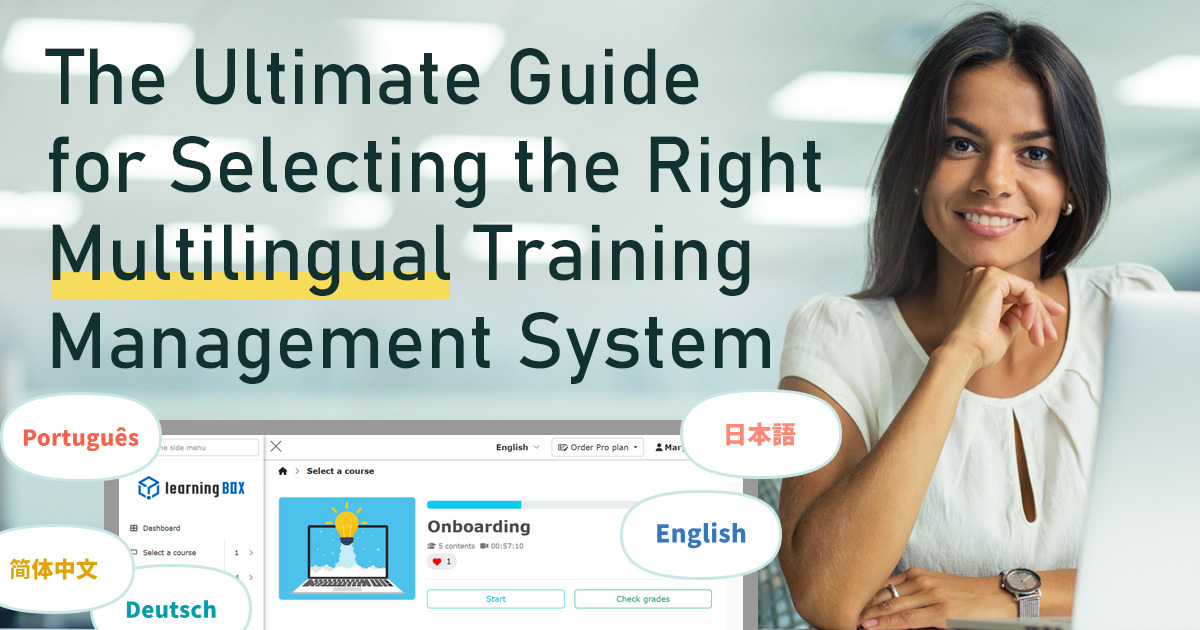 The Ultimate Guide for Selecting the Right Multilingual Trainng Management System
 Human Resource Development Grant for e-Training
 Memorization Strategies
 How to Create Your Own Aptitude Test