Diversified recruitment tests and web tests, what types are there?
In the selection process for new graduates or mid-career hires, recruitment exams are virtually always administered. While candidates must prepare for these exams, companies must also select the recruitment exams best suited to their organization and make the necessary preparations. In this article, we’ll introduce the increasingly diverse range of recruitment exams available and examine implementation models and key considerations for conducting them. We encourage HR professionals responsible for recruitment at companies to use this as a reference. Types of Recruitment Exams The types of recruitment exams conducted by companies can be broadly categorized into the following three types. Written Exams: These are exams that assess abilities through written responses. Specific exam content includes general knowledge questions designed to verify whether candidates possess the qualities necessary for the workforce, as well as essay questions intended to assess their thought processes. Additionally, companies focused on technical or specialized roles often administer specialized exams related to their specific fields. Aptitude Tests: These tests assess a candidate’s aptitude for a particular profession and their personality. They can be taken on a home computer or at a test center. As will be discussed in detail later, tests such as SPI3, CAB, and GAB are widely used by many companies. Interviews: These are face-to-face assessments designed to hear candidates’ self-introductions and reasons for applying. Interview formats include individual interviews, group interviews, and group discussions. This method is used to evaluate a candidate’s character—aspects that cannot be fully assessed through written exams alone. It is an essential part of the process for determining the final hiring decision. Back to Table of Contents: Recruitment Test Formats Recruitment tests can be broadly categorized into two formats: written and online. Both have their pros and cons, so companies should choose the format that best suits their specific needs. Written Recruitment Tests Let’s first look at the pros and cons of written recruitment tests. Advantages of Implementing Written Recruitment Exams The advantage of written exams is that they allow you to assess a candidate’s character—something that cannot be determined from application documents alone. If conducted in-house, you can also check whether candidates greet others properly and possess business etiquette. Additionally, by setting a specific venue and time, it becomes easier to supervise the exam, which helps prevent cheating. Disadvantages of Implementing Written Recruitment Exams A disadvantage of written exams is that they are conducted manually, which takes time and incurs costs to tabulate the results. Furthermore, depending on the company, staff members may be responsible for grading and managing the results rather than outsourcing the task, which places a burden on employees. In addition to the costs of preparing the exam papers, separate expenses such as service fees and storage costs may arise if transportation is required. Online Recruitment Exams Next, let’s look at the advantages and disadvantages of online recruitment exams. Advantages of Implementing Online Recruitment Exams The biggest advantage of implementing online recruitment exams is, without a doubt, the ease with which test results can be tallied and analyzed. Online exams are particularly well-suited for general position recruitment exams, which tend to attract a large number of applicants. Furthermore, since there is no paper-based management, issues such as damage to or loss of information do not occur. Furthermore, improved operational efficiency can shorten the hiring process and reduce recruitment costs. Disadvantages of Implementing Web-Based Recruitment Exams A disadvantage of web-based recruitment exams is that it is difficult to verify whether the candidate is actually the person taking the exam. In fact, some companies have experienced issues such as proxy test-takers or third-party agencies taking the exams on behalf of candidates. Therefore, to ensure accurate administration, companies will need to implement measures such as proctoring the exams—even when conducted online—and requiring candidates to present identification documents. Return to Table of Contents Types of Web Tests There are numerous types of so-called “web tests” (aptitude tests) used in recruitment. The main ones are as follows: SPI, CAB, GAB, TAP, IMAGES, Uchida-Kraepelin Test, IMAGES, Tamatebako, TG-WEB, SPI (Synthetic Personality Inventory) Reference: https://www.spi.recruit.co.jp/ SPI is an aptitude test that measures a test-taker’s personality and basic abilities. It is provided by Recruit Management Solutions and is adopted by many companies. While this aptitude test is particularly common in new graduate recruitment, it has recently been adopted for civil service exams as well. The test consists of three sections: verbal, nonverbal, and personality. The verbal section assesses knowledge of the Japanese language, while the nonverbal section tests mathematical and arithmetic skills. The personality section asks about the test-taker’s daily behaviors and ways of thinking. While the SPI itself is not particularly difficult, it contains a large number of questions, so test-takers must manage their time carefully. In addition to paper-based testing, candidates can take the test online from home or at a dedicated testing center. The SPI has been updated in 2005 and 2013, and SPI3 is the latest version. CAB (Computer Aptitude Battery) Reference: http://www.shl.co.jp/ CAB stands for Computer Aptitude Battery and is an aptitude test primarily administered to systems engineers and programmers. The CAB covers the following four areas: Mental arithmetic, pattern recognition, instruction tables, and symbols—all of these assess administrative processing skills, intellectual ability, and aptitude. The test also evaluates nine characteristics, such as teamwork and vitality. It is generally administered as a written test using a multiple-choice answer sheet, though a web-based version called Web-CAB is also available. GAB (Graduate Aptitude Battery) Reference: http://www.shl.co.jp/ GAB stands for Graduate Aptitude Battery and is a comprehensive aptitude test. Like SPI, it is used in many recruitment exams at general trading companies, specialized trading companies, securities firms, and other organizations. The test covers verbal, non-verbal, and personality assessment sections. While similar to SPI, GAB focuses primarily on ability tests that assess processing speed, requiring candidates to answer quickly. In addition to written exams, the GAB can be taken at test centers (C-GAB) or online from home. TAP Reference: https://www.tap-tekisei.com/ TAP is an aptitude test frequently administered in the food and beverage, retail, and financial industries. Although it is less well-known than other tests, it is highly challenging and provides a high-quality assessment. A key feature of TAP is that test-takers can choose from the following three test formats: Comprehensive Type: A standard test that includes both ability and personality questions; Personality Type: Consists solely of personality questions, with a relatively short test time of 15 minutes; and Shortened Type: The test time is 30 minutes, which is shorter than the Comprehensive Type. The aptitude section focuses on mathematical knowledge, such as basic arithmetic, profit and loss calculations, and n-base number systems; the test is administered via a multiple-choice answer sheet or online. IMAGES Reference: http://www.shl.co.jp/ IMAGES is an aptitude test sometimes used in comprehensive aptitude assessments for new graduates. While the content does not differ significantly from GAB, IMAGES is characterized by its short duration, with both the aptitude test and personality test lasting 30 minutes each. It is chosen by companies seeking to “assess basic abilities quickly due to a large number of applicants.” In addition to verbal and nonverbal sections, it includes English questions, making it a suitable aptitude test for assessing applicants’ English proficiency. Uchida-Kraepelin Test Reference: https://www.nsgk.co.jp/uk The Uchida-Kraepelin Test is a proprietary psychological test administered by the Japan Institute of Psychiatric Technology. It consists of simple single-digit calculations performed in two 15-minute sessions (one in the first half and one in the second half), which helps determine whether the test-taker is mentally stable. Because it assesses a person’s ability to perform monotonous tasks accurately and without errors, it is used not only by companies but also by government agencies. Note that the Uchida-Kraepelin Test is not available online and is generally administered in paper-and-pencil format. Tamatebako Reference: http://www.shl.co.jp/ Tamatebako is an aptitude test provided by Japan S.H.L., known for its CAB and GAB tests. As a web-based test that can be taken at home, it is widely used even by major corporations. It is characterized by its composition of ability tests—including verbal, nonverbal, and English sections—as well as personality tests that measure a candidate’s fit with the company and their motivation to work. The time allotted per question is short; candidates must solve each question in about 10 seconds. This makes it an ideal aptitude test for assessing a candidate’s accuracy and speed. TG-WEB Reference: https://www.humanage.co.jp/service/assessment/service/tg_web.html TG-WEB is an aptitude test that measures verbal, non-verbal, and personality aptitudes. Although it is not yet widely known, it is more difficult than SPI or Tamatebako, and more and more companies are adopting it. In the non-verbal section, questions such as those requiring the decoding of ciphers are presented, giving it a distinct character compared to other tests. TG-WEB generally does not require a written test and can be taken online or at a test center. learningBOX Reference: https://learningbox.online/ learningBOX features a diagnostic test creation function that allows you to assess a test-taker’s characteristics and knowledge level. A key feature is the ability to flexibly create appropriate questions tailored to the skills and abilities required for the specific job role. Based on the analysis results, you can take appropriate actions aligned with the test-taker’s aptitude and abilities. This also serves as a reference for hiring decisions. In addition to creating diagnostic tests, you can manage test administration status and results. Back to Table of Contents: Points to Consider When Administering Aptitude Tests Using aptitude tests in the hiring process can provide valuable data for your recruitment efforts. Here, we outline key points and considerations when administering external aptitude tests. Focus on Reliability When administering an external aptitude test, be sure to verify its reliability. Even if it can be implemented at a low cost, using an unreliable test will not yield sufficient results. Specifically, you can assess reliability by reviewing its track record—such as “which companies are using it” and “how many test-takers it has annually.” Verify That It Meets Your Company’s Needs Next, determine whether the test aligns with your company’s needs. This is important because the information gained from aptitude tests can be utilized in contexts beyond hiring. Proper implementation makes it easier to evaluate employees after hiring, as well as to assign roles and provide training. If it’s difficult to research this on your own, take a look at actual implementation case studies. If there are case studies from competitors in your industry, it’s a good indication that the aptitude test will meet your company’s needs as well. Don’t take test results at face value. While aptitude tests are useful for hiring, try not to focus too much on the results alone. This is because results can vary depending on an applicant’s physical condition or state of mind at the time. Furthermore, even if the results aren’t ideal, some employees may go on to perform exceptionally well after joining the company. It’s important to understand and recognize that aptitude tests are merely one part of the hiring process, and to also carefully consider the impression you get when speaking with the applicant during the interview, as well as the content of their application materials. Back to Table of Contents Summary We’ve introduced various types of hiring exams. While many of these exams—whether written or online—have both advantages and disadvantages, you should select the aptitude and competency tests that best suit your company’s needs. We highly recommend our e-learning system, “learningBOX,” which not only offers diagnostic test creation but also features for creating recruitment exam questions, grading, and score management. If you are considering implementing online recruitment exams, please try our learningBOX for free. ▼You Might Also Like! Related Articles Return to Table of Contents









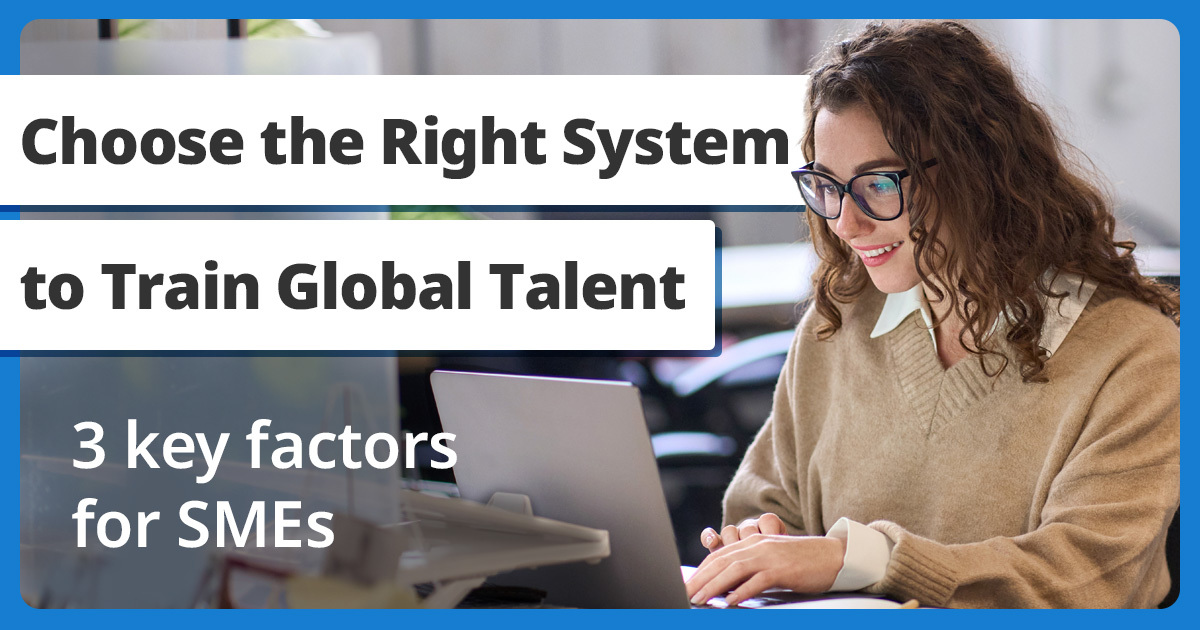 Choose the Right System to Train Global Talent - 3 key factors for SMEs
 The Ultimate Guide for Selecting the Right Multilingual Trainng Management System
 Human Resource Development Grant for e-Training
 Memorization Strategies
 How to Create Your Own Aptitude Test