How to Use the IT Implementation Subsidy 2025 for an e-Learning System


In 2025, along with the acceleration of digitalization, human resource development and business efficiency improvement are becoming important management issues for small and medium-sized enterprises. Amid calls for reforms in work styles, addressing human resource shortages, and improving productivity, the introduction of e-learning systems utilizing the "IT Introduction Subsidy 2025" is attracting attention.
However, many companies are hesitant to introduce e-learning because of cost bottlenecks or uncertainty about whether the system can be properly utilized even if introduced.
In this article, we will provide an easy-to-understand explanation of the "IT Subsidy 2025," from its outline, schedule, and major changes from FY2024, to the application procedure for introducing e-learning by utilizing the subsidy. In addition, we will also introduce IT tools (e-learning systems) that are eligible for the "IT Introduction Subsidy 2025.
Managers and personnel in charge of human resources and general affairs of small and medium-sized companies who are considering introducing IT tools through the "IT Introduction Subsidy 2025" are encouraged to take a look at it.
Article supervised by: Shumi Suda, Labor and Social Insurance Consultant, sumac Co.
*The article is current as of May 2025. For the latest system overview and requirements, please contactSubsidy for IT Introduction Support Project for Improving Service Productivity" (IT Introduction Subsidy 2025) Secretariat's page.
There is a limited time to obtain IT implementation subsidies
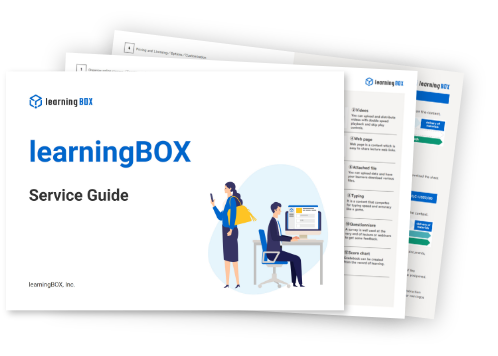
We will be happy to explain the functions, costs, and implementation flow of learningBOX.
What is IT Implementation Subsidy 2025?

The IT introduction subsidy is a system under which the government subsidizes a portion of the cost of introducing IT tools to small and medium-sized enterprises (SMEs) and small businesses. This section provides an overview of the program, changes in the 2025 IT introduction subsidy, and eligible businesses.
Overview
The IT introduction subsidy is a program to support the introduction of IT tools (software, services, etc.) to improve business efficiency and promote DX, with the aim of improving labor productivity of small and medium-sized enterprises and small businesses.
IT tools (software, services, etc.) eligible for subsidies under the "IT Introduction Subsidy 2025" are limited to those that have been reviewed by the secretariat in advance and registered and published on the official website (except for the IT introduction framework for multi-company cooperation).
Small and medium-sized enterprises (SMEs) and other subsidy applicants who wish to apply must form a partnership with an "IT introduction support provider" registered with the IT Introduction Subsidy Secretariat and jointly apply (excluding the IT introduction quota for multiple company partnerships).
Businesses eligible
Businesses eligible to apply are small and medium-sized enterprises and small businesses (including sole proprietorships) with less than a certain amount of capital and full-time employees.
Please refer to the table below for the scope of SMEs and small businesses that are eligible for the "IT Introduction Subsidy 2025.
Small and medium-sized enterprises (service industries such as restaurants, lodging, wholesale/retail, transportation, medical care, nursing care, childcare, etc., as well as manufacturing and construction industries are also eligible)
| industry-classification | capital stock (Amount of capital or total amount of investment) |
Employees (Employees who are regularly employed*1) |
|---|---|---|
| manufacturing industry(excluding rubber products manufacturing industry)Construction, transportation | Less than ¥300 million | Less than 300 |
| wholesale business | Less than 100 million yen | Less than 100 |
| service industry (excluding software industry, information processing services industry, and inn industry) |
50 million yen or less | Less than 100 |
| retail trade | 50 million yen or less | Less than 50 people |
| Manufacture of rubber products(*2) | Less than ¥300 million | Less than 900 |
| Software industry, information processing services | Less than ¥300 million | Less than 300 |
| the hotel business | 50 million yen or less | Less than 200 people |
| Industries other than those listed above | Less than ¥300 million | Less than 300 |
(*1) "Permanent employees" means "those who require advance notice of dismissal" as stipulated in Article 20 of the Labor Standards Law.
(*2) Excluding the manufacture of tires and tubes for automobiles or aircraft and the manufacture of industrial belts
In addition, medical corporations, social welfare corporations, school corporations, small and medium-sized business organizations, foundations, incorporated associations, and specified nonprofit corporations are also eligible if they meet the requirements (for corporations without capital, they are eligible if the number of employees is below the standard).
For more details, including the definition of small businesses, please refer to the "Subsidy for IT Support Project for Improving Service Productivity" (IT Introduction Subsidy 2025) Secretariat's website atWho is eligible to applyPlease check the "About Us" page.
Application quota
There are five application slots for the "IT Introduction Subsidy 2025" as follows
- normal quota
IT tools that are appropriate for your company's issues and support the improvement of labor productivity. - Invoice quota (invoice-enabled type)
Support for compliance with the invoice system by introducing software, PCs, hardware, etc. with "accounting," "order and supply," and "settlement" functions that are compatible with the invoice system. - Invoice quota (electronic transaction type)
Software with "order and supply" functionality that supports the invoice system to improve labor productivity and compliance with the invoice system. - Security measure promotion quota
Aimed at addressing the potential risks associated with the increase in cyber attacks and supporting various risk mitigation measures related to cyber incidents - Multi-Company IT Deployment Framework
Support for efforts to improve productivity by introducing IT tools through collaboration among multiple SMEs and small businesses in supply chains and commercial clusters.
Reference] "Subsidy for IT Introduction Support Project for Service Productivity Improvement" (IT Introduction Subsidy 2025) Secretariat, "IT Introduction Subsidy 2025", "IT Introduction Subsidy 2025", "IT Introduction Subsidy 2025", "IT Introduction Subsidy 2025IT Deployment Subsidy 2025"
Changes and the maximum subsidy and subsidy amount
The main changes in the IT Subsidy 2025 are as follows. The subsidy covers the costs related to the introduction of the standard framework, multi-company IT introduction framework, and invoice framework (invoice-compliant type), and the subsidy rate and subsidy amount for the security measures promotion framework have also been expanded.
Expansion of expenses eligible for subsidies (normal quota, IT introduction quota for multi-company cooperation, invoice quota and invoice-supporting type)
Post-introduction "utilization support" that encourages the firm's use of IT, such as maintenance support for IT tools, manual preparation, etc., is also covered.
Change point (2): Change in subsidy amount and subsidy rate (security measures promotion framework)
The maximum subsidy amount for "IT Introduction Subsidy 2025" will increase from 1 million yen to 1.5 million yen. In addition, the subsidy rate for small businesses has been increased from 1/2 to 2/3.
Change point 3) Change in subsidy rate for businesses near minimum wage (normal quota)
Starting with "IT Introduction Subsidy 2025," the subsidy rate will be expanded from 1/2 to 2/3 for SMEs that meet the following conditions <Businesses that have shown that the number of employees employed at the regional minimum wage plus 50 yen or less for more than 3 months is more than 30% of the total number of employees>.
For more information on the maximum amount of subsidy and the amount of subsidy for each application frame of the "IT Introduction Subsidy 2025," please refer to the "IT Introduction Subsidy 2025" page.For all those seeking to improve productivityPlease refer to the "Small and Medium-Sized Enterprises Agency, March 2025 edition" (Japanese only).
Leave all subsidy applications to us!
We will explain the functions, costs, and implementation flow of learningBOX.
e-Learning systems are eligible for subsidies under the IT Implementation Subsidy 2025

IT tools that are eligible for IT introduction subsidies are mainly those that contribute to "business process improvement" and "business efficiency". e-learning systems and LMS (Learning Management Systems) are often adopted because they are directly related to improving the efficiency of employee training and the quality of human resource development.
IT tools eligible for the IT Implementation Subsidy 2025
For details on the IT tools (software, services, etc.) eligible for each of the five application windows, please refer to the relevant page of the secretariat from the link below.
- normal quota
- Invoice quota (invoice-enabled type)
- Invoice quota (electronic transaction type)
- Security measure promotion quota
- Multi-Company IT Deployment Framework
Explanation of the "normal framework" to which the e-learning system is subject
Here, we will explain in detail about the "Regular Quota," of which the "e-Learning System" is one of the five quotas.
Examples of "e-learning systems" include learning management systems (LMS), educational management systems, online training platforms, and internal educational content delivery systems.
The "Regular Quota" of the "IT Introduction Subsidy 2025" is intended to support the improvement of labor productivity by subsidizing a portion of the costs for small and medium-sized enterprises (SMEs) and small businesses to introduce IT tools that meet their challenges and needs. The subsidy rate and amount are as follows The subsidy amount varies depending on the number of processes (number of business steps).
| Subsidy amount | 50,000 to less than 1.5 million yen | 1.5 million yen to 4.5 million yen or less | |
| functional requirement | More than 1 process | 4 processes or more | |
| Subsidy rate | Within 1/2 The number of employees who have been employed for more than 3 months within the minimum wage + 50 yen per region. Not more than 2/3 of the total number of employees, if the number is indicated to be more than 30 percent of the total number of employees. |
||
| Subsidized Expenses | Software purchase costs, cloud usage costs (up to 2 years of cloud usage fees), Installation-related expenses | ||
Based on the image of utilizing IT tools to promote business efficiency and DX, software purchase costs and cloud usage fees (for up to two years) as well as implementation-related costs are eligible.
Installation-related expenses include maintenance support, manual preparation, and other costs, as well as post-introduction "utilization consulting" to promote the establishment of IT utilization, all of which will be covered from 2025. Please refer to the chart below.
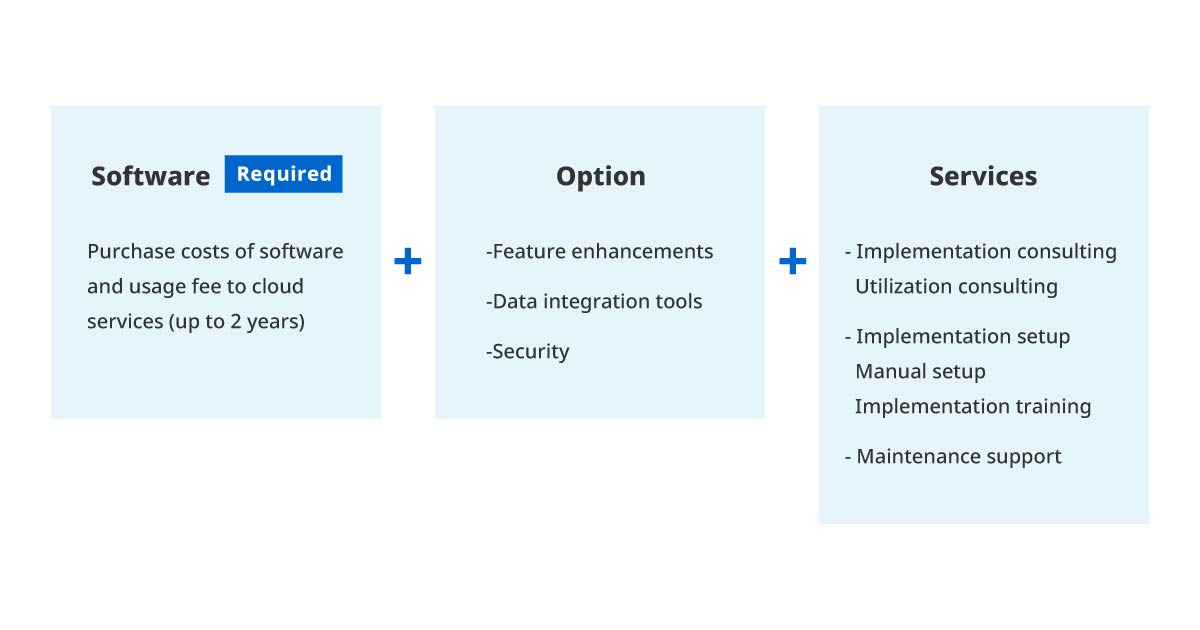
In addition, the requirements for IT tools are software with one or more of the business processes shown in the figure below (only generic processes are not acceptable).
| classification | P code | process name | |
|---|---|---|---|
| business process | common process | P-01 | Customer service and sales support |
| P-02 | Settlement, receivables and payables, and collection of funds | ||
| P-03 | Supply, Inventory and Logistics | ||
| P-04 | Accounting, Finance & Management | ||
| P-05 | General Affairs, Human Resources, Payroll, Labor Relations, Education and Training, Legal, Information Systems, Integrated Operations | ||
| Industry-specific processes | P-06 | industry-specific process | |
| General Purpose Processes (Not for stand-alone use) |
P-07 | General purpose, automation and analysis tools (Not limited to industries or operations, but contribution to productivity improvement is expected. (Admittedly proprietary software) |
|
For details on the "Normal Quota", please refer to the "Subsidy for IT Introduction Support Project for Service Productivity Improvement" (IT Introduction Subsidy 2025) Secretariat's "IT Introduction Subsidy 2025 Application Procedure (Regular Quota).
Support of "IT Application Support Providers" for subsidy applications
The application for the "IT introduction subsidy" requires a joint application by the company, which is the applicant, and the vendor (IT introduction support provider), which provides the IT tools.
In addition, only IT tools that have been registered and certified by an IT introduction support business operator are eligible for application and subsidy. For information on "IT Support Business Operators and IT tools" adopted by the secretariat for the "IT Introduction Subsidy 2025", please refer to the "Subsidy for IT Introduction Support Project for Service Productivity Improvement" (IT Introduction Subsidy 2025) secretariat's "Search for IT tools and IT implementation support providersYou can search from
When considering the introduction of a system that meets the project objectives of the "IT Introduction Subsidy," it is important to confirm that the IT tool is eligible for the subsidy application. We recommend that you choose a partner (IT implementation support provider) with a system that can provide solid support from smooth application procedures to reporting work.
Back to ContentslearningBOX to introduce e-learning systems under the IT Implementation Subsidy 2025

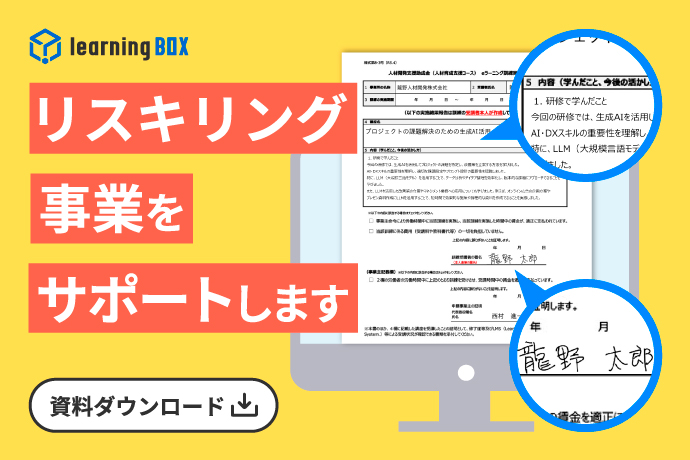
LearningBOX Corporation, developer and operator of the e-learning system "learningBOX" (Learning Box), has been selected as an IT introduction support business for the "IT Introduction Subsidy 2025". The company is eligible to apply for the subsidy by utilizing the "regular quota".
learningBOX is certified as a tool eligible for the IT Implementation Subsidy 2025
As an IT introduction support provider, learningBOX Inc. provides total support from hearings to preparation and submission of application documents and post-introduction reporting. We have a wealth of experience in introducing IT to small and medium-sized enterprises, and can make proposals that meet the challenges of the workplace. We provide services in cooperation with a specialized laborer's office for various procedures, so that even first-time users can use our services with peace of mind.
Costs eligible for subsidy
The subsidy covers the cost of the IT tool "learningBOX" license (software usage fee), various paid options, and "introduction support," "operation support," and "maintenance support" as introduction-related expenses approved for this project.
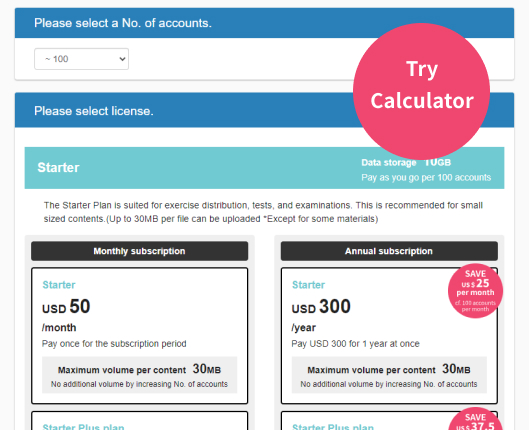
For more information about "learningBOX" license fees and paid options, please contactRates PagePlease refer to the "How much assistance can I receive? Please contact us below for a free simulation to find out how much assistance you can receive, the license configuration that meets your needs, and the scope of support you can receive.
There is a limited time to obtain IT implementation subsidies
Please feel free to inquire about the introduction cost of learningBOX.
What the e-learning system "learningBOX" can achieve
The e-learning system "learningBOX" has an intuitive UI/UX that allows even those without specialized IT knowledge to easily create and manage teaching materials, manage members, and save and view grades. It is a domestically produced system with more than 700,000 registered users and more than 1,500 companies using the system (as of the end of March 2025).
In addition to reducing the cost and time required to run training programs, the program has also been proven effective in equalizing the quality of education, and visualizing and quantitatively evaluating learning outcomes.
Effects of introducing the "learningBOX" e-learning system
Save time & money with training operations
In replacing an e-learning system at a company that provides support for the preparation and disclosure of legal disclosure documents, mainly for listed companies,97% reduction in unattended verification workTo. Also,Compliance training operations reduced by 60 hourshas been made, and at a cost ofThe reduction was about 1.5 million.Internal data also shows that
→Click here to see the case study of PRONEXUS Inc.
Counter service operations reduced by 44%.
Risk consulting firm, with the introduction of the e-learning system "learningBOX",44% reduction in window handling operationsThe company has also been able to improve operational efficiency, such as by reducing operational man-hours. In addition, the company has been able to improve operational efficiency by reducing man-hours spent on operations.
→Click here to see the case study of Tokio Marine Dealer Co.
Examples of "learningBOX" use by small and medium-sized companies
The e-learning system "learningBOX" is used by many small and medium-sized companies and small businesses, regardless of industry or type, for employee training, training management, recruitment and promotion exams, knowledge sharing, and other purposes.
Digitization of teaching materials reduces management man-hours & costs
→Click here to see the case study of HALEYAKA JAPAN Co.
Other examples of e-learning system "learningBOX" use areCase StudiesYou can see it on the "What's New" page.
From application to grant
The application process is as follows: LearningBOX, an IT implementation support provider, will assist you in the grant application process.
1) Selection of IT tools .
After hearing from you, we will propose a "learningBOX" license configuration, scope of support, etc. that meets your needs. We will also simulate the introduction schedule and subsidy amount.
(For more information about the e-learning system "learningBOX" plan, please refer to "Schedule of Charges(Please check the ".)
(2) Acquisition of "G-biz ID" prime
G-biz ID" is a service provided by the Ministry of Economy, Trade and Industry that allows you to log in to various administrative services with a single ID. It is required for the grant application requirements, so please use the "G Biz ID official pagePlease register from the "Registration" page.
(3) Implement the SECURITY ACTION Declaration
Information-technology Promotion Agency, Japan (IPA)SECURITY ACTIONThe declaration of "*1 star" or "*2 star" is required. This is a system for self-declaration of information security measures, and the requirement is to declare "★One Star" or "★Two Stars".
(4) Apply for a subsidy .
To apply for a grant, you will need to prepare a business plan and other documents. LearningBOX will assist you in the preparation of each document.
- After receiving an invitation to "Application My Page" from learningBOX, please enter the representative's name and other basic applicant information.
- Please input information and attach documents necessary for the grant application.
- The learningBOX will enter the IT tool information to be installed.
- After final confirmation of the information entered on the "Application My Page," please take an oath for the application and submit it to the secretariat.
(5) Grant Decision <Introduction of learningBOX
You will be required to install the "learningBOX" once the grant decision has been made. Please note that if a contract or order is placed before notification of the grant decision, you will not be eligible for the subsidy.
(6) Report on the effects of project implementation
After the product is installed, a performance report is required. LearningBOX will support you in this area as well.
About grants, learningBOX, etc.
If you have any questions, please feel free to contact us.
Reference] "Subsidy for IT Introduction Support Project for Service Productivity Improvement" (IT Introduction Subsidy 2025) Secretariat, "IT Introduction Subsidy 2025", "IT Introduction Subsidy 2025", "IT Introduction Subsidy 2025", "IT Introduction Subsidy 2025Details of new application and procedural flow"
Back to ContentsApplication Schedule and Notes for "IT Introduction Subsidy 2025

This section provides the schedule of the grant application period and points to keep in mind when applying for the "IT Introduction Subsidy 2025". Some points require time, such as the collection of information to be input, so please proceed with your preparations systematically.
Application period
The latest application schedule for the IT introduction subsidy (regular quota) for 2025 is as follows
The schedule is currently being finalized up to the 5th deadline.
| For the 3rd deadline | deadline | Friday, July 18, 2025 at 17:00 | |
| Date of decision to grant | Tuesday, September 2, 2025 (tentative) | ||
| Project implementation period | Grant decision - Friday, February 27, 2026, 5:00 p.m. (tentative) | ||
| Deadline for reporting project results | Friday, February 27, 2026, 5:00 p.m. (tentative) | ||
| 4th Deadline | deadline | Wednesday, August 20, 2025 17:00 | |
| Date of decision to grant | Tuesday, September 30, 2025 (scheduled) | ||
| Project implementation period | Grant decision - Tuesday, March 31, 2026, 17:00 (tentative) | ||
| Deadline for reporting project results | Tuesday, March 31, 2026, 17:00 (scheduled) | ||
| 5th Deadline | deadline | September 22, 2025 (Monday) 17:00 | |
| Date of decision to grant | October 31, 2025 (Friday) (scheduled) | ||
| Project implementation period | Grant decision - Thursday, April 30, 2026, 17:00 (tentative) | ||
| Deadline for reporting project results | Thursday, April 30, 2026, 17:00 (tentative) | ||
As there were applications up to the "7th deadline" in FY2024, the latest information is available from the "Subsidy for IT Introduction Support Project for Improving Service Productivity" (IT Introduction Subsidy 2025) Secretariat's "Project SchedulePlease check the "About Us" page.
When applying for the IT Implementation Subsidy 2025
Get ready early!
Some items, such as obtaining a "G-Biz ID" prime or declaring a "SECURITY ACTION," may take time to obtain and implement. To avoid the risk of missing the application deadline, start preparations well in advance.
Be sure to check eligibility and application requirements
Renewal of existing tools or use of non-target "IT implementation support providers" will not be eligible for subsidy. In addition, contracts and payments made prior to the grant decision will not be approved. Be sure to check the latest application guidelines and official information.
Be careful not to include incomplete or omitted information in the application documents.
Insufficient or omitted information in the application documents can lead to rejection, so please work closely with your IT vendor (IT implementation support provider) and carefully check the required documents and descriptions. It is especially important that the business plan be specific and numerical.
Don't forget the post-introduction reporting requirements.
After the grant is awarded, you are obligated to report on the results and effects of the introduction of the system. Be sure to properly manage the necessary documents and data after the introduction, including the status of achievement of improvement targets, and have a system in place to report on time.
Early preparation and systematic progress are crucial for a successful application for the "IT Introduction Subsidy 2025. It takes approximately two weeks to obtain a "G-biz ID" prime, and we recommend that companies considering applying for the program begin registering for an account in parallel with the selection of IT tools.
The "IT Support Project for Productivity Improvement of Services" issued by the Secretariat of the IT Support Project for Productivity Improvement of Services, etc.Grant Application GuideSee also.
Advice from the Supervisor
The fiscal year 2025 IT introduction subsidy has been greatly beneficial to businesses, as the eligible expenses for the subsidy have been expanded and the subsidy rate has been raised. On the other hand, the screening process has been made stricter than last year, and the application rules have become more detailed.
More than past IT introduction subsidies, it is important to convey to the reviewers in an easy-to-understand manner why the IT tool is necessary and what benefits can be expected from its introduction. Keep this point in mind when submitting your planning application.
Back to ContentsSummary
The "2025 Wall" is the background behind the implementation of the IT implementation subsidy. Issues such as aging legacy systems, shortage of IT human resources, and stagnation of DX have been raised. Under these circumstances, the introduction of e-learning systems is an important key for SMEs to achieve human resource development and business efficiency.
By utilizing the "IT Introduction Subsidy 2025," it is possible to realize a state-of-the-art educational DX at a reduced cost. Why not take your company's human resource development and business efficiency one step further by preparing early and working with a reliable IT vendor (IT implementation support provider)?
By combining "IT Subsidy 2025" and "learningBOX", we provide one-stop support from application to introduction and operation. Please feel free to contact us.
From application to application with 0 yen initiation fee and contingency fee.
We even provide follow-up services.
For those in a hurry, web meetings are also available.
You can apply right away!
▼You may also like: