Admin Blog

77 articles
Whoever controls e-learning also controls HR! ~Online testing and training using e-learning

Whoever controls e-learning also controls HR! ~Online testing and training using e-learning

Hello! My name is Nakanishi from Human Resources. This is my first blog post since joining the company. Nice to meet you! And I hope you will stay with me until the end. In fact, I used to work in human resources, and in the course of my duties, I have implemented all kinds of measures to increase the number of applications from job seekers. Based on this experience, I would like to talk about tips from an HR perspective, from recruiting to hiring, as well as the benefits of implementing online testing and training using e-learning before and after the hiring process. By all means, HR and education professionals, read on so that you can implement recruitment and training practices that will contribute to the growth of your company! Please stay with us until the end! Click here for Table of Contents 1. what are the tips for recruiting jobs efficiently? 2. Why don't you adopt online examinations for recruitment? 3. after recruitment, let's provide "good education" through e-learning. 4. summary What are the tips for recruiting job seekers efficiently? Have you advertised in the recruitment media, but are you worried that you are not getting any applications or that it is costing you a lot of money? (I was like this myself.) (I had this problem myself.) I spent many days trying to figure out how to get talented people to apply for jobs. I would like to share with you a few tips that I have learned through my efforts. Make your job ad title in words that can be read in 5 seconds. First, review your job ad to make sure it is an attractive title that will catch a job seeker's eye. In our research with job site managers, we found that job seekers spend at most five seconds looking at the title of a single job posting. We also found that the most words a job seeker can read in five seconds is about 30 words. In other words, it is not good to be too simple, and it is not good to pack in a lot of information. One way to help with this might be to team up with someone in your company who is good at copywriting or with an outside expert (e.g., a copywriter). Make your keywords attractive to job seekers. When writing job ads, we tend to use keywords that we want to create a good impression of our company. However, if job seekers see the keywords and think, "Really? If the job seeker thinks, "Really? So, the trick is to arrange keywords that attract attention... Keywords of the desired candidate's preferences" + "Words we accept" + "Job description" That's it! Example.) I like games" + "A person with a science and math background is a must" + "A development job at a game app production company." I like fishing" + "I can make the most of my hobby" + "Sales job at a fishing tackle manufacturer" By all means, try to imagine what kind of people might apply for jobs at your company, and create a catchphrase that will stick in the hearts of job seekers! (Good luck trying to find a catchphrase) Why not adopt an online test for your hiring process? When it comes to recruiting, there are other things to consider, such as the cost of job media and techniques to get your job ads to the top of the search results, but that's all for now! From here, I would like to talk about how to bring applicants to the hiring process, as well as the introduction and use of e-learning before and after the hiring process. First, let's talk about "online examinations. Why don't you adopt online examinations using e-learning for your recruitment tests in order to acquire human resources efficiently? Advantages of Conducting Tests and Examinations We recommend conducting tests/examinations when you have a large number of applicants and need to narrow down the field before interviewing, or when you need to measure the skills and abilities required for the job by testing. (Of course, in some cases, applicants may not need to be narrowed down due to qualifications they already possess, etc.) Advantages of using online testing (CBT) First of all, what is an online test (CBT)? Let us explain. CBT stands for Computer Based Testing. It refers to computer-based testing. By taking the test by computer, instead of using paper question papers or mark sheets, it has the advantage of greatly reducing the time and cost required for scoring, scoring, and notification of results. In addition, since the test is taken by computer, questions with audio and video can be used. It also allows applicants to take the online test from the comfort of their own home, as long as they are connected via the Internet. The ability to administer the test at home allows job seekers to take the test themselves at their own convenience, at a time and place of their choosing, without having to arrange a test date and time or test site. This reduces the burden of having applicants come to the company to take a 30-minute test. This is a very important point in this corona disaster. Also, by having them take the test before the interview, both parties can streamline their time when they subsequently come to the company for the actual interview. With online testing, is it safe to cheat? One of the concerns that companies have when conducting online tests is the risk of cheating. However, by utilizing the question creation function of the e-learning system and devising the time limit, number of questions, and content of the questions, the risk can be easily avoided without having to go to the trouble of using expensive anti-cheating tools such as cameras dedicated to online tests. (Incidentally, only our learningBOX offers such a convenient question creation function!) As for online testing, please take a look at the case study of the "Japan Art Examination Association," which conducts online examinations using the EC function of our e-learning system, learningBOX. Although the content of the case study is about "online examinations," it contains a lot of information that will be very helpful for HR personnel as well! ▼ In response to the new normal society, online examinations can be taken at home! (The Art Examination Association of Japan) https://learningbox.online/casestudy/casestudy20201030/ After hiring, provide "good education" through e-learning. After hiring, try to provide "good education" through e-learning in order to make the hired personnel into your company's human resources (←A little old fashioned, isn't it?). Let's provide "good education" through e-learning. For your information, in our case, we create and provide an account on learningBOX for employees who have been offered a job before they join our company, so that they can receive online training through e-learning before they join our company. Don't you think it's very convenient for the new employees to be able to take the training "at any time and any place" before they join the company? Moreover, with the e-learning system, the company can easily check online to see how far the candidate has progressed in his or her studies before joining the company. Please click here to see how we are actually implementing this system! ▼Tatsuno Information Systems Internal Use Cases CS Implementation Support https://learningbox.online/casestudy/casestudy20200204/ Summary From a "human resources" perspective, I wrote this article on tips for recruiting and hiring job seekers, as well as online testing and online training using e-learning before and after the hiring process. By all means, HR and education staff, why don't you introduce an e-learning system to create a system that makes recruitment and training more efficient and effective? If you are interested, please feel free to contact us. We also offer a free plan that you can actually use at learningBOX. After registering for an administrator account, you can take sample exam questions and training courses. For more information, please try out the sample courses on the learning screen after registering for the free plan. It will change your image of e-learning. Start your free trial now! Thank you very much for reading to the end. We look forward to working with you again next time.
Dr. Karpick's Experiment

Memory retention is determined by output! Dr. Karpick's experiments on memory

Memory retention is determined by output! Dr. Karpik's experiments on memory Nice to meet you! I am Torii, a member of the Development Department who joined the company in September 2020. I have just finished a month-long training program for new employees at Tatsuno Information Systems, but there are still many things I need to understand, and I am still learning every day. It is difficult to find time to study while working, isn't it? For businesspersons, the ability to retain memory is required more and more when studying for company promotion exams, TOEIC, qualification exams, and so on. In this article, we will discuss the question, "What is the most effective way to study?" Dr. Carpick of Purdue University in the U.S. conducted an interesting experiment on the subject. Click here to see the table of contents. 1. Dr. Karpik's experiment on memory 2. Brain performance is determined by output 3.Repeated learning through e-learning is recommended for memory consolidation 4. Summary Dr. Karpik's experiments on memory Dr. Karpik of Purdue University, USA, conducted an experiment in which students at the University of Washington were asked to memorize 40 words of Swahili. The students were divided into four groups and repeated the following until they had memorized all the words. Group A... After learning all 40 words, test on all 40. After the second session, study all 40 words and test all 40 words. Group B... After studying all 40 words, students will be tested on all 40 words. After the second test, the students study only the words they made mistakes on, but take the test on all 40 words. Group C After studying all 40 words, students will be tested on all 40 words. After the second test, the students study all 40 words and take the test only for the words they got wrong. Group D After studying all 40 words, students will be tested on all 40 words. After the second test, the students study only the words they got wrong and take the test only for the words they got wrong. All groups seemed to be able to memorize everything after 4 or 5 repetitions. The time required for Group A was 100, for Groups B and C 75, and for Group D about 50. It seems that the D group, which learned only the wrong questions and tested only the wrong questions, is the most efficient, doesn't it? In fact, there is more to this experiment. When we conducted an unannounced test one week later, we found a big difference in the learning effect! Which group do you think remembered more words after one week? Brain performance is determined by output The following are the results of the unannounced test after one week for the four groups introduced above. What do you think? I think it is easy to predict that Group A, which spent the most effort, was able to produce 80% and Group D, which spent the least effort, was able to produce 35%. However, could you predict the results of Groups B and C? Wasn't it surprising that Group C, which had to relearn all the questions each time they took the test, did so poorly? The brain remembers more from "output" than "input The results of this experiment show that testing (i.e., memory output), not memorization (i.e., information input), is important for memory retention. When learning, it seems that it is more efficient to repeatedly conduct tests to consolidate memory rather than just reading a reference book. Output is a shortcut to fix memory in the brain! Input" refers to the "input" of various information into the brain, while "output" refers to the "output" of the processed information out of the brain. In his book, psychiatrist Shion Kabasawa states that the biggest difference between the two is whether there is "exercise" or not. Memories that use motor nerves, such as writing and speaking, are called "motor memories. The characteristic of motor memory is that once you remember something, you rarely forget it, so you will not forget how to ride a bicycle after riding it for the first time in three years. (Quoted from: Shion Kabasawa (2018), "Learning into Results: The Complete Guide to Output," p.22, Sanctuary Publishing Co. The golden ratio to improve memory is to be aware of "input 3: output 7! The golden ratio to improve memory efficiency is "input 3 : output 7. You should incorporate brain science into your studies. (Source: Study Hacker) There is a golden ratio between input and output! Use brain science to dramatically increase the efficiency of your study and memory.) From ▼ To briefly summarize the results of the experiment... Confirmation tests" are effective for memory retention, and it is required to do all the confirmation tests rather than only those in which mistakes were made. Output learning, such as solving problems, is more than twice as effective as input learning, such as memorizing the whole text. Repeated learning through e-learning is recommended for memory retention. Testing is a good way to consolidate memory, but depending on what you are learning, whether it is for major certifications, corporate training, or work-related matters, there may not be commercially available problem sets. In such cases, we encourage you to try using our e-learning system to create tests. learningBOX allows anyone to easily create the tests needed for output on the web. LearningBOX is an easy-to-use web-based test creation tool that allows anyone to create tests for their output. Please take a look at the video below to see how to create a 4-choice question as a sample. We were able to create the questions with only simple screen operations. For large numbers of questions, it is possible to upload them in batches using Excel or text files. learningBOX's quiz function allows users to create more than 13 types of questions, including not only four choices, but also correct/false, fill-in-the-blank, and short answer questions. Click here to read more articles related to ▼ testing. 1) Creating quizzes 2) Creating Tests 3): Restrictions on participation Introduction to learningBOX content functions learningBOX is an e-learning "box" that allows you to build and manage a conventional learning environment on the web. Inside this box, learning materials such as videos and PDFs, questions/tests, and grades are stored, and the system manages the learning process. Here are the features of learningBOX More than 13 types of questions can be created for web-based tests and quizzes. Easy to create tests and practice questions to check the effectiveness of training. The web-based test and quiz creation function allows you to easily create tests and practice questions to check the effectiveness of your training programs. Tests can be created for all types of industries and fields. You can also sell your own teaching materials by converting them into e-learning. LearningBOX allows you to create your own content to suit your application. There are a total of 15 different features currently available in our e-learning system! For more information on how to select content, please refer to this article. ⇒How to select learningBOX content Conclusion How was this blog? Output is very important for efficient learning. LearningBOX is a system that focuses on "ease of use" and "low cost. LearningBOX is free for an unlimited period of time for up to 10 accounts. Try it out for yourself! Registration is easy and can be done here. Thank you for taking the time to read this article.
E-learning - toeic

Increase your score efficiently using e-learning! Recommended learningBOX for TOEIC preparation

Efficiently Increase Your Score with e-Learning! learningBOX for TOEIC Preparation This is Kidaoka, Marketing Manager. In this article, we will introduce a recommended study method to obtain a high score on the TOEIC by utilizing an e-learning system. For those customers who are preparing for TOEIC and are worried that their scores are not improving, that they cannot find a study method that suits them, or that they are not motivated to study! Why don't you review your study method with us using e-learning? Thank you very much for your cooperation. Table of Contents 1. about the popularity of TOEIC 2. if you want to improve your score effectively, repetitive learning using e-learning is recommended! 3. we introduce TOEIC preparation using learningBOX! 4. summary About the popularity of TOEIC The official name of TOEIC is the Test of English for International Communication (TOEIC), which is designed to measure English communication skills for non-native English speakers. If you have ever considered obtaining a certification or taking a certification test, you probably know little about TOEIC, which is very popular as a means of proving English language skills among people of all ages, from students to working adults. TOEIC itself is not a certification test. It is merely an objective measure of "how well you can communicate using English. Most certification exams are divided into different levels of difficulty, with beginners taking the 5th level, intermediate taking the 2nd level, advanced taking the 1st level, and so on. TOEIC, on the other hand, is characterized by the fact that the results are indicated by scores rather than pass/fail, and everyone from beginners to advanced students take the same test. Demand for TOEIC With the development of globalization, not only foreign companies but also Japanese companies such as Rakuten and Uniqlo are increasingly using English as their official language. According to a survey by the Association for International Business Communication, 77.7% of listed companies (278 companies) "refer to TOEIC scores when hiring," 68.0% "refer to TOEIC scores when assigning or transferring employees," 16.9% "make TOEIC scores a requirement for promotion and advancement," and "expected scores" average 550 points. The average score is 550 points. As more and more Japanese companies are hiring foreign workers, English communication will become a necessity in Japan as well. The total number of TOEIC test takers in FY2019 is approximately 2.41 million. Source: from English Hub|Test-takers of TOEIC L&R and TOEIC S&W The data for the number of test takers is based on applications for the public test only. In addition, the March 2020 open test was cancelled due to the new coronavirus, so applicants for the March test are not included in the number of examinees in FY2019. ▼ Companies refer to TOEIC ®︎ scores when hiring. Source: "2013 Survey on the Use of English in Listed Companies" report|From IiBC According to the "2013 Survey of English Use in Listed Companies" report conducted by the International Business Communication Association (IiBC), which administers TOEIC®︎, approximately 70% of companies use or sometimes use TOEIC®︎ scores as a reference when hiring. ▼ Click here to see companies that actually employ TOEIC scores. Resource Global Professionals Japan K.K. (Accounting): 900 or above Nissan Motor Co. Rakuten, Inc. JTB Corporation (Cultural Exchange Division): 750 points or above Mitsubishi Electric Corporation (Sales): 700 points or more Even at Japanese-affiliated companies, TOEIC scores above a certain level are required in departments where English is a prerequisite, such as overseas sales departments, and in companies that have an official English-language policy. The importance of English language skills is expected to increase in the future. What is the average TOEIC score of Japanese people? Source: english-club|What is TOEIC|Basic knowledge beginners should know! From the contents, tips, and cautions The average score of the TOEIC (87,245 examinees) in December 2019 is 595.4. (Listening section: 327.6 points / Reading section: 267.8 points) ▼ English proficiency based on TOEIC is summarized by score. 200~400 points ⇒ Can understand the basics of junior high school English. 400 to 600 points ⇒ Can understand junior high school English at a glance, understand the basics of high school English, and can carry out daily conversation if it is done slowly. 600~800 points ⇒ Can understand daily conversation and business English, can understand and communicate in business English. 800-900 points ⇒ Can use English without any difficulty. The average score of Japanese is "400 points". To approach this score, it is essential to have at least an understanding of middle school English. What exactly are the TOEIC questions? The TOEIC L&R is an objective test that consists of listening (100 questions in about 45 minutes) and reading (100 questions in about 75 minutes). The format is the same for each test, and all answers are written on a separate answer sheet from the question paper. All answers are written on a separate answer sheet from the question paper. The test consists only of English sentences, and there are no English-Japanese or Japanese-English translation questions. The TOEIC consists of 200 questions from part 1 to part 7, to be solved in 2 hours. Listening questions part1:Picture description (6 questions) Part2: Response (25 questions) part3: Conversation (39 questions) part4:Explanatory text (30 questions) Reading part5:Short fill-in-the-blanks (30 questions) part6:Long fill-in-the-blanks (16 questions) part7:Long reading comprehension (54 questions) If you want to effectively improve your score, we recommend repetition of learning through e-learning. E-learning is a form of learning that uses the Internet. It is a learning system that allows students to improve their skills at their own pace, regardless of location, time, or learning content, by using electronic devices such as PCs, mobile terminals, and IT networks. Learning Management System (LMS) supporting e-Learning A learning management system (LMS) is a system that integrates and manages the delivery of learning materials, grades, etc., necessary for implementing e-learning. It has functions for "managing students and course materials" and "managing learning progress," and can manage learning, such as which course materials are assigned to which students, and which students are progressing through the exercises and how much they are learning. The LMS displays and updates test results and study progress rates in real time, so you can immediately grasp the current status. The LMS makes it easy to "narrow down which subjects are strong and which are weak, and what learners need to concentrate on. Strengths of e-Learning Learning The greatest feature of e-Learning learning is that learners can study "anytime," "anywhere," "easily," and "at their favorite time. Here is an introduction to TOEIC preparation using learningBOX! learningBOX is an LMS with all the functions necessary for e-learning, such as creating teaching materials, creating questions and tests, and grading and grade management. Anyone can easily start e-learning without specialized knowledge. Here are some of the features of learningBOX that we recommend for TOEIC preparation. Memorization cards and worm-eaten notebooks for easy input to memorize English vocabulary The more English words you know on the TOEIC test, the easier it will be to read English sentences. The more English words you know, the faster you can read English sentences and increase your score. ▼ Memorization Card Features The administrator can keep track of how much the student has read the memorization cards, how many times they have been opened, etc. Memorization cards can be created as text files. The creation process is quite simple, so once you understand how to create a memorandum card, even those who are not good at computer operations can easily create a memorandum card. You can create as many memorization cards as you like. Font size and color can be selected, and images can be set. TOEIC Frequently Asked English Vocabulary High school freshman level Sample 1 Sample 2 Sample 3 Second year high school level Sample 4 Sample 5 Sample 6 High School Senior Level Sample 7 Sample 8 Sample 9 ⇒How to use memorization cards ▼ Features of the worm-eaten notebook Mushigui Notebook makes it easy to create memorization questions in sentence form. In addition, by putting a check mark in the bugbear you have memorized, your strategy rate will be displayed. ⇒How to use Mushikae Notebook Using the quiz function, you can create quizzes and tests from more than 13 different question formats. In order to achieve a high score on TOEIC, it is important to have a solid grasp of the basics of English. If you are a beginner or have not learned English in a while, understanding your situation is a shortcut to learning more efficiently. Whether your grammar is weak or your vocabulary is not, it is recommended that you work on overcoming your weaknesses. Using the quiz function of learningBOX, you can create and publish quizzes on the web according to your own learning level and purpose, and you can quantify your strong and weak areas based on your performance data. ▼Quiz Function Features By using the question creation form, you can create more than 13 types of questions, including "choice, multiple choice, sorting, and fill-in-the-blank" questions. Click the Start button below to try out quizzes created with learningBOX. Listening questions can also be easily created! Get Started You can easily create your own listening questions! ⇒ You can also choose a male or female speaker! You can set images, videos, and links to quiz questions and explanations! ⇒ You can set images, videos, and links to quiz questions and explanations! You can choose from 13 different types of quiz questions! ⇒ You can adjust the difficulty level of the quiz according to the question! You can set detailed options such as the order of quiz questions, time limit, passing score, and so on! ⇒ You can set the order of quiz questions, time limit, passing score, and other detailed options! How to use ⇒Quiz learningBOX also allows you to create your original course study by combining contents and functions! learningBOX allows you to set constraints on the content you create. By setting this, learners will not be able to proceed if they do not complete or pass the content. You can set prerequisites, for example, if you want learners to solve the next question after passing a particular question, or if you want to grant a certificate after passing an exam, etc. ⇒Create a course study Conclusion In this article, we have introduced a recommended study method to obtain a high score in TOEIC by using an e-learning system. LearningBOX is an LMS that makes it easy for anyone to start e-learning. learningBOX can be used by up to 10 people, including the administrator, for free and indefinitely for almost all functions, except for the optional features that require a fee. Please take this opportunity to try our learningBOX.
Online Class - Coronavirus

The Challenges of Online Teaching in the Corona Era

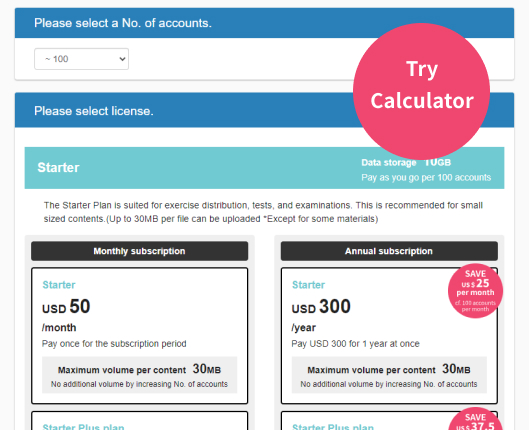
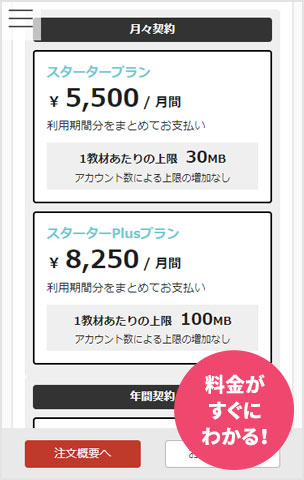
The Challenges of Online Teaching in the Age of Corona Nice to meet you. My name is Finn, a new employee of Tatsuno Information Systems, and with words like with corona and post corona flying around, how has your lifestyle changed over the past six months? With the spread of the new coronavirus, remote work has become more prevalent in the company, and online classes have spread rapidly in the educational field. I have a child in early elementary school. Due to the impact of this new coronavirus, my child switched to home study in March and started online classes using e-learning. In this article I would like to consider the "pros/cons of online classes" as I feel as a parent. I hope you will enjoy this article as well. Click here for the Table of Contents 1. fatigue with complex e-learning systems 2. challenges and needs of online classes 3. learningBOX is an e-learning system that even first-time users can use with confidence 4. summary Complicated e-learning systems are fatiguing. The spread of the new coronavirus has made it very difficult to conduct regular classes. Many of those in charge of e-learning may have been in a hurry to introduce e-learning systems in order to cope with the corona outbreak. Parents and guardians may have also experienced a sudden change in their children's learning style from school to home, and their normal daily lives may have taken a dizzying turn. Points that were difficult to overcome in order to take online classes 1. It was difficult to set up and use the e-learning system, and I had a hard time learning the manual after work. 2. It costs a lot of money to set up and prepare the devices and internet environment necessary to take online classes. 3. It took a lot of patience to lecture the children on how to use the system properly from scratch. Blind spots of online learning seen from in-home study The students' access to the site was so intensive that "the PC screen froze up or didn't move" ⇒ There were scenes where the class didn't feel cohesive. The students were often unable to concentrate on their learning because they were focused on the actions and words of the characters in the online class. I often felt confused and anxious because I sometimes did not get the results or feedback after the online class was over. There was a time lag in the teacher's response, and I often felt that I could not communicate well with the teacher. The online classes were physically and mentally exhausting not only for the children, but also for me as a parent who was nearby to support them. Here are some surveys related to online classes. Source: "Online classes cannot be just "delivery of conventional classes". Questionnaire on the Attitude toward Home Study among Parents with Children" What kind of learning functions are you looking for in your home study? Source: "Video functions such as class delivery" is the most sought after feature for home learning! |Source: e-Learning Research Institute The following is a brief summary of the above two surveys. (1) It is difficult to set up PCs and tools to prepare for online classes. (2) There are many difficulties in switching to online classes, such as the structure of the class content and how to proceed. (iii) Unlike at school, it is difficult to receive instruction from an educational professional such as a teacher when studying at home, so many families seek video content such as class delivery. Challenges and Needs for Online Classes ▼Based on the advantages and disadvantages of online classes, let us consider the challenges of e-learning that will be needed in the future. Advantages of online classes 1. Students can study at their own pace and at their own time ⇒ Effective use of commuting time 2. Many people can take classes from top instructors ⇒ No difference in instructors 3. contribute to school education in remote islands and depopulated areas ⇒ classes can continue even in the event of unexpected natural disasters such as typhoons and earthquakes Disadvantages of online classes 1. Audio and video may be interrupted during class depending on the Internet environment ⇒ Different regions and people use different connections 2. Difficult to conduct action-oriented classes ⇒ Difficult to apply to student-participation classes such as music and physical education 3. e-Learning is difficult to set up and operate ⇒ There are many technical terms and it is difficult to understand how to use and set up the system. 4. High price ⇒ High hurdles for online classes, and students are hesitant to use it even if they want to. E-learning functions and services needed in the future 1. easy-to-operate, easy-to-use design To conduct online classes, an e-learning system that only a few administrators can touch and use is not enough. As shown in the survey results, a system that is complicated to operate and requires multiple readings of the manual to master will not keep administrators and learners motivated. 2. Easy to start e-learning at a reasonable price The Japanese government has been spending a large amount of money to improve the ICT environment in schools. The "GIGA School Initiative" proposed by the Ministry of Education, Culture, Sports, Science and Technology (MEXT) has also received more than 200 billion yen in the fiscal 2020 supplementary budget proposal. It is important to set a price point that mitigates the image that e-learning requires a large amount of money and expertise to implement. learningBOX is e-learning for first-time users! Our e-learning system is an e-learning creation system that satisfies the above criteria, focusing on "ease of use" and "low cost". Learning content can be easily created using the creation form, and the system can be configured to distribute materials according to the learner's needs. You don't need to have any technical knowledge to create e-learning programs, and we have a wealth of teaching materials to support your implementation. Simple design and usage designed from the user's perspective Gamification to motivate children! When you were a child, you collected stamps from the radio exercises you did every morning during summer vacation. Or the stickers you got for helping out at home. These are called gamification because they are similar to the elements of competing for points in a game, and have been attracting attention in education and human resource development in recent years. LearningBOX makes it possible. With learningBOX, you can also award badges or "certificates" to learners who have met the passing standards. These badges and certificates can be used to visualize the progress of mastery from grade management, which will motivate learners and help them maintain motivation and goals. ▼ Pass badges are awarded for successful completion of study material. The badge display function can be set to grant badges for each material (PDFs, quizzes, memorization cards...etc.) or by folder. For details, please refer to this article. ⇒ About the badge setting function Grant a certificate when all ▼ study courses are completed learningBOX allows you to set constraints on the content you create. By setting this, learners will not be able to proceed if they do not complete or pass the content. You can set prerequisites, such as requiring learners to solve the next problem after passing a particular question, or granting a certificate after passing an exam. For more information, please see this article. ⇒Creating a Course Study The lowest price in the industry, in the 30,000 yen range per year even for 100 users (*Prices shown in the figure do not include tax.) The most important feature of learningBOX is that it is the lowest price in the industry. The Starter Plan is available for 100 users at 30,000 yen per year (plus tax), or 2,500 yen per month. We also offer a free plan that can be used for an unlimited period of time. Starter Plan starting at 30,000 yen The Starter Plan is suitable for distribution of practice questions, online learning, and preparation for certification exams and national examinations. 30MB of material per file can be distributed as quizzes or videos. learningBOX's fee structure is based on a pay-as-you-go basis in units of 100 users. The fee structure of LearningBOX is based on a pay-as-you-go system in units of 100 users. The Starter Plan is recommended for the following customers Those who want to reduce the cost of implementing online learning. Want to use e-learning on an individual level. Want to try it out. Standard Plan for customers who mainly want to use video learning The Standard Plan is suitable for video training. Up to 500 MB can be uploaded per file of educational materials, making this plan perfect for customers who are considering video-based education and training. The Standard Plan is recommended for customers who want to use a lot of video materials. Customers who want to use a lot of video materials in the Standard Plan! We recommend this plan for customers who are mainly considering video learning. When using video materials, the quality of the video and the sound quality will have a large impact on the capacity. Please refer to this article for more details about the pricing structure of learningBOX's Starter/Standard Plans. ⇒About the fee plans Conclusion Japan's ICT education environment, tested in the midst of the Corona Disaster, has created many challenges. There is an undeniable feeling that both educators and students were unable to respond effectively to the unfamiliarity of online classes, and the first point of contention seems to be how to break through the cost and technical barriers to introducing e-learning systems. Although learningBOX is the lowest priced e-learning system in the industry, at 30,000 yen per year for 100 students, it is packed with a wide variety of functions, including the creation of 15 types of teaching materials, 13 types of question types, grade management, and message exchange with students. Even people who are not good with computers can easily use the system, and it is possible to manage students' learning status and grades, and provide feedback to students. Unlike e-learning materials that are sold separately, original materials can be easily created according to the students' learning status, which brings the students closer to each other. If you are having trouble implementing e-learning, please take this opportunity to try our learningBOX plan. Reference: Ministry of Education, Culture, Sports, Science and Technology, "Toward the Realization of the GIGA School Concept". Nihon Keizai Shimbun, electronic edition, "How to Improve Self-Management Skills Essential for New Normal Working Style" (Japanese only)
instructional design

An instructional design-based educational model for corporate training

Educational Model Using Instructional Design Required for Corporate Training Hello, this is Yoda from the Tokyo team! It's completely turned into autumn. Autumn is a season full of fun events such as sports festivals and cultural festivals, but this year things have changed with the Corona Vortex. I hear that many schools have their cultural festivals online💦. The environment around us is evolving every day, so let's try our best to keep up so we don't get left behind! But enough digression, let's get to the main topic of this article! What do you imagine when you hear the word "study"? I think of studying for exams and qualifications. Was it a learning experience that you enjoyed? In my case, I think it was studying out of necessity... To begin with, [learning] is essentially [something enjoyable]. To be able to acquire knowledge that you don't know and to be able to use it, or to be able to do something that you can't do, is growth and joy. In this article, we will introduce "Instructional Design. This learning theory is full of "know-how and ideas" that can be applied to the development of e-Learning materials, so if you are having trouble creating e-Learning materials, please take a look at it! Click here to see the table of contents 1. what is instructional design? Why Instructional Design is Attracting Attention Relationship between e-Learning and Instructional Design 4. summary What is Instructional Design? Instructional design is a "process for making education and training more effective, efficient, and attractive. It is a way of thinking to design and develop more effective and efficient learning environments in various situations where education is required, with the goal of achieving high levels of proficiency and behavioral change among learners. Instructional design is a way of thinking about something that is invisible to the eye, such as education, as a process and systematizing it. To make learning attractive, it is important to keep learners motivated to learn more. In Japan, there is a strong tendency to say, "I can do it now, but I don't want to do it anymore," which is hardly an adequate education. It is difficult to say that we have educated our people well enough. The design for educating human resources with the goal of "not only becoming able to do it, but also wanting to do it more! Nowadays, the use of ICT has become popular, and learners can receive a variety of information and services via the Internet, using smartphones, tablets, and PCs. Conventional education has long used a method called "KKD," which stands for "intuition, experience, and courage. However, if corporate training only relies on intuition, experience, and guts, it does not necessarily produce a high learning effect. It is necessary to design and replace educational content that can achieve high learning effects even in training for new recruits and other educational settings, using a systematic approach. How Instructional Design views learning ▼ ADDIE Model [Plan-Do-See] Systematic approach to make the most of failure the next time Analysis: Clarify learning objectives ⇒ Determine entrances and exits Design: What to teach ⇒ Analyze the problem Development: How to teach => Instructional strategies Implementation: Making the learning attractive ⇒ How to motivate learning Evaluation: Analyze learning ⇒ Formal evaluation and reflection/improvement The ADDIE model is an improvement method like the PDCA cycle, considered within the framework of education. What is important here is to have a forward-looking perspective. In other words, it is important to clarify the "goal (learning objectives)" and to follow a reverse order. It is important in designing teaching materials and classes to follow the "Plan-Do-See" cycle, that is, to plan, execute, and evaluate. Create three tests: a prerequisite test (whether the student is qualified to learn), a pre-test (whether the student needs to learn), and a post-test (whether the student has reached the learning objectives), and clarify the scope of responsibility for the teaching materials. Good materials are those that can properly reach the passing standard on the post-test. While checking the reasons for the learner's poor performance, such as whether the material was too difficult or whether the learner was unwilling to work on it, constantly improve (add, delete, move, or change) the material so that the learner can reach the learning objectives with the material. Click here for a learning support model based on the concept of instructional design. Gagné's 9 Teaching Events Gagné's Nine Teaching Events is a learning support model proposed by Robert M. Gagné, a learning psychologist and the "father of instructional design theory. Gagné considers the instructional processes that make up classes and teaching materials as external conditions that support learning, and proposes nine types of instructional activities. What is necessary for learners to understand what the instructor wants to teach them are the external conditions that support learning. Support in both theory and practice according to Gagné's 9 teaching events is effective. The goal is to prepare them for new learning, present information and learning activities, check their performance, and make sure they don't forget. Keller's ARCS motivational model This is a model for improving learning motivation proposed by educational psychologist John Keller in 1983. The model presents the four aspects of Attention, Relevance, Confidence, and Satisfaction that instructors should take in order to improve and maintain learner motivation. The ARCS model helps learners to take the initiative in learning. Why Instructional Design is attracting attention Instructional design was originally developed to efficiently train soldiers for the U.S. military. Later, it spread mainly in the U.S. as a design method for corporate education and higher education. One of the reasons for the spread of instructional design in Japan was the popularization of e-learning from around 2000. When e-learning was introduced mainly for corporate education, instructional design attracted a lot of attention. The importance and impact of instructional design has increased with the spread of the Internet, as well as the evolution of cloud environments and devices such as smartphones and tablets. With the rapid shift of corporate training online in the wake of the new coronavirus, many human resource development department personnel and educational managers may be wondering how to rethink and create education. Relationship between e-Learning and Instructional Design Since e-learning materials can capture learning histories and records, it is easy to implement the cycle of "analysis, design, development, implementation, evaluation, and analysis. The concept of instructional design has been attracting attention, and this concept has become popular in corporate training and other settings. learningBOX is an LMS that makes it easy for anyone to start e-learning learningBOX is a learning management system with all the functions necessary for e-learning, such as creating teaching materials, creating questions and tests, and grading and grade management. A wide variety of questions and teaching materials can be easily created using forms on the web! In Content Management, you can "create questions and teaching materials" and "set up distribution of teaching materials to learners. You can create a wide variety of questions and teaching materials, including web quizzes, web tests, PDFs, videos, and questionnaires. ⇒Contents Management Features You can see at a glance the learning materials to be studied and the progress of the learning process! From the "To study" screen, you can study and browse materials. The screen lists only those materials that have been assigned to the administrator, so learners can smoothly work on their studies. ⇒ Features of the learning screen of learningBOX Individual learners' learning status and level of understanding can be monitored! The "Grade Management" function can be used for "overall grade management", and the "Chart function" can be used for "grade management and analysis for each learner". The administrator can use these two functions to view the percentage of correct answers for each question and the grades for each learner in graphs and tables. ⇒About LearningBOX Grade Management Conclusion In this issue, we have briefly introduced Instructional Design Theory. There are many other topics we would like to delve into, such as task analysis, evaluation methods, how to create instructional material packages, and what is academic ability, which we have not been able to introduce here. There are a wide range of topics that we would like to explore in depth. If you are interested in instructional design, why not pick up a copy of "Instructional Materials Design Manual" by Katsuaki Suzuki and "Classroom Design Manual" by Tadashi Inagaki and Katsuaki Suzuki from Kitaoji Shobo? learningBOX requires no computer knowledge! Even if you are not familiar with the system, you can easily create in-house training tools with rich contents. We look forward to working with you in the future! Kitaoji Shobo "Instructional Design Manual for Teachers: To Support Self-Study" by Katsuaki Suzuki Kitaoji Shobo "Instructional Design for Teachers: Class Design Manual Ver2" by Tadashi Inagaki and Katsuaki Suzuki  
learningBOX - use for free

[Important] From version 2.12, the report function was modified.

Important】The report assignment function will be changed from Ver. 2.12 of learningBOX. Thank you for using learningBOX, our e-learning creation system. My name is Kidaoka, and I am in charge of marketing! Today, we have an important announcement for our customers. Please take a moment to read this announcement if you are currently using the report function in learningBOX. This page introduces the changes that will be made to the report function in the next version of learningBOX. In the previous version of learningBOX, once a report was submitted and graded as pass/fail, it was not marked as awaiting grading on the learning screen and could be submitted as many times as needed, even if it was resubmitted. Starting with version 2.12 of learningBOX, content creators will be able to set whether or not to allow learners to resubmit reports after they have submitted them. For customers using the learningBOX shared server When the version of learningBOX is upgraded to 2.12, the system will automatically switch to the latest functions even if no settings are made by the customer. Therefore, when editing report materials that were created and edited before the version upgrade after the upgrade, the visual design and setting methods may differ from the previous usage. ⚠The report submission method will change. Prior to version 2.12 of learningBOX, learners could choose to submit their assignments by either "web input/file upload" or both, and learners could only submit their report assignments by one of "web input/attach file". Ver. 2.12 and later, both can be sent at the same time. Report Assignment Settings (Ver. 2.12 or earlier) ▼Report Assignment Submission Screen (Ver. 2.12 or earlier) ▼Report Assignment Submission Screen (Ver. 2.12 or later) ⚠The method for resubmitting reports will change. Prior to version 2.12 of learningBOX, it was possible to resubmit a report by clicking on the name of the course material in the report list. However, in version 2.12 and later, only a preview of the report is displayed, and resubmission is not possible. To resubmit a report, go to the study screen. ▼ Report assignment submission screen (Ver. 2.12 or earlier) Clicking on the name of the course material allowed re-submission. ▼Report Assignment Submission Screen (Ver. 2.12 or later) How to create a report assignment ▼learningBOX Ver. 2.12 or earlier Ver. 2.12 or later of ▼learningBOX Prior to Ver. 2.12, report assignments could be submitted in one of two formats: input form or file submission, with a choice of "Web input" or "file upload" or both. In learningBOX Ver. 2.12 and later, report materials are created from the new creation form. The new version allows users to "set attachments according to the content of the assignment," resubmit report assignments, and optionally leave a note for the grader who grades the report. How to submit reports ▼learningBOX Ver. 2.12 and earlier Ver. 2.12 or later of ▼learningBOX Prior to Ver. 2.12, the report assignment was completed by entering the report content and clicking the "Submit" button; Ver. 2.12 or later adds a button to count the number of words entered by the learner and a button to upload a file. To upload a file, click this button to attach the document. A report resubmission setting has been added to the grading method LearningBOX version 2.12 or earlier Ver. 2.12 or later of ▼learningBOX A new "Resubmit Memo to Grader/Report Assignment" has been added in Ver. 2.12 or later. When a report assignment is failed (learner) When a report assignment is failed, the message "Failed / Resubmitted" will appear above the content. If the grader has set the option not to allow resubmission, only the failing grade will be displayed. When you resubmit a report assignment, the status will change like this. Resubmitted" => "Awaiting Grades When you pass, your status will also change from "Waiting for grading" to "Passed". Conclusion In this article, we introduced the reporting functionality that will be changed in the next version of learningBOX. The new feature will allow the content creator to set whether or not the learner can resubmit the report assignment after submitting it. We will provide more detailed information on how to use the report assignment function after the version is upgraded. Thank you for your patience.

A must-read for DX promoters! Get your e-learning in place first!

Must Read for DX Promoters! First of all, introduce e-learning! I am Yoda, a member of the Tokyo team who recklessly joined Tatsuno Information Systems with zero IT knowledge. Recently, I have frequently seen the term "Digital Transformation (DX)" on the Internet and in books. I have a vague understanding of the concept of DX, but I am often asked questions such as, "What is the difference between DX and conventional IT utilization? or "Why is DX being promoted in Japan now? and "Why is DX being promoted in Japan now? In this article, we will introduce "Digital Transformation" from among the latest IT trends, and some of the terms may be familiar to those who work in IT-related fields, but we hope you will bear with us. Click here for the Table of Contents What is Digital Transformation (DX)? 2. what is the relationship between digitization and digitalization? 3. let's start promoting DX by introducing e-learning training! 4. Conclusion What is Digital Transformation (DX)? Do you know the term Digital Transformation (DX)? As someone with "zero IT knowledge," this is the first time I have learned about it. I looked up the term and found that it was a concept proposed by Professor Erik Stolterman of Umeå University, Sweden, 15 years ago. He proposed that "the penetration of IT will change people's lives for the better in all aspects. In other words, it is described as "the transformation of a company's culture, organization, and structure into one that can respond with speed to changes in business and society using IT (digital, data, etc.). Change...? Transformation...? It may not ring a bell. To briefly summarize the terms here, DX is the concept of creating new value in existing business processes and business models by utilizing new digital technologies such as cloud computing, IoT, AI, and big data. Specifically, it is as follows. Concept of DX Source: Ministry of Internal Affairs and Communications Companies are expected to break away from existing businesses and create new value by leveraging new digital technologies, indicating that DX is not only about transforming products and services, but also about changing corporate culture and the resolve to tackle this issue. The following is an introduction to the methods used by companies that have successfully implemented DX initiatives. Have you ever heard of Amazon? There are probably few people who do not know the name of Amazon, the largest Internet retailer. Amazon is cited by most as "a company that combines speed and disruptiveness (change). Amazon was founded in 1994. This was before the release of Windows 95. Although Amazon originally started as an online bookstore, it has seamlessly transformed various operations into IT and IT into operations. Amazon continues to expand its customer contact points both online and in the real world by developing various services based on its customer-first philosophy. Amazon has been so successful that it has been called a model of DX. Source: [Illustration] From "Amazon," the company closest to DX that can be understood in a single chart. The Relationship between Digitization and Digitalization The terms "digitization" and "digitalization" are also used to describe digitization, and it is easy to understand that these two terms can be thought of as one of the stages leading up to DX as a goal. There is a big difference between the two terms in terms of local and global digitization, but the fundamental idea and goal are the same. The names are confusing, so please be careful not to confuse which is which. Here is an explanation of the difference between digitization and digitalization. Digitization Digitization is often described as "digitization," i.e., increasing the efficiency, rationalization, and added value of operations through the use of digital technology. For example, customer lists that used to be managed by paper-based systems can now be converted to databases, and the vast amount of copy/paste work that used to be done manually by humans can be converted to RPA (Robotic Process Automation). The goal is to digitize the company's business processes through the use of digital technology to improve operational efficiency and reduce costs. Digitalization Digitalization is the use of digital technology to create new value and profit. In other words, we can only work on digital transformation (DX) if we can achieve digitalization. Digitalization is necessary to achieve digital transformation (DX). Digitization: This refers to local improvements that digitize analog equipment and information. Digitization・・・It refers to improvements that create high added value for the entire organization through digitization, including processes. Digital transformation: Refers to changes that utilize digitization and digitalization to generate innovations that affect society and the economy. Start promoting DX by introducing e-learning training! Today, various digital technologies such as cloud computing, AI (Artificial Intelligence), and IoT (Internet of Things) are evolving, and many companies are moving toward the realization of DX accordingly. Recently, more and more companies are shifting from analog to digital education by utilizing e-learning for their own internal training and training of new employees. E-learning is now attracting a great deal of attention as a new learning format that will change the future of training and education. By utilizing digital technology, employee training can be conducted efficiently and effectively, playing a major role in corporate growth. Paper- and document-intensive organizations are definitely less productive. By converting training materials to digital content, it becomes easier to create video materials. The benefits of going paperless go beyond simply reducing the amount of paper used. By actually watching and learning the scenes and operations, it becomes possible to intuitively understand content that is difficult to understand with words and materials alone. Many paper-based materials are rarely read again after being used once in a training session. If they are stored on a device as digital content, you can immediately refer to them when you encounter a part you don't understand, and you can review them at the time you want to learn without worrying about what others will think. learningBOX offers a full range of features necessary to achieve digital transformation! learningBOX is an LMS that has been introduced in various industries and business sectors. Click here to read about learningBOX case studies The University of Tokyo Disaster Preparedness Training Center ⇒ Training personnel who can act in the event of an actual disaster by utilizing systematic knowledge of disaster countermeasures Wants Japan Corporation ⇒ Providing "learning to live and learning to make use of Conclusion In this article, we introduced "Digital Transformation" among the latest IT trends. We hope that we have been able to add to your IT knowledge about digital transformation (DX), even if only a little. Regarding DX, the digital environment is rapidly improving with the evolution of AI and the spread of 5G and IoT. Now is the time to get in on the DX bandwagon. That's all for this issue! Please stay tuned for the next installment. Reference: Illustrated Guide to the Latest IT Trends Book: Masayoshi Saito
Training Transfer - E-Learning Learning

Effective for training transfer! What is e-learning?

Effective for training transition! What is the use of e-learning for human resources training! Hello, this is Yoda of Tatsuno Information Systems Tokyo Team. This is Yoda from the Tokyo team of Tatsuno Information Systems. The spread of the new coronavirus is still unpredictable, but I hope everyone is doing well. In this article, based on Diamond's "Introduction to Training and Development: Theory and Practice of Training Transition," I would like to introduce the characteristics of training transition and the efforts required to achieve it. The theme of this article is "How can we take what we learn in training and put it into practice in the field, and link it to results?" We will discuss the future of in-house training programs under the difficult theme of "How can we put what we learn in training into practice and link it to results in the field? We look forward to your continued support in this issue. Table of Contents What exactly is training transfer? 2. what are the necessary steps to achieve training transfer? 3. using e-learning to enhance the effectiveness of training transfer Conclusion What exactly is training transfer? Transfer of Training is the process by which the knowledge and skills learned in a training program are actually put into practice in the workplace, and the effects are sustained. However, this is difficult to achieve in reality, and there is an abundance of so-called "leave-it-done" training programs. Since its plain introduction in the book "Theory and Practice of Transfer of Training" (co-authored by Jun Nakahara, Kimitoshi Shimamura, Eichika Suzuki, and Masayasu Sekine, published by Diamond Inc. in 2018), training transfer has attracted a great deal of attention as a concept for applying learning to action. Some people say loudly that what is learned in training is not useful in the field. It is true that many people who think, "I want to make use of what I have learned in the training in the field! However, the percentage drops to 12% six months later and to a surprising 9% one year later. Three Barriers to Training Transition To begin with, there are three major barriers to training. The following is a brief description of the three barriers. The Memory Barrier The memory barrier is the barrier of not being able to remember anything that was learned in the training. If you simply attended the training without preparation or review, you are likely to be held back by the memory barrier. Have you ever heard of the Ebbinghaus forgetting curve? This is a graph that shows how human memory changes over time. We are forgetful creatures; we forget less than 70% of our memories in a day. What if you are a "learner"? How well do you remember what you learned in past training sessions? People are incredibly forgetful creatures. No. 2. the barrier of practice The barrier to practice is the question of whether or not learners will actually try what they have learned in the training. There are two types of barriers to practice: the motivation problem, which is whether learners will willingly try what they have learned in training, and the "opportunity problem," which is whether they will actually be given the opportunity to try it out. To enhance the former, it is important for the instructor to encourage the participants to increase their self-efficacy at the end of the training. For the latter "opportunity problem," it is necessary to inform and involve the participants' supervisors. One of the factors that most influence training transition can be the attitude and support of the participants' supervisors and colleagues. Let's do it! (self-efficacy). 3. Barriers to Continuation The barrier to continuity is "how to put into practice what you have learned in the training and whether or not you can continue to do so. In order to continue practicing, it is necessary to maintain motivation and to create opportunities and work environments that allow for continuity. I, and you, are "fragile beings. Even once you start, you need to have a strong will to keep practicing. Efforts required to achieve training transition In the first place, training is not an objective to learn, but a means to change behavior. If "behavior" cannot be changed as a result, there is no point in training. Therefore, companies must develop meaningful training programs to develop their employees. So, what should companies do to enhance training transfer (putting into practice what was learned in the training)? Involve supervisors. The key to training transfer is how to involve company leaders and colleagues, who have a great influence on workplace practices, and how to gain their understanding and support. The most important key to a successful training transition is to involve the supervisors in the workplace. Specifically, you need to compel the supervisor to be deeply involved in the training, to participate in some of the training, and to run the training side-by-side with the supervisor and subordinates. It is also important for the supervisor to review the training with the participants periodically, such as three months, six months, or one year, to check on behavioral changes and reflect on the training together. What and how to learn? is important, but "Who is involved and engaged?" is also more important. Who is involved in your training? Does your training program have the understanding of the top management of your workplace? Follow-up and evaluation before, during, and after each phase of training In order to clearly recognize and realize the training transition, it is necessary to devise a series of measures in each of the phases of "before, during, and after training. Before training Before the training course, the reason and purpose of the training course should be explained to the trainees. This pre-training explanation not only has a significant effect on the motivation of the participants, but also facilitates follow-up and evaluation after the training. During the training The training should be interactive and participatory. Set the correct goals that will lead to action after the training. After the training To be utilized in the field, with regular reinforcement of support and feedback by supervisors and peers. Consider training and measuring effectiveness "the four-step Kirkpatrick model." Many companies conduct a questionnaire immediately after training and use the results as the training evaluation. However, the effectiveness of training decreases over time. Therefore, a one-time evaluation immediately after the training is not sufficient to determine the level of understanding of the trainees. So, at what timing should training evaluations be conducted? Kirkpatrick's "4-step evaluation model" is a useful reference for considering the timing and method of training evaluation. This model divides the process of training results into four categories: reaction, learning, action, and outcome. In training transition, changing the behavioral level of these four stages onsite is a major point in facilitating training transition. E-learning is used to increase the effectiveness of training transition! E-learning is a form of learning that uses computers, tablets, and smartphones to learn over the Internet. Learning content, such as videos stored on a server (learning management system), is delivered to students who take courses using computers, tablets, smartphones, and other mobile devices with Internet access. learningBOX has a full range of functions necessary to realize training transitions! Iterative and Reversal Learning as a Way to Overcome Memory Barriers Repetitive learning is a learning method in which the content of a training course is reviewed many times to consolidate the knowledge in the memory. Reversal learning, on the other hand, is a learning method in which participants prepare for a lecture before attending a training course to improve their understanding of the course content and increase the effectiveness of exercises and role-playing. The learningBOX allows you to proceed with training and learning at your own pace, regardless of where, when, or what you are learning. The quiz function allows you to focus on the knowledge and skills you need to do your job, and you can study them over and over again. ➡learningBOX features Message Box function for overcoming practical barriers learningBOX allows easy communication within the system. You can easily exchange messages with members registered in your account, and use it to check the level of understanding of online learning. multiple people can write to one conversation, so you can communicate with members without spending time and effort. ➡learningBOX message box Gamification is the key to overcoming barriers to continuity By incorporating gamification, learningBOX can create a system that motivates learners and makes it fun to work on until the end. For more details, please refer to this article. ➡Introducing techniques for creating e-learning materials to motivate learners! Click here for an article on in-house training using learningBOX. ⇒ Introducing in-house training for new employees using e-learning ⇒ Security training using e-learning to prevent information leaks ⇒ E-learning system that can be started free of charge Conclusion In this article, based on Diamond's "Introduction to Training Development: Theory and Practice of Training Transition," we introduced the characteristics of training transition and the efforts required to achieve it. Training in the future will depend on the type of industry and type of work as a countermeasure against new coronavirus sensitivity, but teleworking and other work styles are expanding. In training, we need to avoid "three-second" training sessions, and traditional group training has become difficult. Online training will become the mainstream. Until now, online training has mainly consisted of watching videos. However, input alone is not enough to create the "training transition" described above. LearningBOX does not require computer knowledge! Even if you are not familiar with the system, you can easily create an in-house training tool with rich content. You can look back and provide feedback to improve the training process. Please try the free plan first to see how easy it is to use! References: Introduction to Training Development "Training Transfer" Theory and Practice Book: Jun Nakahara, Kimitoshi Shimamura, Echika Suzuki, Masayasu Sekine

Changing education with the power of EdTech! Introducing Tatsuno Information System's LMS and in-house facilities!

Changing education with the power of EdTech! Introducing Tatsuno Information System's LMS and in-house facilities! My name is Nishimura, I am a developer. Tatsuno Information System, Inc. is a system development company headquartered in Tatsuno City, Hyogo Prefecture. We provide LMS (Learning Management System), the backbone of e-learning, in addition to smartphone applications and web system development. LMS development requires technical elements such as aws, VSCode, yarn, composer, and virtualization technology, but these alone do not make for a comfortable development environment. An atmosphere in which employees can work comfortably and internal facilities are also very important for good work. In this article, we will introduce the features of our core business, LMS, as well as the atmosphere of our office and internal facilities, which are not usually introduced in our blog. Click here to see the table of contents Tatsuno Information System's LMS supports human resource education with the power of EdTech 2. an introduction to Tatsuno Information System's office space! 3. summary Tatsuno Information System's LMS supports human resource education with the power of EdTech Our LMS is an e-learning system that focuses on price and ease of use. learningBOX has all the functions necessary for e-learning, such as "question and test creation, member and group management, grading and grade management," and is an LMS that "anyone can easily build a web learning environment. What exactly is an LMS? Some of you may have never heard of an LMS before. Here is a brief explanation of LMS functions and features. An LMS (Learning Management System) is a system that creates, registers, and distributes learning materials necessary for implementing e-learning, and manages learners' learning progress and grades. It is a system that distributes learning materials and manages grades via the Internet. The learning materials are placed on a server on the Internet, and learners study using PCs, tablets, smartphones, etc. The learning status and grades are stored on the server. Learning status and grades are centrally managed on the server. In many cases, both the learning materials and the LMS are developed according to the SCORM specification, and materials from different companies can be installed as long as they are SCORM compliant. Features of e-Learning with LMS With LMS-based e-learning, the learning status is managed on the server, so the learning status can be checked in real time. learningBOX allows you to check who has answered which questions and how on the management screen, and you can even download the answers in CSV format. learningBOX is used in a variety of situations, including training, examinations, and correspondence courses! learningBOX can be configured in detail according to the user, such as course settings for teaching materials, group management of learners, and the ability to distribute teaching materials to different groups. Our LMS is used in a wide variety of industries, including in-house training, certification exams, and learning content sales. LearningBOX is introduced as a "box" for creating e-learning contents, and provides educational materials loved by men and women of all ages. Wants Japan Co. Purpose of use: Content sales / Sales of educational materials We participated in the "Education IT Solution EXPO" held at Tokyo Big Sight and spoke with about 5 companies dealing with e-learning. There were actually companies other than Tatsuno Information Systems that I thought would be good here... (laugh), but when I actually used the system on a trial basis, I was concerned about the UI of the basic screen, such as the small letters and old design. It was when I was thinking that way that I came across learningBOX. I was immediately issued an ID for the free plan, and when I actually tried creating content, I thought, "This is better by several orders of magnitude, isn't it? (laugh). ... Click here to continue. Introducing e-learning for training examinations at directly managed stores, and significantly shortening the time required to pass the examinations. Motivation Switch Group Inc. Purpose of use: Internal training/training exams Three years ago, when we decided to introduce learningBOX, we were operating the licensing system in a different way than we do today. We had a written test for knowledge and an exam for practical skills. The written exam was paper-based, but it was time-consuming and subject to scoring errors. Otherwise, there would be a blurring of scores. The man-hours are concentrated on a specific member of the team. Also, the exam was held once a month, but there were a lot of people taking it, and it was very difficult to pass. ... Click here to continue. LearningBOX is developing systems to accompany companies' human resource training and business growth. please feel free to contact us if you have any questions about e-learning implementation. Online meetings for introduction support are also available. Please contact us if you are not sure how to use learningBOX, consider a plan, or discuss design customization! We will help you with introduction at the web meeting. ➡Reserve a WEB Meeting Introducing our in-house office! As mentioned briefly at the beginning of this article, good work requires, first of all, good physical and mental health. Secondly, it is also very important to have an internal environment where employees can work comfortably and relax. Our company has its own office! The office space is open and spacious, allowing employees to stretch out and use the space as they please. In the common space, there is a ping-pong table, darts, and training machines, which can be used freely during breaks. Ping-pong and darts are very popular within the company, and many members get together during breaks and after work to play and improve their skills. Heated games are played every day! Ping-pong table A ping-pong table is an essential part of an IT company! We also have a ping-pong table in our office. During lunch breaks, heated matches are held daily, transcending departmental boundaries. We have experienced ping-pong players, beginners, and members who have rapidly improved their skills since joining the company. Why don't you join us for a game of ping-pong after work or just to get some exercise? A very popular game among the development team! Darts machine installed this year We are probably the only IT company in Tatsuno City, Hyogo Prefecture, that has an in-house darts machine. Let's have fun with darts during lunch break. As with ping-pong, there are differences in skill and ability among the members, but it is always a lively and friendly atmosphere. Recently, members of the development team have become particularly skilled and are dominating the top ranks! A workplace where you can work and play darts! Isn't it attractive? In-house facilities are open to the public at a glance! Hanging Health Apparatus For those who want to work out after work, we recommend the Hanging Health Apparatus. This is for stiff shoulders! Let's beat up your body that has been napped by sedentary work. The young people on our development team do pull-ups every morning to strengthen their bodies! Vending Machine The price is a little cheaper than the average vending machine. Be careful not to drink too much! Comfortable restrooms There are two each for men and women. They are clean and comfortable since they were installed only a year ago. There are enough of them so there is no waiting time! Even if you need to make an emergency pit stop, you can do so quickly. Large Screen Monitor This is a large screen monitor for training purposes, enhanced from 50 inches to 75 inches. Study sessions will be facilitated. Table in the common space People gather for lunch with their own lunch boxes. Aeon The office is about a 10-minute walk from Hontatsuno Station. There are many members who go out for lunch since the office is close to AEON and restaurants. It is a 3-minute walk to the AEON, so you can always replenish what you are missing! Conclusion In this article, we introduced the features of our core business, LMS, as well as the atmosphere of our office and internal facilities, which are not usually introduced in our blog. learningBOX is developed in a spacious and roomy office. If you are interested in participating in development, working in sales or customer support, or marketing, please apply from the employment page.
E-learning learning system

Great for IT newbies! Introducing newcomer training using e-learning.

IT beginners! Introducing training for newcomers using e-learning! It has been a month since I joined Tatsuno Information System. Hello, I am Takahashi, a sales representative who joined the company in August 2020 🔰. As a newcomer from a different industry, there are many things I don't understand about IT and computer knowledge, and I am struggling with difficult IT terminology every day. In this article, I would like to introduce our e-learning system (learningBOX) newcomer training, which was a smooth learning experience even for an IT novice like me. During the training, I felt "learningBOX is amazing! I would like to share with you my frank impressions of the system, such as the points that I felt during the training and the ease of use. For those who are interested in e-learning training for newcomers or in-house training, or for those who are hesitant to introduce e-learning because they are not good at using PCs, we would like to share our frank impressions. We hope this article will help you learn more about the functions and ease of use of learningBOX. We look forward to your continued patronage of this report. Click here for the Table of Contents 1. impressions of newcomer training using learningBOX 2. learningBOX's quiz function to enhance learning effectiveness 3. the ability to correct and instruct report assignments 4. summary About the impressions of the newcomer training using learningBOX ▼Here is a captured image of an actual newcomer training. To sum up my impression of learningBOX in one word... "It's just so easy and user-friendly!" That is the only word that comes to mind. Learners select the content they want to take and proceed with the training. There are no difficult operations or settings to be made on the learner side, so even those who are not confident in their computer skills can smoothly proceed with the training. As I proceeded with the training for newcomers, here are some of the points that made me think, "learningBOX is amazing! I felt that learningBOX is great! The design design makes it easy to understand the contents at a glance! I was surprised at the ease of viewing the learning materials. learningBOX is designed to allow learners to see the training content at a glance, including the names of course titles and content within the content. The content can be set up with images for each material, so I was able to get a general idea of the training content from the image diagrams. In addition, learningBOX changes learner status information, such as "not studied, completed, and passed," according to the learner's learning status and performance information, so it is possible to check at a glance which training courses have been completed and to what extent. 2. Easy to use! The learner clicks on the "Learn" button to proceed with the training. As you can see from the capture here, learners click on the folder containing the training materials to take the contents inside. Since learningBOX allows learners to proceed with the training with only simple mouse operations, even those with low IT literacy can proceed at their own pace and without worrying about others around them. There are no difficult processes at all, as it is as easy as snapping and clicking the contents. No.3. You get a certificate when you complete the assignments! In learningBOX, a certificate is awarded at the end of the training after passing the contents in the folder. It is a great pleasure for the learners to receive recognition for their hard work in the form of a certificate, and it motivates them to continue the training to the end. The certificate includes the name of the successful candidate and the date of issue. The text can be customized freely, allowing the administrator to create a certificate full of originality. For more information about certificates, please refer to this article. ➡ How to use the certificate creation form LearningBOX's quiz function to enhance learning effectiveness One of the content features of learningBOX is the quiz function. The quiz function allows users to create practice questions and tests by combining 13 different question types, including multiple-choice and 0x questions. Media such as images, audio, and video can also be incorporated into the question text, choices, and explanations. The quiz function allows users to choose between two modes: Normal Mode and Master Mode. The web quiz/web test created in "Master Mode" can be studied repeatedly until the learner learns the questions well, as wrong questions are prioritized once they are answered. ➡About Master Mode Features of Master Mode Start strategy button ・・・ Unanswered/Study-in-progress/mistaken questions will be shown. This button cannot be used when the percentage of strategy reaches 100%. Weak point conquer button ・・・ Problems that are being studied/wrong questions are given priority. Total review button ・・・ 100% of the strategy rate → Available / All questions will be presented at random / There is no upper limit to the percentage. Report assignment can be corrected and guided. When a learner submits a report assignment, the administrator can not only grade the assignment, but also provide feedback (explanations, hints in case of mistakes, etc.) on the answers. Here is a sample of a report assignment used in a real training program for new employees. This is an assignment to respond to an email regarding a section question in QuizGenerator. ▼ Feedback on Reporting Assignments In fact, when I was studying on my own, I had trouble understanding why I failed and what I did wrong. However, the advice provided by the corrective guidance not only helped me get the correct answers, but also deepened my understanding of what I had studied that I could not have realized on my own. ⇒About the report function Conclusion In this article, I have introduced some of the points that I felt during the training through our e-learning system (learningBOX), and I would like to share with you some of the points that I thought "learningBOX is great! LearningBOX is an e-learning system that allows you to easily create your own training programs. LearningBOX is an e-learning system that makes it easy to create the training you need. It has a wealth of content functions, and there are many more that we have yet to introduce. The concept of learningBOX is a "cheap and easy-to-use" system. No computer knowledge required! Even if you are not familiar with the system, you can easily create an in-house training tool with rich content. Try our free plan first to see how easy it is to use!
Find more about learningBOX