learningBOX 

132 articles

About the video capacity of the Standard Plan

About the video capacity of the Standard Plan This is Kinoshita, CS introduction support staff. It's almost the long-awaited Obon vacation! Have you made your Obon vacation plans yet? There will be swimming, barbecues, firework festivals, and lots of other fun things! My plan for the Bon vacation is to study for a certain amount of time every morning for the Basic Information Technology Engineer exam. My plan for Obon is to study for a certain amount of time every morning for the Basic Information Technology Engineer exam. Let's keep moving forward every day toward our goals! This time's story This article is a summary of the questions we often receive from our customers about the capacity of the video materials in the Standard Plan. The advantage of video materials is that they can express content and nuances that words alone simply cannot convey. Our Standard Plan allows for a lot of video material! We recommend this plan to customers who are considering video learning as their main focus. However, there is one thing you need to be aware of. Video materials cannot be uploaded without limitation. So, how much video can I upload? Click here for Table of Contents 1. frequently asked questions: how many uploads can I upload? 2. frequently asked questions: What is the upload limit per upload? 3. what happens in such cases? When the size of your video exceeds 500 MB 4. summary FAQ: How many videos can I upload? The Standard Plan allows you to use 100GB of total capacity with a 100-account contract. For those who may not be familiar with the term "100GB," here is an explanation of the data capacity related to videos. In the case of Standard Plan Maximum upload limit of 500MB of video material 1GB = approx. 1000MB 100GB = approx. 100,000MB (overall) 100,000MB ÷ 500MB (upper limit per video) = 200 videos *If you are uploading video materials only, you can upload as many as 200 videos with a 100-account contract. (However, the overall capacity is cumulative, including the amount of grade data other than teaching materials.) FAQ: What is the upload limit per video? So, how many minutes of video can be uploaded with 500MB of video? As it turns out, we cannot answer how many minutes of video you can upload, as it depends on the video material! When judging the capacity of a video, it is not wrong to say that the playback time has an impact, but there is a number that has a bigger impact. The quality of the video, such as image and sound quality (bit rate), has a significant impact. (→ What is bitrate?) Simply put, a video with a high bit rate = a video with high image and sound quality → in other words, a video with a large capacity. *When uploading videos that may be large in size (corresponding to 500 MB or less), the original video must be divided and uploaded with a shorter playback time per video. But don't worry, there is a way to handle this! The following is an explanation of how to deal with this problem. What to do in such a case? When the size of the video exceeds 500 MB Some customers may ask, "What should I do if the maximum upload size per video exceeds 500 MB?" Some customers may have questions such as, "What should I do if some of my videos exceed the 500 MB upload limit per material? There are two solutions to this question. 1. consider microlearning (although the video materials may not be microlearning-ready in the first place) Microlearning is a style of learning in which students can easily learn materials with short learning time at a time using mobile devices. For example, let's break down volume teaching materials such as "Arithmetic" into categories such as "Addition," "Subtraction," "Multiplication," "Division," etc., or into chapters to create teaching materials. Given a video called "Arithmetic," a teaching material, we say that it should be broken down into smaller pieces such as "Addition," "Subtraction," "Multiplication," "Division," etc. (3 to 10 minutes), which have shorter learning time. In this way, the video capacity can be reduced. In addition, there are three advantages to microlearning. If you are interested, please refer to this article as well. Learning in Your Skim Time [Microlearning]. 2. video compression A video, even one or two hours long, can be reduced to 500 MB if properly compressed. Compression means adjusting the video to an appropriate quality, as excessive quality will unnecessarily increase the size of the video. Therefore, we have prepared a tool that allows anyone to easily compress videos. No special settings are required, and the tool can be downloaded and used immediately. Please click here for more details. The easiest way to pre-compress video materials Summary In this issue, we have briefly explained the number of videos that can be uploaded and the upload capacity limit for the Standard Plan. When using video materials, the quality of the video and the sound quality of the video will also have a significant impact on the capacity. Please be careful when uploading video materials. Thank you for taking the time to read this article.
learningBOX_english learning

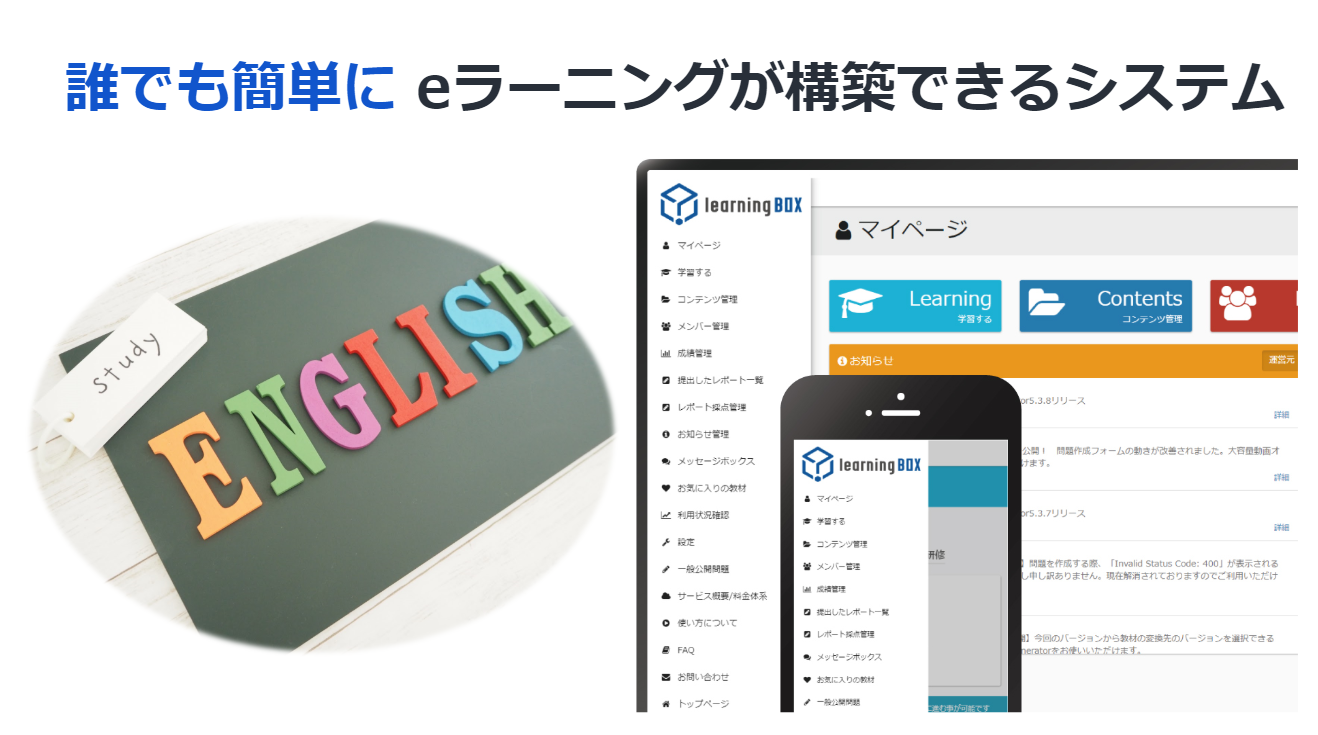
Learning English with an e-learning system

This is Kitaoka 🍎, our marketing manager! In September, I participated in the "Education IT Solution Expo. It was my first time to participate in this event and I was very nervous, but it was a very valuable opportunity for me to directly experience firsthand the voices and concerns of our customers. We would like to thank everyone who visited our booth. We would like to thank you again. Thank you very much. We will continue to take your concerns and requests seriously and devote ourselves to playing a role in "e-learning learning systems that anyone can easily start using"! At the exhibition, we will be asking questions such as "What can I do with an e-learning learning system? We received many comments such as "I want to introduce this system in schools and tutoring schools! We received many comments such as "What can I do with an e-learning learning system? In this article, we would like to introduce English learning using our e-learning system (learningBOX) as an example. Thank you very much for your understanding and cooperation. Table of Contents 1. what is e-learning learning? 2. e-Learning Learning System 3. using learningBOX's content creation function to create English learning materials 4. summary What is e-learning learning? E-learning is a form of learning that uses the Internet. It is a learning system that allows students to improve their skills at their own pace, regardless of location, time, or learning content, by using electronic devices such as PCs, mobile devices, and IT networks. E-Learning Learning System This is an e-learning creation system (learning management system). This system provides and manages education on the web, such as face-to-face education, paper-based examinations, and group training, to supplement learning. Our e-learning learning system, "learningBOX," has been used by approximately 2,300 companies that have built learning environments on the Web. It is mainly used by school teachers and corporate educators. Create English learning materials using learningBOX's content creation function. learningBOX has functions for creating each type of e-learning content. You can easily upload videos and PDFs as learning materials, create quizzes and tests to check your understanding, create certificates after completing a course, and create vocabulary cards and notebooks as learning aids. English vocabulary is effortlessly input with memorization cards CardGenerator is a system that allows anyone to easily create web-based memorization cards from texts. It is a digital version of memorization cards that can be easily created by anyone with an Internet environment and a computer. Even if you are not good at operating a computer, you can easily create and publish your memorization cards on the web with the help of the easy-to-understand manual. Please refer to the How to Create Memorization Cards page for more details. Mushi-eating notebooks are also recommended for memorization notebooks. MUSHIBUKI Notebook allows you to easily create memorization questions in sentence form. In addition, by checking off the bug-eaten items you have memorized, the percentage of success will be displayed. This content is highly recommended as an English memorization notebook. *For detailed information on how to use MUSHIBEI Notebook, please refer to this page on how to use MUSHIBEI Notebook. Check the English vocabulary you have memorized with typing materials! Typing materials are learning content that can be created using the learningBOX content management function, which allows you to "type text using the keyboard. Our typing materials also support English and Romaji! You can learn English just like playing! You can try typing English words below, so please try to pass the test! You can find a detailed explanation of how to create your own typing materials on the How to Use Typing Materials page here. Please use the sample below on a PC. Not available for smartphones and tablets. Quiz (Master Mode / Normal Mode) 12 question formats! Not only textual information, but also images and sounds can be placed in the question text. Questions can be divided into several sections (groups), and a specified number of questions can be asked from each section. You can also set optional values such as "images, videos, URL links, explanations, etc." to suit your needs. Please refer to the list of options when setting options. Master Mode Normal mode The content created for this article can be found here. You can use the downloaded materials as contents on learningBOX as they are! Memorization cards -> >> Click here to check if it works.

Notes on creating quizzes in the question creation form

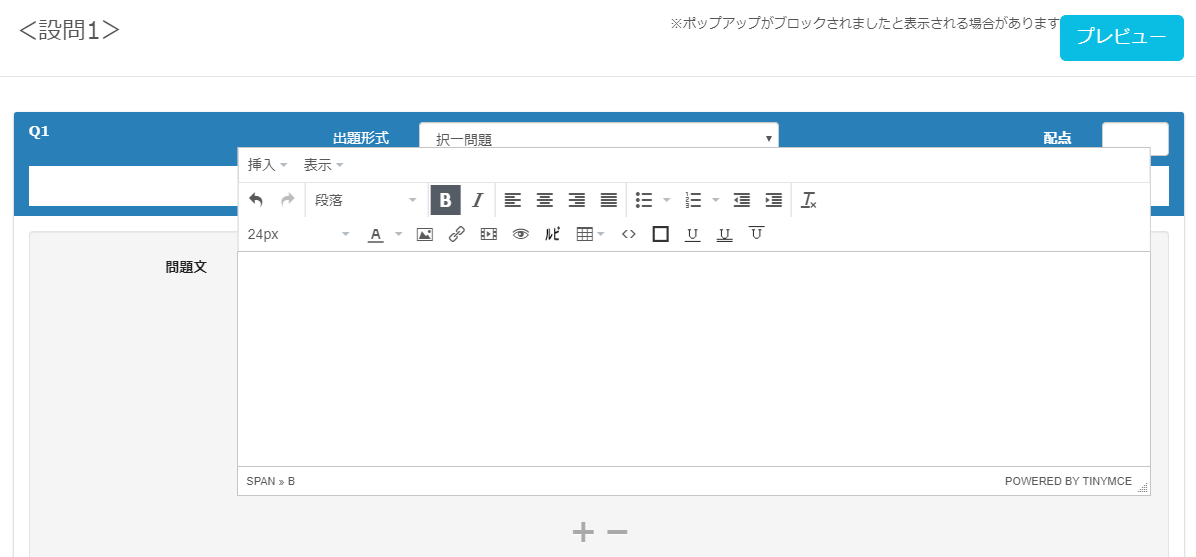
Hello, this is Nagai🎮 of the Quality Control Department, still unable to let go of my fan due to the hot and cold weather. October has arrived in the blink of an eye! In this article, I would like to share with those who want to create quizzes that can be used in e-learning, what to keep in mind when creating quizzes in the question making form and how to solve them. For those of you who are using our QuizGenerator or learningBOX and are having trouble with the questions not displaying well, how can you solve the problem? We are here to help you! If you know how to solve a small input error, you can quickly deal with it! Thank you very much for your cooperation. Click here for the Table of Contents 1. what is deceptive appearance? 2. how to solve it 3. summary What is deceived by appearance? First of all, please look at the following image. The text is typed in the "problem statement" section. At first glance, it looks like you are just typing "Don't let appearances deceive you. But if you check the actual source code, you will see ・・・・・ *This is just an example, and in some cases it can be even more complicated. Font specifications, paragraphs, headings, and many other things may be specified. ➡ " This is what I call being fooled by appearances." When do you see this kind of phenomenon? This phenomenon may occur when you use "copy and paste" which you usually use casually when creating quizzes. It is easy to create questions by copying and pasting the information you have entered in the question creation form or the text and contents posted on the Internet, but "unnecessary information such as extra line breaks, spaces, special fonts, and machine dependent characters are also incorporated when creating quizzes. Some problems occur when multiple questions are combined into one, as well as the display of the player's screen is corrupted. If a question does not display as expected, these are the most likely causes💦. Solution This is caused by using the issue creation form and you will need to check the source code for confirmation." The easiest way around this is to use text." To be precise, it is the method of using standard text. Standard text does not allow the use of html tags and only the bare text data is entered. You can adjust the text here and create questions in text format as is, or you can copy and paste it into the question creation form. You can use the standard text as you wish once you have gone through the standard text. Summary When using the question form to create a question, you may find that it appears differently than you intended. It may seem convenient, but there are unexpected pitfalls. However, html tags are there to display problems beautifully. The html tags are not that difficult to understand. Some people reject them just by looking at the English language, but I want them to touch them just a little. Furthermore, by applying HTML tags and other techniques, you can create interesting problems, such as this one. This article is a bit of advice for those who want to create quizzes that can be used in e-learning. Our e-learning system, learningBOX, has a very wide variety of quiz formats and options. Of course, we are happy to consult with you on the creation of quizzes as well. Please feel free to contact us. Thank you for taking the time to read this article.
STEM

What is STEM education?

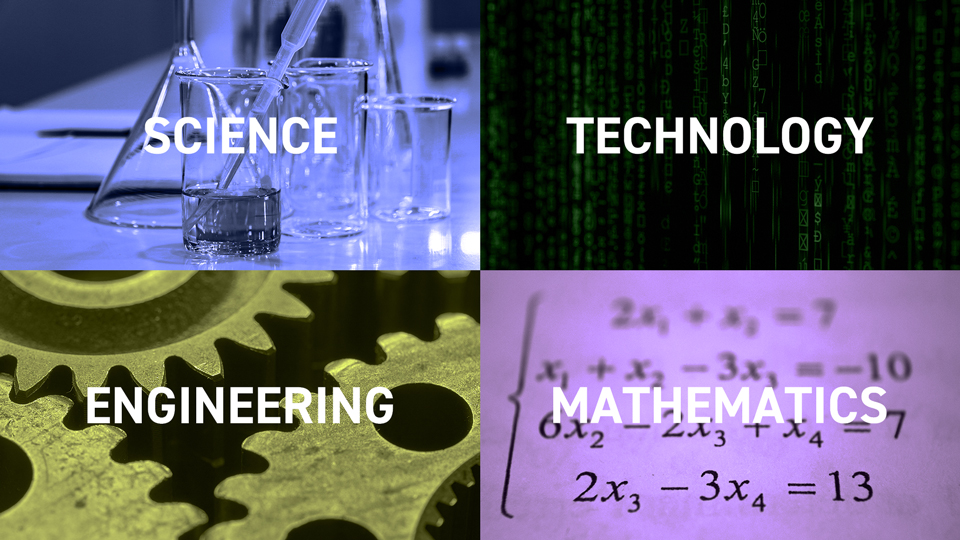
Nice to meet you. My name is Yokoyama🐈, and I am a developer. Have you ever heard of STEM education? This is an educational model that started in the United States in the 2000s. This paper introduces STEM education, which is attracting attention around the world. Click here for Table of Contents 1. what is STEM education? 2. STEM Education Overseas 3. STEM Education in Japan 4. summary What is STEM education? STEM is an acronym for Science, Technology, Engineering, and Mathematics, and was proposed by the National Science Foundation in the 2000s. STEM education was originally initiated to increase enrollment in science and engineering fields in order to increase global competitiveness in science and technology. Today, the concept has expanded and diversified to include various related concepts, such as STEAM education with the addition of Art and STREAM education with the addition of Robotics, as creativity and sensitivity are becoming increasingly important in preparation for a super-smart society. It is not just education in science and engineering fields, Emphasis on practical skills From subject-specific education to cross-disciplinary education hands-on, creative, and proactive introduction of new technologies emphasis on integration and diversity of people: ensuring fairness of educational opportunities Emphasis on value of K-12 (K-12 elementary education) Emphasis on STEM teacher development and other initiatives are being undertaken around the world as a comprehensive education closely linked to society and creativity. STEM Education Overseas STEM education began in the U.S. and is now being actively pursued as a national policy in countries around the world. Country Name Background Specific Initiatives United States of America Government-led Promotion of IT Human Resource Development, EdTech Penetration, and STEM Education Middle-income class faces crisis amid automation by robots and AI Charter Schools Emerging to Break Away from Conventional Education Schools utilizing EdTech services such as adaptive learning, MOOCs, LMS, etc. Project-based learning-centered schools with cross-enforcement to develop soft skills (non-cognitive skills, GRIT, etc.) through a charter school system with open-ended curriculum China By 2025, China faces a severe shortage of human resources in areas critical to its future economic development Premier Li Keqiang advocates "mass entrepreneurship and universal innovation China STEM Education 2029 Innovation Action Plan Shanghai "STEM+" Education Research Center Israel Recognition that the development of scientific and technological human resources is essential for the country's continued development due to its historical/military background STEM education is introduced from an early age. In particular, science and technology kindergartens in partnership with high-tech companies allow students to learn about robotics, computers, space, and more. STEM education with special emphasis on programming and cyber security Singapore Traditionally emphasized the importance of nurturing the elite who will be at the helm of the country Particular focus on fostering human resources for key industries such as IoT, robotics, AI, biotechnology, etc. Recently introduced "humanistic education" to nurture non-cognitive skills Providing a generous, supported AI education program for young professionals to strengthen the country's AI human resource capacity Integrated program for secondary education and college preparatory education Personalization of learning and cross-disciplinary knowledge understanding and utilization through EdTech seems to be the global trend. STEM Education in Japan STEM education efforts in Japan seem to be mainly conducted by the Ministry of Internal Affairs and Communications, the Ministry of Education, Culture, Sports, Science and Technology, and the Ministry of Economy, Trade and Industry. The Ministry of Education, Culture, Sports, Science and Technology has been conducting Super Science High Schools since 2002. The MEXT aims to develop future international science and technology-related human resources, The Ministry of Education, Culture, Sports, Science and Technology (MEXT) has designated high schools that provide advanced science and mathematics education as "Super Science High Schools" in order to develop future international science and technology professionals, Development and implementation of curricula that are not based on the Courses of Study, and promotion of problem-based research, Since 2002, the program has been supporting experiential and problem-solving learning through observation and experimentation. Source: Ministry of Education, Culture, Sports, Science and Technology/Super Science High School Furthermore, various measures are being taken to fully implement programming education in elementary schools from FY2020. The Ministry of Economy, Trade and Industry (METI) has set forth three pillars for educational reform: "STEAM-ization of learning," "Independence and individual optimization of learning," and "Creation of a new learning foundation. STEAM-ization of Learning With each student's unique excitement at the core, "knowing" and "creating" will be circulated to create a learning environment that integrates the humanities and sciences. Independent and personalized learning Learning that allows students to choose how they learn based on their individual cognitive characteristics and level of achievement. Creation of a new learning foundation Learner-centered, digital-first, seamless schooling with society. In Japan, as in other countries, EdTech is being used to personalize learning, and to understand and utilize knowledge across the board. Conclusion STEM education is not only education in science and engineering fields, but also comprehensive education to "create and utilize AI and create new values" for a super-smart society. STEM education started in the U.S. and is now being actively pursued as a national policy in countries around the world. Personalization of learning and cross-cutting knowledge understanding and utilization through the use of EdTech The day may come in the not-so-distant future when e-Learning will be conducted using one computer or tablet per person as a matter of course! Our e-Learning system "learningBOX" will be developed for STEM education! 😀 😀 Click here for reference page on STEM education Source: Reference Material on the Current State of Education in Other Countries (Ministry of Economy, Trade and Industry) (used on 09/05/2019) Source: Human Resource Development for Society 5.0 - Changing Society, Changing Learning (used on 2019/09/05)

Practice typing with e-learning training!

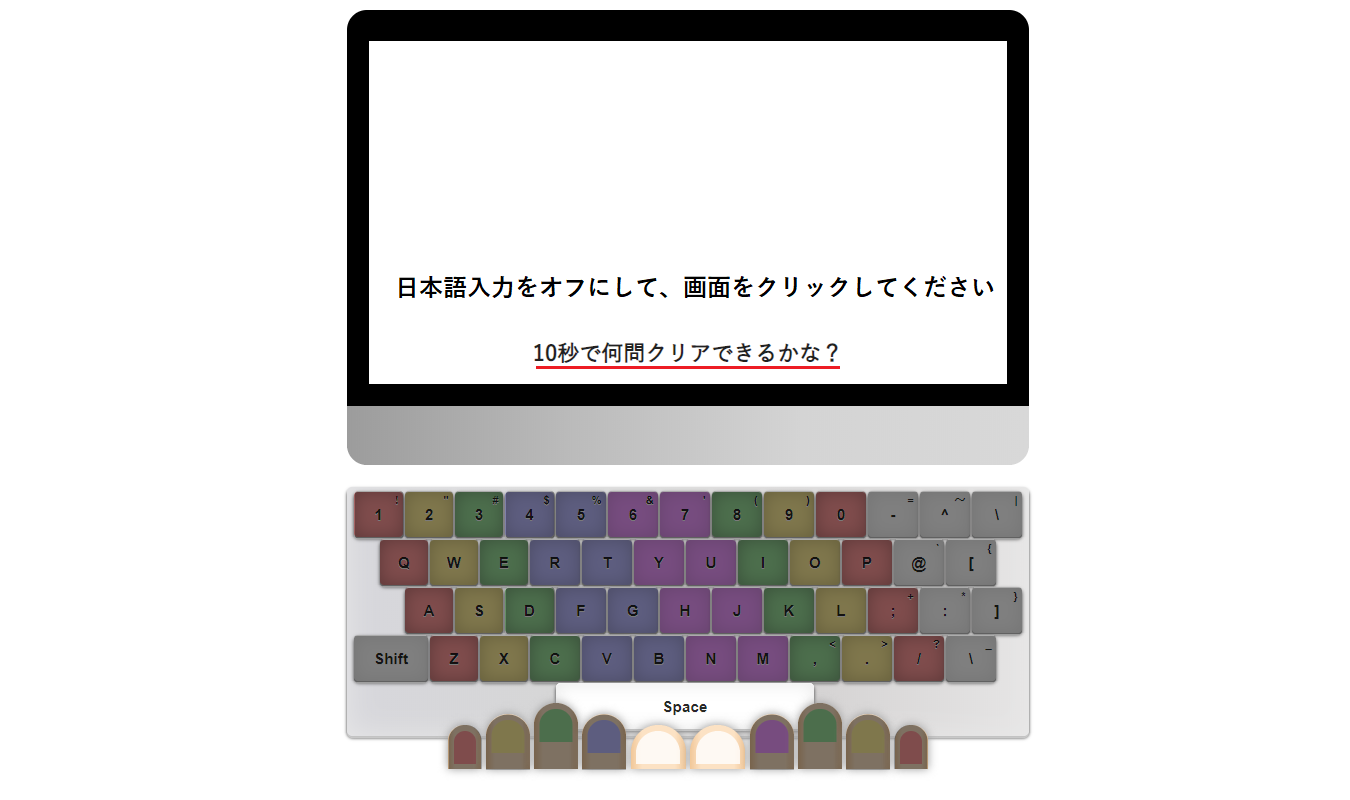
Typing Practice Now Available Through E-Learning Training! Long-sleeved cardigans are now a necessity instead of parasols. Hello! Nice to meet you, I am Kuroda from the Quality Control Department. This is my first article duty. The subject this time is "Feature Typing Materials"! Have you ever heard of "typing materials" that are included in the contents function of learningBOX? In addition to memorizing cards and creating questions, learningBOX also offers "typing materials" that allow you to practice typing as an e-learning training program. In this article, we will introduce how to create, use, and utilize "typing materials". Thank you very much for your understanding and cooperation. Table of Contents What are typing materials? 2. how to make typing materials Let's try typing text using typing materials 4. how to use it in your company 5. summary What are typing materials? Typing materials are learning contents that can be created from the content management function of learningBOX, which allows you to "input text using the keyboard. How to create typing materials Please log in to learningBOX and go to Content Management, Typing Materials ▷"Create Typing Materials". Enter the title, text, and reading style into the typing material creation form, and if there are no problems, click "Save and publish" in the upper right corner. When the form appears, follow the input boxes to set the "Text" (i.e., the question text) and "Yomikata" (i.e., the characters to be input). Hiragana, katakana, and numbers can be used for "Yomikata". Please note that Kanji, English, symbols ("", ", "), etc. cannot be used. Please note that you cannot use *For more information about the detailed settings of the typing materials, please refer to the page on how to use the typing materials. Let's try typing text using the typing materials! Good at typing! We have prepared typing materials created by our quality control. Take it to test your skills! Difficulty level The questions will be about 10 to 20 characters long. The test will be unexpected, so please be prepared for it! Passing score: 40 points How many characters can you type without typing mistakes? This is a difficult typing test that even our staff had a hard time passing! Please click on the PC monitor screen below and you will see the message "Please press the SPACE key when you are ready" and start from there! Let's typing! Please use the sample below on a PC. Not available for smartphones and tablets Thank you for your time. Now, how many points did you get for the above materials? Did you get a passing "Daruma-chan"? I created it, was it interesting? What I created was "interesting! I want to solve it again! I would be very happy if you think "It was fun! How to use within the company We distribute e-learning learning using typing materials within our company as a recreational activity. By designing courses in learningBOX, any learning material, not just typing materials, can be studied in a set order. I finally got my certificate! I worked hard every day and passed! Effectiveness and Expectations of Typing Materials I think there are many people who are not good at typing, although they don't say it out loud. They want to type quickly and accurately, but they tend to type while looking at the keyboard. They want to type quickly and accurately, but they tend to look at the keyboard while typing. I want to type quickly and accurately, but I always end up looking at the keyboard while typing.        I think everyone has his or her own problems. Advantages of improved typing Reduction in typing speed and spelling errors will reduce the amount of time spent on office work. Increased work efficiency You will be able to notice typing errors more quickly. You will be able to work with confidence as you become less computer illiterate. Typing is a seemingly simple task of "just typing on the keyboard. However, our brains accurately determine the meaning and content of words, and work in and out instantly. Keyboarding quickly and accurately based on the information processed is a more complex act than one might think. To perform this task efficiently, quickly, and accurately, daily repetitive practice is the fastest way to improve your typing. Conclusion What do you think of "typing materials" that allow you to practice typing as an e-learning training program? We hope you have been able to experience the fun of typing through hands-on experience. Although typing speed and accuracy cannot be dramatically improved in a day or two, acquiring the skill to type accurately will give you the skills you need in your company, such as improving the efficiency of your office work. Dear company training staff reading this article! If any of the following apply to you, please consider implementing learningBOX! There are too many misspellings and omissions in the text typed by employees. Recent new employees are good at using smartphones, but slow at typing on PCs. It takes time to check for errors in contract documents prepared by subordinates. Please try learningBOX for an e-learning typing practice tool that you can enjoy using your mind and body. Thank you for taking the time to read this article.
LMS Open Source

What is open source moodle for e-learning?

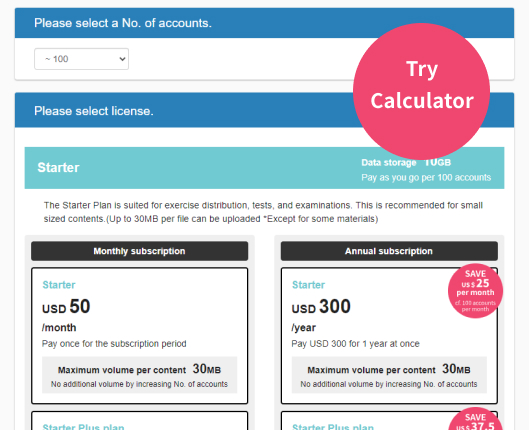
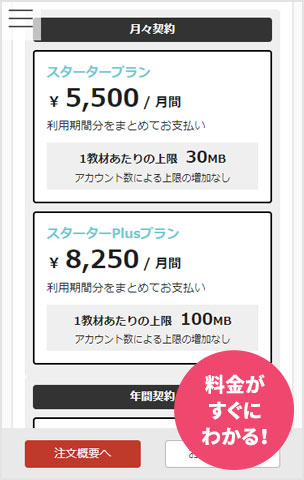
What is moodle, an open source for e-learning? Hello everyone, this is Ueda from CS. August seems to be ending in a flash, and soon it will be September. I just hope the heat will pass soon! Well, this time, I would like to talk briefly about the open source for e-learning, moodle. Before I begin, I would like to explain "open source". Open source refers to the idea that source code, which is a computer program written in a programming language that is easy for humans to understand, should be made widely available to the public so that anyone can freely handle it. It also refers to software released based on such an idea. ➡Quoted from IT Dictionary Advantages and Disadvantages of moodle There are several open source versions of LMS, but in this article, we will compare the advantages and disadvantages of moodle, which has a relatively large number of users. As for advantages, the biggest feature is that it is free of charge. Therefore, the cost at the time of introduction can be reduced. And it can be customized to any specification with a high degree of freedom. Also, based on the GPL license, users are free to download, modify, and further distribute it! One of the disadvantages of moodle is that you may not be able to secure a working environment if you use a rental server to install moodle, and if you install and operate your own server, you will need technical knowledge of servers. In addition, maintenance costs may be high in the event of problems due to the lack of a complete support system. Creating and setting up materials is also often considered difficult. Learn more about moodle eLearning - About open source moodle About our service LMS learningBOX Our service, learningBOX, is a cloud-based LMS that, unlike open source LMSs such as moodle, does not require in-house system configuration. LearningBOX is easy to use, and one of its strengths is that even those who are new to e-learning can operate it easily. 10 accounts can be used free of charge regardless of the expiration date, so you can try out almost all the functions before full-scale implementation. You can also use 11 to 100 accounts for as little as 30,000 yen per year! See more details about our pricing plans. The system is fully functional and easy to operate, including the creation and management of content, group management of members, and storage of results management. There are 12 types of contents that can be created and uploaded, including quizzes, tests, memorization cards, PDFs, videos, questionnaires, and reports. If you have any questions about implementing an LMS, we'd love to hear from you! We would be happy if you could try our free plan. Our CS team will do their best to support you before and after implementation! Conclusion What did you think? There are different types of e-learning systems. There are also many different types of e-learning systems. Each system has its own merits and demerits, and the system that best fits your needs will depend on how you operate your system. We hope this information will be helpful to those who are considering the introduction of a new system. Please find the best system for you. We are pleased to announce that we will be holding an exhibition at our booth. ▼ We will exhibit at the 3rd [Kansai] Educational IT Solution EXPO in Intex Osaka from September 25(Wed) to 27(Fri), 2019!
microlearning

Learning in Skilled Time [Microlearning].

Learning in a short time [Microlearning]. Hello! I'm Kinoshita, a CS staff member who has recently started to prefer fish to meat. The theme of our first commemorative post is "microlearning," a current trend in learning. Click here to see the table of contents. 1. what is microlearning? 2. three advantages of microlearning 3. summary What is microlearning? Microlearning is a style of learning in which students casually use mobile devices to study material that is short in duration per session. Learning time is generally completed in 3 to 10 minutes. Conventional learning involves a learning volume of 30 minutes to an hour or more, and is generally done at home on a PC using a fixed amount of time. In contrast, with Microlearning, you can study during your commute to and from work or school, or in your spare time between housework and part-time jobs. This learning style is suitable for modern people who are busy in their daily lives and do not have a lot of time to spare. By the way, YouTube, which I love, is also a microlearning site. There are many video contents that can be replayed in 5 to 15 minutes, and it is the best entertainment you can enjoy in your skimming time (laugh). Three advantages of microlearning Learning in your spare time Microlearning is a short learning material (3 to 10 minutes), which allows you to study in your spare time, such as during travel, breaks, or between classes. Compared to learning that requires a large amount of time to complete, microlearning is an easy and convenient way to learn. Combined with mobile devices (M-learning), the advantage is that time and location constraints are eliminated. Making Learning a Habit The short learning time for each material lowers the hurdle to continue learning, and it is expected that students will develop a habit of learning through continuous learning. Using our learning management system, learningBOX, students can divide each unit of study into shorter units, allowing them to repeat specific units that they are interested in or that they have difficulty with. In addition, when used in combination with the grade management function, it is possible to analyze the tendency of each learner's weak areas. Easy creation and updating of teaching materials It takes a great deal of effort to create teaching materials that are about an hour in length, but in comparison, it is easier to create short teaching materials that are about 10 minutes in length. Furthermore, short materials are easier to update. For example, rather than a volume of material such as "taxation," material broken down into "consumption tax" can be updated more quickly when tax rates are changed. 3. Summary Microlearning is a current learning method suitable for today's society. There are three reasons for this: "learning in one's spare time," "making learning a habit," and "easy creation and updating of teaching materials. With the arrival of 5G communication technology, microlearning using mobile devices is expected to advance even further in the future. If you feel that you are facing challenges in promoting employee training or distance learning, we recommend that you incorporate a microlearning system.
learningBOXver27

learningBOX has been upgraded to version 2.7

Thank you for using learningBOX, our e-learning creation system. Today, learningBOX has been upgraded from Ver. 2.6 to Ver. 2.7. This article provides details about Ver. 2.7.4 (released on June 12, 2019), which adds various new features. About this Version Upgrade In this version update, many new features were added, such as the "Medical Records" and "Tagging" functions, which are the main features, as well as improvements to existing functions, such as "Moth Notebook" and "Member Management". Let us introduce you to the 2.7 series version upgrade in detail. Tagging Function More adaptive learning." By using the tagging function to sort questions, you can see the characteristics of each student's performance, which is difficult to see from the score alone. By setting tags for questions in advance, you can analyze each student's weak and strong areas. The following "chart function" analyzes and displays grades using these "tags. Chart function You can check the "progress" of your study. The chart function allows you to check how much each user is learning each day and how far they have progressed. This allows us to monitor the learning status of each individual user and provide more adaptive support for learners. Other New Features and Functional Improvements Enhanced e-mail notification function The "Notifications" displayed on "My Page" can be notified by e-mail. The system can also send emails to learners whose conditions have been narrowed down from the grade management screen. Certificates Certificates can be customized with your own original design. You can check your certificates at a glance. Worm-eaten notebook You can add a "memorized check". Member Management Re-issue of invitation mail Account expiration date function Content management, addition and improvement of various functions PDF printing prohibition function Right-click duplicate function Attachment file teaching materials Expanded input fields for web pages/mushy notes Dedicated Server New features mainly for those who have customized/optional contracts, but various new and improved EC functions have been added, and API linkage of login and grade results is now available for companies that have institutional systems. Miscellaneous Please contact our CS sales team for more information on how to use the system or if you have any questions. Inquiry Form We will continue to listen to our customers' voices and improve our functions to make your use of our products even more comfortable. Thank you for your continued support of LearningBOX/QuizGenerator.
VR Education

VR Technology Advancing in the Field of Education [e-Learning in the World].

VR Technology Advancing in the Field of Education [e-Learning Around the World] (Japanese only) Hello. I'm Motoki, a marketing person who prefers boiled eggs in the morning. Thanks to your support, this is the sixth installment of the "e-Learning Around the World" series. This time, I would like to talk about the cutting-edge technology in American edtech and e-learning services, "VR. Table of Contents What is VR? 2.Application in the field of education 3. Examples of services in the U.S. 4.Summary What is VR? The term "VR" itself is already very familiar, but to reiterate, VR stands for "Virtual Reality" and is translated as "virtual reality" in Japanese. Generally speaking, it is a technology that allows users to experience a virtual reality world with a 360-degree field of view through the use of displays and VR goggles. VR is often associated with games and entertainment, but it also has a high affinity for education and is one of the cutting-edge areas of edtech in the United States. ▼ Image Applications in Education In the field of education, the use of 3D visualization has begun to spread as a tool to make learning easier and more enjoyable in fields that are difficult to express in books or easier to understand when expressed in three dimensions (STEM education, for example, the shape of organs in the human body), including experiences in virtual spaces such as space and the deep sea, simulated occupations, and so on. The use of 3D visualization is beginning to spread. In the U.S., the U.S. government has launched a project called the "VR Education Project" in an attempt to promote education using VR, and there is a system under which grants are provided for the development of technology products for educational purposes. →"Ed Tech Developer's Guide" by the U.S. government (←all in English) Examples of services in the U.S. Now, without further ado, let's take a look at some specific examples of typical services. First of all, we have Nearpod. ▼ VR experience on a tablet Nearpod offers more than about 100 different VR courses that can be learned from kindergarten to high school, and can be used by school teachers as teaching materials for their classes, and also serves as a platform for promoting classes where teachers can collect students' responses and reactions through Nearpod The company says that the system is being used in the classroom. Since the course is mostly used in the classroom, the tablets are mainly utilized to watch VR and serve as textbooks and notebooks for the class. Next is "Zspace. ▼ Demonstration video (even the heartbeat sound is shown) Zspace" (→ also called "Z-space"), this company also offers many VR educational materials for elementary through high school students. Zspace uses a display-type device like a laptop computer, and when the user puts on a pair of special glasses, the device appears to have an object in front of them. Then, by manipulating a special pen tool, you can move the object freely. As with Nearpod, the goggles are not used as the main device here, and this style was probably the result of pursuing a comfortable VR learning experience for learners. As shown in the demo video, in fields that are easier to understand when represented in three dimensions (STEM-related, for example, the shape of organs in the human body), materials that utilize VR are very appealing in order to make learning easier to understand and more enjoyable. Conclusion Furthermore, VR technology is also being used in corporate training. Walmart, a major U.S. retailer, has a VR-based training program in place of in-store hands-on training by instructors. ▼Utilizing VR for training In this way, we found that VR is being used and spread very much not only in the entertainment field but also in the education field. When we think of STEM education, programming education seems to be the main focus, but it seems that the evolution of this type of VR technology will help to optimize education in science, technology, engineering, and mathematics. Well, ladies and gentlemen, this [e-Learning around the world] series has so far focused on the U.S., but the U.S. section will come to an end at this time. From the next installment onward, we will be looking at China? Europe? Asia? Where will we go next? I am worried. I am looking forward to it. Thank you for reading. *Reference: Edtech will change the future Author: Masahiro Sato
evolutionofedtech

The Evolving Edtech Services of the United States [eLearning in the World]

Evolving Edtech Services in the U.S. [e-Learning Around the World]. Hello. I'm Motoki, a breakfast person and in charge of marketing. Thanks to your support, this is the fifth installment of the "e-Learning Around the World" series. In the last issue, we introduced the impact of adaptive learning on the field of school education. This time, I would like to touch on the impact of Edtech on companies in the U.S. and its movement. Click here to see the table of contents 1. Diffusion and evolution of e-learning and Edtech in the U.S. Examples of Edtech services in the business field 3. Emergence and Diffusion of e-Portfolio 4. Summary Diffusion and Evolution of e-Learning and Edtech in the U.S. The United States is a large country, and many companies are expanding globally, not only domestically, so there are limits to the extent to which group training can be used for employee education and human resource development. As a result, along with the spread of the Internet, e-learning became one of the means of human resource development for companies, and the evolution of Edtech services progressed. And recently, e-learning and Edtech services are increasingly being used not only for corporate human resource development, but also as part of employee benefits programs for the purpose of acquiring human resources. Examples of Edtech services in the business sector Let's take a look at some of the most popular Edtech services for business. First is LinkedIn, a social networking service for business people. LinkedIn has acquired Lynda.com, an online learning service. This acquisition allows for a mix of social networking services and online learning history information. On LinkedIn, users disclose their business profiles, including where they work, job title, industry, skills, and education. This information, combined with Lynda.com's learning information (user course history and certificates of completion), allows users to discover their talent and skill preferences through the social networking service. This allows users to make a better use of human resources within their companies, as well as to make a better decision when recruiting or collaborating with others. This service is unique to the U.S., where human resources are highly mobile. Emergence and Spread of e-Portfolio I would like to go a little further into the learning history information introduced on LinkedIn. In the U.S., IT for storing and accumulating learning history is progressing, and so-called "e-portfolios" are being used for employment and higher education. For example, the content and results of students' research at university are compiled in e-portfolios, and university students use the e-portfolios to promote themselves to companies for job hunting, which are then used by companies as materials for internships or to recruit human resources. Portfolium" is one of the e-Portfolio platform services. This one is being used by universities and is helping to improve the skill level of students. It is expected to change the way people find jobs, change jobs, and enter higher education, as more concrete information such as learning history is converted into data by IT, instead of formal information such as resume and academic history. Conclusion E-learning and edtech services are evolving and spreading in the U.S. due to its large land area and the presence of numerous global companies. In addition, the base of Edtech services is expanding as online education and learning history are connected to existing IT services such as social networking services, and platform services focusing on learning history management have emerged. We have learned that the impact of Edtech services has been significant, not only in learning, but also in changing the way people go on to higher education and find employment. From the next issue onward, I would like to touch on cutting-edge technologies in e-learning and edtech, such as VR. Thank you for reading to the end!
Find more about learningBOX